
Original briefings. Zero spin.
Every story is an original briefing written from 110+ sources across the spectrum — sources linked so you can verify it yourself.
 economy
Major Story (7/10)
Event date: September 8, 2026
economy
Major Story (7/10)
Event date: September 8, 2026
European Parliament to Debate Ceuta Migrant Crisis Tuesday as Spain's Political Fight Escalates
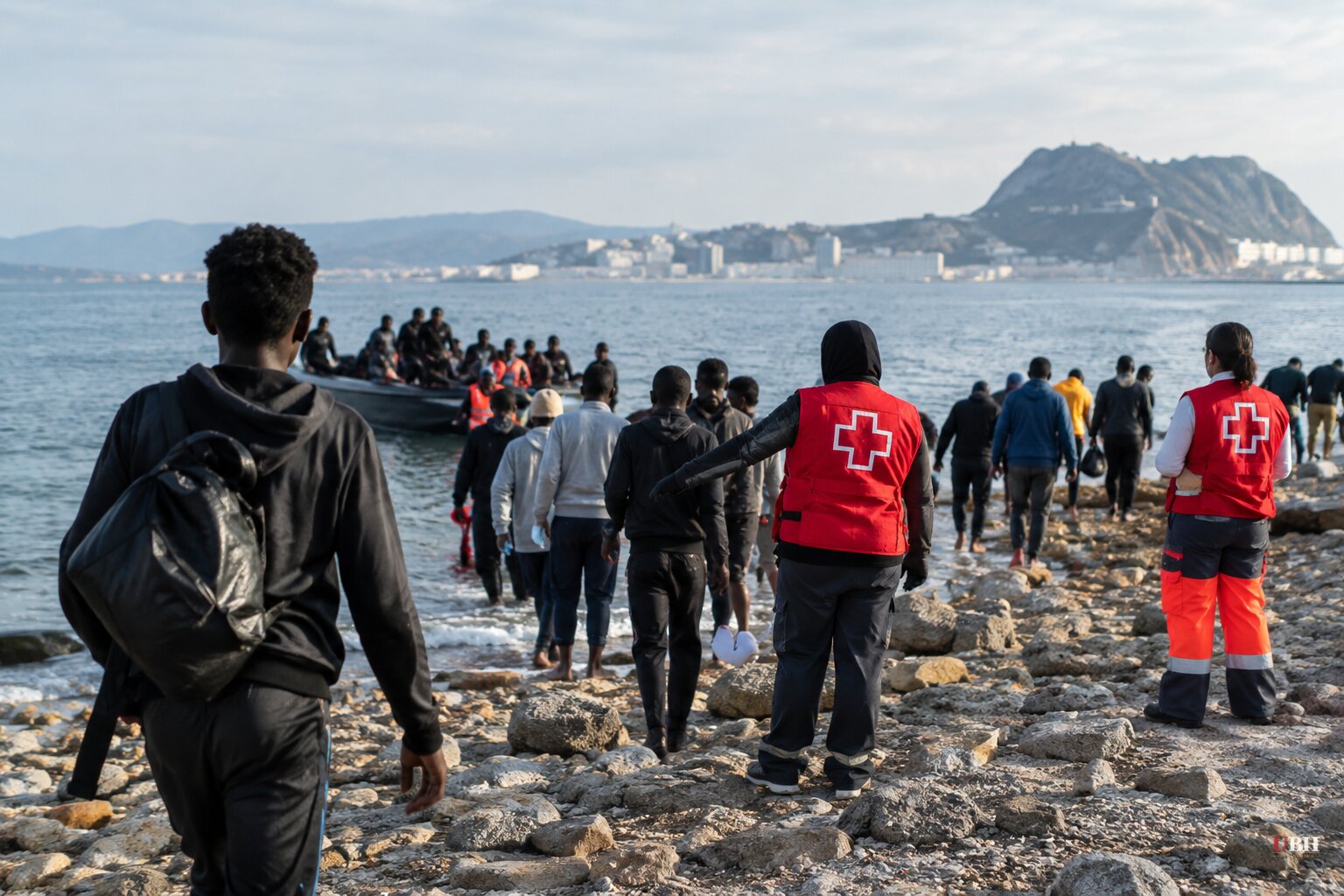
The European Parliament will debate the Ceuta migration crisis on Tuesday, September 15, in Strasbourg, according to Euronews, after the chamber's political group leaders agreed Wednesday to put the issue on the agenda. A resolution vote is expected to follow the debate.
The crisis began when a mass crossing of irregular migrants from Morocco overwhelmed the Spanish exclave starting July 30-31. Euronews and Ceuta's president, Juan Jesús Vivas, put the number at roughly 80,000 arrivals; Daily Wire cites a figure of "more than 72,000." Russia and Spain News reports that at least 1,612 of those arriving were unaccompanied minors. Politico Europe additionally reports that more than 100 people died last month attempting the crossing, a toll not mentioned by the other outlets reviewed here.
Weeks later, thousands of migrants remain in the city, according to multiple accounts, and Ceuta's president has called the situation a "pressure cooker" close to bursting, per Russia and Spain News. Vivas traveled to Brussels this week, backed by EPP president Manfred Weber, to demand a permanent EU presence in Ceuta, expanded Frontex and European Asylum Agency roles, emergency funding, and special legal status for Ceuta and Melilla as the EU's only land border with Africa.
Spain has formally requested €82.7 million from the EU's Asylum, Migration and Integration Fund and more than €32 million from the Border and Visa Management Instrument, according to government data cited by Euronews. The European Commission says the request is a priority, but final decisions are on hold pending more detail from Madrid, per Russia and Spain News.
The Political Fight in Spain
On September 2, hundreds of thousands of Spaniards took to the streets in more than 300 cities, organized by the Spanish Federation of Municipalities and Provinces, according to Breitbart. Crowds in Madrid's Cibeles Plaza chanted against Prime Minister Pedro Sánchez, with Vox leader Santiago Abascal telling reporters that Ceuta represents "the future of several Spanish cities if we do not rise up to remedy it."
Turnout figures are disputed. Breitbart reports Madrid's local government estimated 150,000 participants, while Spanish government representatives put the number at 50,000, according to El Mundo as cited by Breitbart. The ruling PSOE dismissed the protests as partisan and discouraged party participation, while the opposition People's Party says it documented nearly 2,000 separate demonstrations that day, including 72 at socialist-controlled town halls.
Brussels Divides Along Familiar Lines
In Strasbourg, EPP senior MEP Javier Zarzalejos argued Sánchez called the crisis "an attack on Spain's territorial integrity" but "has not acted consequently," according to Euronews. Right-wing and far-right groups are also tying the crisis to Spain's broader plan for mass regularization of undocumented migrants, framing Ceuta as evidence the policy is unworkable at scale.
Socialist MEPs are pushing back. An unnamed senior S&D MEP told Euronews that "the narrative adopted by some prime ministers was simply shocking" for attacking Spain instead of showing support. On Euronews' "The Ring," German Socialist MEP Birgit Sippel said the priority "whenever things like that are happening to whatever country" should be solidarity, and called for relocating unaccompanied minors to other member states under the EU migration pact.
Czech centre-right MEP Tomáš Svetechovský rejected that approach outright, telling Euronews the Czech Republic would not accept anyone from Ceuta and calling mandatory relocation quotas a non-starter. He argued Spain "did not react to the situation very well" and should have requested European help sooner. Sippel's point is that a member state facing an unprecedented single-month surge deserves EU backing rather than blame. Svetechovský's point is that Spain's own government controls its borders and asylum policy and bears primary responsibility for its response.
Morocco's role is a separate flashpoint. Vivas and others have accused Rabat of allowing the crossings to happen, though no source here presents documentary evidence establishing Moroccan government intent, and Morocco's position is not represented in these reports. Vivas told Brussels the incident should prompt the EU to reconsider its cooperation with Morocco.
A Harder-Edged Debate
Politico Europe's Aitor Hernández-Morales reports that Ceuta marks a shift from prior migration crises like the 2013 Lampedusa shipwreck or the 2015 refugee crisis, when EU leaders including then-Commission President José Manuel Barroso and Chancellor Angela Merkel led with humanitarian appeals. This time, Politico reports, reaction "from the far right to the center left" has been uniformly focused on stronger borders and deterrence. Michele LeVoy of the Platform for International Cooperation on Undocumented Migrants told Politico that migrant-rights groups are shifting from solidarity appeals toward litigation and broader civil-society alliances because the old playbook "is no longer working."
Separately, Daily Wire reported that a group of migrants at Ceuta's Trampolín beach were filmed pulling a protected bottlenose dolphin calf from the water and striking it with a stick, an incident verified by local outlet El Faro de Ceuta. The animal-rights group DAUBMA filed a complaint with Spain's Civil Guard, and the case has been referred toward Spain's Environmental Prosecutor's Office under Article 334 of the penal code, which criminalizes harming protected species. No arrests or charges have been confirmed in these sources.
The unresolved question heading into Tuesday's Strasbourg vote is whether the resolution's final language will include the tougher migration-policy demands the EPP and ECR are pushing or the European-solidarity framing the S&D wants, and whether either version changes anything for the thousands still in Ceuta or the funding request still sitting with the European Commission.
Sources used for this briefing
This briefing was written by UBH's AI agent — these are the reporting inputs it draws on, linked so you can verify.


