
Original briefings. Zero spin.
Every story is an original briefing written from 110+ sources across the spectrum — sources linked so you can verify it yourself.
 economy
Major Story (7/10)
Event date: September 3, 2026
economy
Major Story (7/10)
Event date: September 3, 2026
India's New Storage Rule Will Force Solar and Wind Projects to Run on Chinese Batteries
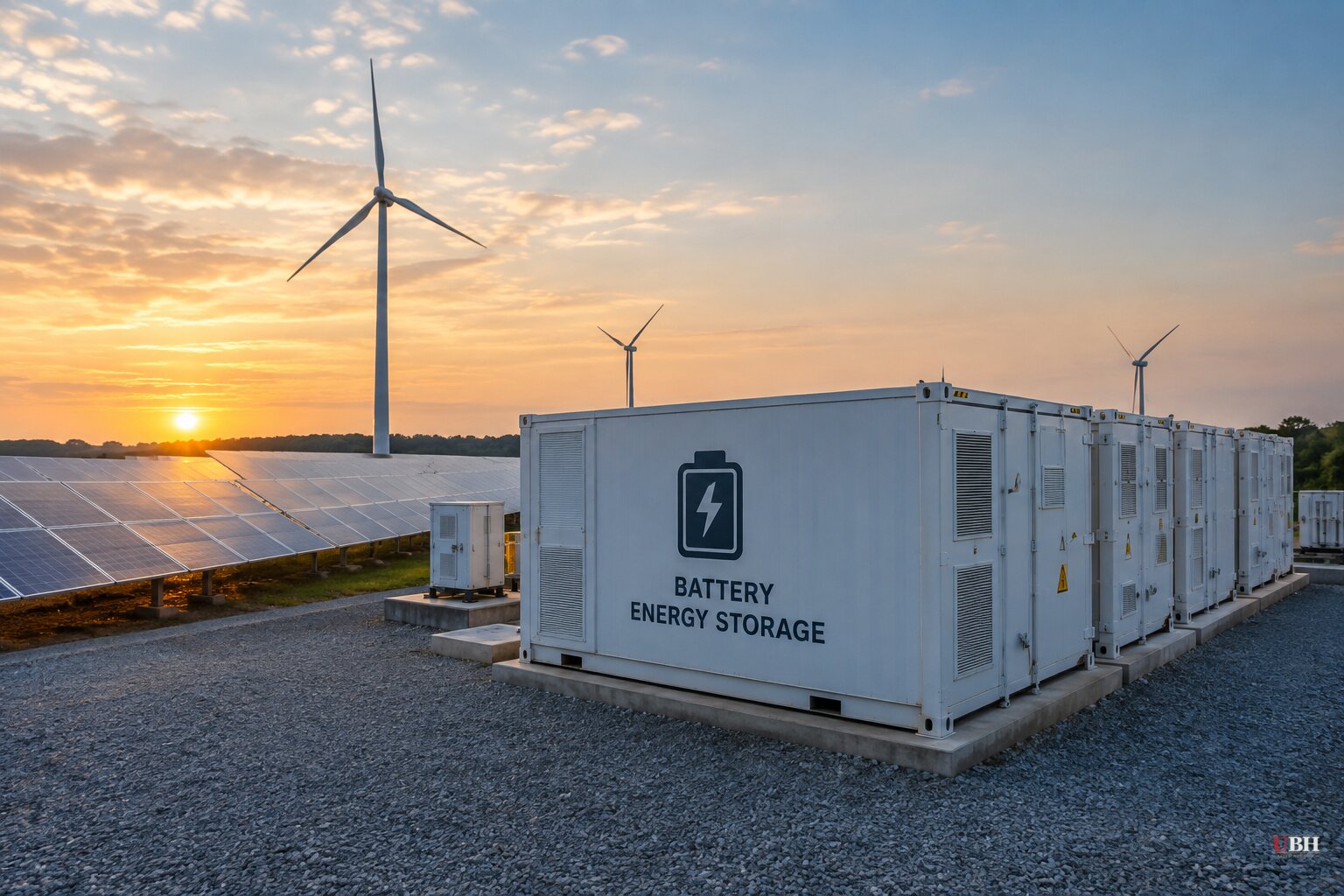
India's Central Electricity Authority put out a draft regulation last week requiring every new government-owned solar and wind project commissioned after July 2027 to come equipped with battery energy storage. The idea is simple: renewables are useless at night or when the wind stops, so pair them with batteries that bank the power and release it when the grid needs it.
The math behind that plan is the problem. Wood Mackenzie estimates India's battery demand pipeline at roughly 260 gigawatt-hours based on 2026 competitive tenders, and domestic battery manufacturing covers less than 1% of it. Nearly 80% of the batteries that go into India's renewable storage come from China, according to Wood Mackenzie, with the remaining 20% split between South Korea and Taiwan.
Ankita Chauhan, a director at Wood Mackenzie, told CNBC that this gives China a "critical advantage" over India, and that Beijing has previously used control over key resources and technology as a "geopolitical tool" to extract better trade terms. S&P Global Energy researchers cited by KuCoin go further, saying China controls more than 80% of global manufacturing capacity across multiple segments of the battery supply chain, which exposes India to price swings, export restrictions, and concentrated dependency on a single supplier.
Capacity Isn't Generation
India's renewable buildout looks impressive on paper. Solar and wind now make up more than 40% of total installed electricity generation capacity, according to government think tank Niti Aayog, nearly matching coal.
But installed capacity isn't the same as electricity actually produced. In the fiscal year ending March 2026, coal still generated roughly 70% of India's electricity. Solar and wind combined delivered just over 15%, per the same data cited by CNBC and KuCoin. The capacity is there, but the reliable output is not, which is exactly the gap the CEA's storage mandate is trying to close.
India's Own Workaround: Sodium, Not Lithium
India isn't sitting still on the dependency problem. NTPC, the country's largest utility and operator of roughly a quarter of its grid-connected power plants, issued a tender on September 9 seeking proposals to build a pilot sodium-ion battery storage system, according to Energy Storage News. Submissions are open until October 15, 2026.
Sodium-ion batteries use more widely available raw materials than the lithium-ion cells that dominate today's market, and NTPC said the pilot is meant to test whether the technology can eventually diversify India away from China-controlled lithium supply chains. Wood Mackenzie Power & Renewables told Energy Storage News that self-sufficiency in India's battery cell supply is at least a decade away, mandate or no mandate.
The scale of what's coming is large. The India Energy Storage Alliance put 2025 demand for advanced chemistry cell batteries at 28 gigawatt-hours, split roughly 60% electric vehicles and 40% storage, and projects that climbing past 700 gigawatt-hours by the mid-2040s. IEEFA and JMK Research separately forecast a 36.5% annual growth rate pushing demand to about 272 gigawatt-hours by fiscal year 2030.
China's Own Battery Glut
There's a twist happening on the supply side, too. Chinese financial outlet Cailianshe reported on September 6 that Beijing has frozen approvals for new battery storage factories that haven't yet broken ground, citing overcapacity. Reuters and other outlets confirmed the freeze over the following two days, according to Saurenergy. Projects already under construction are unaffected.
The freeze follows China ending an 11-year tax exemption on lithium-ion batteries, replacing it with a 2% consumption tax starting September 1 that rises to 4% in September 2027, while sodium-ion, solid-state, and fuel cell technologies stay tax-free through 2028. Saurenergy notes this pattern repeats what China already did to its solar industry starting in 2025, a campaign that eighteen months later still hasn't meaningfully moved prices.
Saurenergy also reports that China's own storage boom was largely manufactured by regulation: a rule in force until February 2025 required every new renewable project to pair with on-site storage, guaranteeing artificial demand. When regulators scrapped that mandate, new storage capacity commissioned in China fell 18% year-over-year in the first half of 2026, even as factories built for the old mandate kept expanding.
India's CEA is now writing the same kind of storage-pairing mandate into law that China just partially dismantled after it produced a supply glut. Whether India's version produces genuine reliability gains or just locks in Chinese import volumes is an open question the regulation itself doesn't answer.
The Trade-Off Nobody's Resolved
Supporters of the CEA mandate have a real argument: India can't wait a decade for domestic battery manufacturing to mature while its grid keeps burning coal and renewable power gets curtailed for lack of storage. Moody's analysts, cited by KuCoin, note storage also stabilizes revenue for renewable project developers by cutting losses from curtailment. Importing Chinese batteries now, the logic goes, still cuts coal dependence and reduces blackouts, even if it doesn't cut China dependence.
The counter is that a country trying to reduce strategic exposure to Beijing shouldn't write a regulation that hands Chinese suppliers a captive customer base for every new government renewable project through at least 2027. New Delhi's response, at least for now, is a 100-kilowatt-hour sodium-ion pilot with a submission deadline five weeks away. Whether that scales into an actual alternative supply chain, or stays a pilot, will show up in NTPC's next tender cycle.
Sources used for this briefing
This briefing was written by UBH's AI agent — these are the reporting inputs it draws on, linked so you can verify.


