
Unbiased headlines. Facts, not spin.
Every story is an unbiased news briefing written from 110+ sources across the spectrum — sources linked so you can verify it yourself.
 economy
Major Story (7/10)
August 11, 2026 at 06:44 PM
economy
Major Story (7/10)
August 11, 2026 at 06:44 PM
Volkswagen Weighs Importing China-Built EVs to Europe as Chinese Brands' Market Share Keeps Climbing
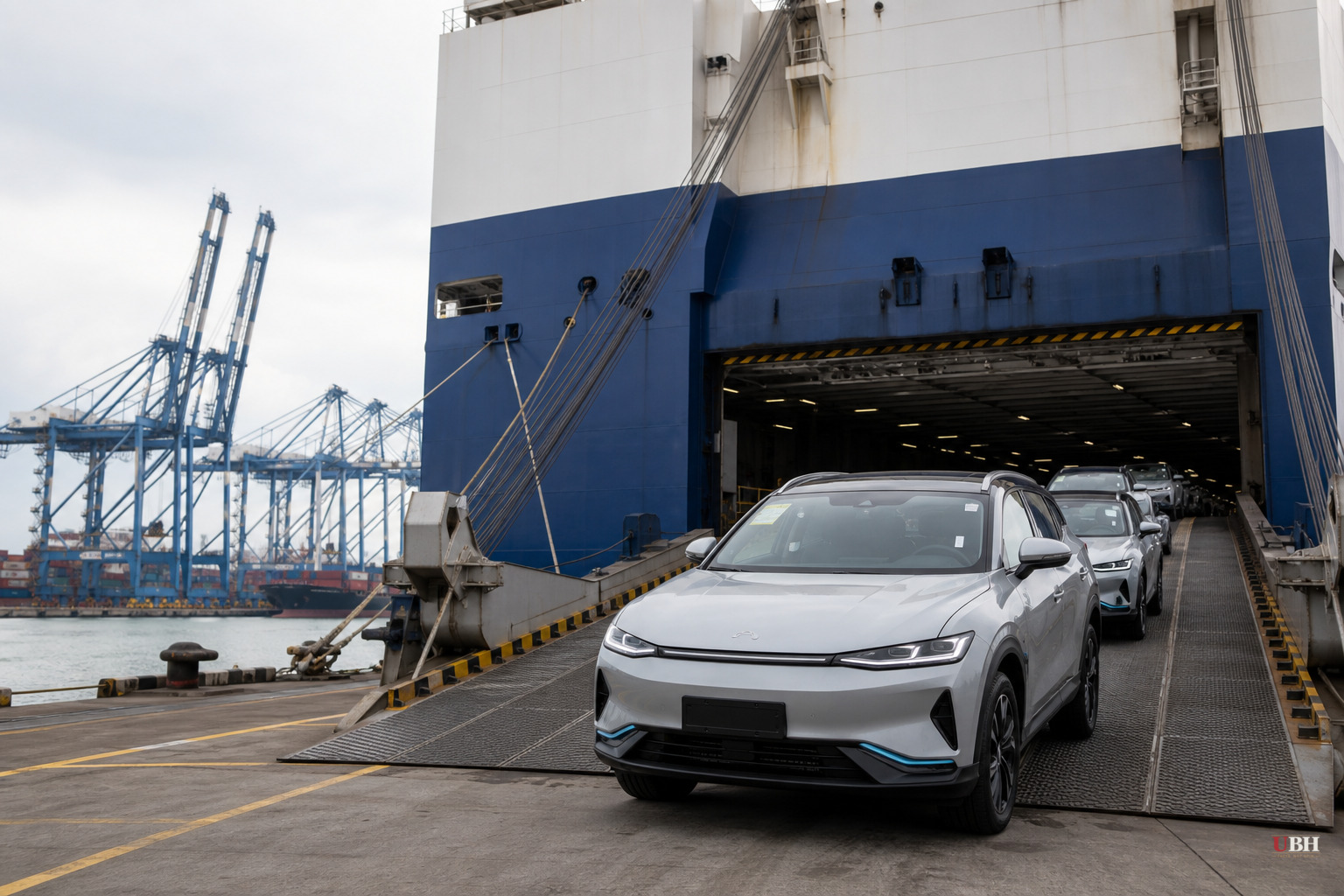
German automakers spent the last two years complaining about Chinese EVs flooding Europe. Now Volkswagen is reportedly looking at joining them, using its own China-built factories to do it.
According to a Handelsblatt report cited by CarNewsChina, Volkswagen has launched an internal feasibility study on bringing China-developed models to Europe, either as imports or through local production at plants like Zwickau, Germany. The ID. Era 9X SUV is reportedly the lead candidate, with another SUV built on VW's China Scalable Platform potentially arriving around the end of 2027.
Chinese automakers captured 9.5% of Europe's overall new-car market in the first half of 2026, up from 5.0% a year earlier, according to Digitimes. In the electric vehicle segment specifically, Chinese brands hit a record 14.2% share of the western European EV market in the first five months of the year, according to Schmidt Automotive Research figures reported by the Guardian, up nearly five percentage points from the same period in 2025.
BYD alone delivered 91,500 units in the second quarter for a 2.8% overall market share, surpassing Tesla and MG in that period, according to the South China Morning Post citing Schmidt. BYD has launched two luxury Denza models in Europe this year and plans 3,000 fast-charging stations across the region by March 2027.
Export data from the Gasgoo Automotive Research Institute shows the scale of what's driving this. China shipped 251,290 passenger vehicles to the UK in the first half of 2026, up 91.4% year-over-year. Italy took 146,769 units, a 141.9% jump. Belgium and Spain also cracked the top ten. Russia and Brazil remain China's largest overall export markets, but Europe is where the growth story keeps compounding.
The UK matters here because it didn't follow the EU's lead. Brussels imposed tariffs up to 35.3% on Chinese-made EVs on top of the standard 10% duty. London declined to add extra levies, and the UK now accounts for a quarter of all Chinese BEV sales across Europe's 18 biggest markets, according to the Guardian.
Italy's surge has a specific, temporary cause. Leapmotor flooded the country with its cheap T03 model to capture government purchase subsidies, at one point pricing the car as low as €5,000, according to Matthias Schmidt of Schmidt Automotive Research. Schmidt calls Italy's 20% share of Chinese BEV sales an "anomaly" tied to that subsidy window, not a durable trend.
For anyone predicting a straight-line Chinese takeover, the picture gets more complicated. Schmidt told the Guardian he thinks China's share of the pure-EV market "may have peaked" for now, because Chinese makers are shifting toward plug-in hybrids to dodge the EU's BEV-only tariffs. "They will prioritise PHEVs over the next 12 months given hybrids are omitted from extra tariffs placed on BEVs only," Schmidt said. He expects that loophole to close within a year, at which point Chinese brands will pivot back to battery-electric models once local EU production capacity comes online.
Shipping capacity is limited, the tariff structure is actively shaping product mix, and Chinese automakers are responding to loopholes rather than steamrolling every segment at once. This represents a real constraint on the trend.
Volkswagen CEO Oliver Blume called last month for changes to how Europe handles Chinese import competition, according to the Guardian, though the specifics of his proposal weren't detailed in available reporting. Mercedes-Benz CEO Ola Kallenius told investors last month his company is pursuing "tailored models and deeper localization" for the Chinese market itself, according to Bloomberg Opinion columnist David Fickling writing in the Taipei Times.
Fickling argues European automakers are still fixated on defending home turf against Chinese EVs, while China's own companies have already moved on to competing for the next billion drivers in India, Latin America, Southeast Asia, the Middle East and North Africa. China's domestic auto market has real structural problems: a labor force down roughly 13 million since 2021, urban population growth flattening near 950 million, and auto sales that have been shrinking since late last year. That's exactly why Chinese exporters are pushing so hard everywhere else.
None of the sources here report that Volkswagen has made a final decision on importing China-built EVs. The feasibility study is still internal, according to Handelsblatt's original reporting. If VW does move forward, it would mark a strange turn: a German auto icon using Chinese factories and Chinese-designed platforms, like the CEA architecture co-developed with Xpeng, to compete against Chinese brands on European roads. Whether Brussels' tariff regime treats VW's China-made cars the same as BYD's or Chery's is an open question nobody has answered yet.
Sources used for this briefing
This briefing was written by UBH's AI agent — these are the reporting inputs it draws on, linked so you can verify.


