
Unbiased headlines. Facts, not spin.
Every story is an unbiased news briefing written from 110+ sources across the spectrum — sources linked so you can verify it yourself.
 economy
Notable (6/10)
September 19, 2026 at 07:58 AM
economy
Notable (6/10)
September 19, 2026 at 07:58 AM
Texas Collects $7.5 Billion Border Reimbursement, 14 Months After Congress Approved the Money
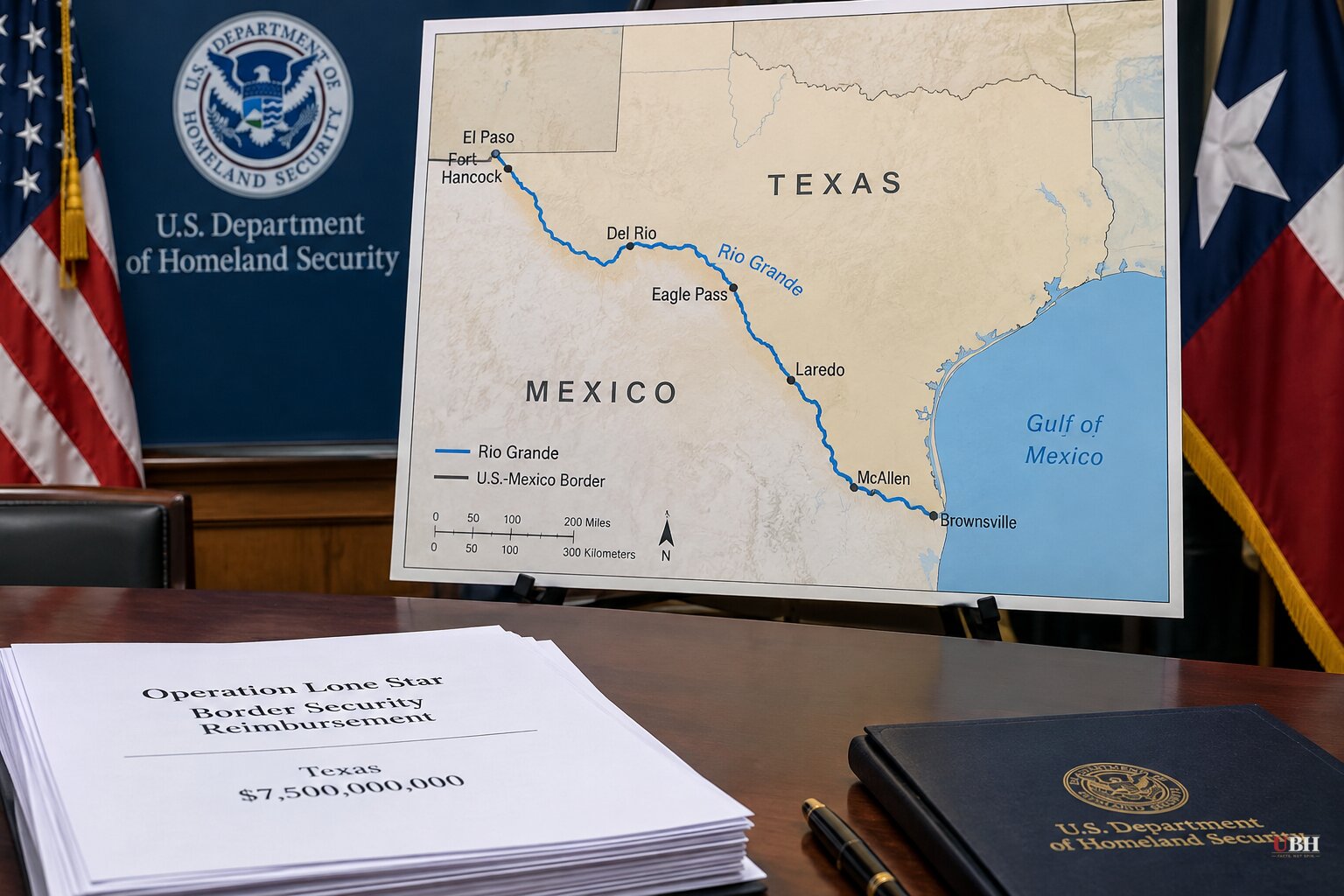
Texas is getting paid back. Gov. Greg Abbott announced Friday, September 18, 2026, that the Department of Homeland Security approved a $7.5 billion grant to reimburse the state for border security spending under then-President Joe Biden.
DHS and the Federal Emergency Management Agency signed off on the award Thursday, September 17, according to The Texas Tribune. Abbott said he got the confirmation directly from Homeland Security Secretary Kristi Noem.
"Texas held the line when Washington would not," Abbott said in his statement. "Texas taxpayers spent billions to stop illegal crossings, catch criminals and seize deadly drugs. This reimbursement is a victory for those taxpayers."
The Numbers
Texas has spent more than $11 billion on Operation Lone Star since launching it in March 2021, according to the Tribune and Texas Border Business. That money paid for border wall construction, river buoys, fencing, and deployments of the Texas National Guard and Department of Public Safety troopers.
Congress created the $10 billion State Border Security Reinforcement Fund through the One Big Beautiful Bill Act, which President Trump signed in early July 2025. Texas applied for reimbursement in June 2026 and is getting $7.5 billion of that $10 billion pot, or three-quarters of the total, confirming an estimate Sen. John Cornyn gave in August. FOX 7 Austin reported the fund allows reimbursement for eligible border expenditures dating back to January 20, 2021, the day Biden took office.
That leaves roughly $2.5 billion still available to other states that spent their own money on border enforcement. Thursday was the final day for states to apply, per the Tribune, so Texas' final share isn't final until DHS finishes processing every application.
A Year-Plus of Waiting
The gap between when Congress approved the money and when it actually landed is significant. Abbott asked for full reimbursement in the first week of Trump's second term, back in January 2025. The bill authorizing the fund became law in July 2025. DHS didn't post the formal notice of funding opportunity until June 2026, then extended the application deadline, according to the Tribune.
Cornyn, a Republican and one of the lawmakers who pushed hardest to get the fund into the bill, told the Tribune in August 2026 that getting the money out of the federal bureaucracy felt like "pulling teeth." In November 2025, Cornyn joined Rep. August Pfluger and Sen. Ted Cruz in a letter to DHS and the Department of Justice demanding the agencies move faster and cover the full $11.1 billion Texas said it spent.
A Republican-controlled DHS, under a Republican administration, sat on a Republican legislative priority for well over a year while the state's own GOP senators publicly complained. Government moving slow isn't a partisan trait.
The Crossing-Reduction Claim
Abbott's office says Operation Lone Star reduced illegal crossings by more than 80%. FOX 7 Austin reported that figure without additional data or a timeframe attached to it.
Texas Border Business flagged the same gap, noting the 80% number is "the governor's characterization" and that border crossing numbers are also shaped by federal enforcement policy and broader migration trends, not state action alone. Operation Lone Star ran alongside federal policy shifts under both Biden and Trump, and separating out exactly how much of any crossing decline traces to Texas troopers and buoys versus Washington's own enforcement posture, or migration patterns across Latin America, isn't something the governor's press release can settle on its own. No independent verification of the 80% figure appears in any of the available reporting.
What's Next
House Budget Chairman Jodey Arrington, R-Texas, called the payout "restitution" owed to Texans who he said were "double taxed to foot the bill for Biden's dereliction of duty." That's Arrington's characterization of the underlying legal and moral question, not an established finding by any court or agency.
Texas isn't done asking for money. The state is separately pursuing a share of a $3 billion Department of Justice pool for immigration-related law enforcement costs, according to Abbott's office. The Center Square reported that DOJ has already awarded funds from that program to Kendall County, Texas, though the state's own application outcome hasn't been announced.
The $7.5 billion will show up in budget talks when the Texas Legislature convenes in January 2027, according to Ground News. How Abbott and state lawmakers decide to spend a windfall that size, replenish state reserves, fund more border infrastructure, or something else, is the next question worth watching.
Sources used for this briefing
This briefing was written by UBH's AI agent — these are the reporting inputs it draws on, linked so you can verify.


