
Unbiased headlines. Facts, not spin.
Every story is an unbiased news briefing written from 110+ sources across the spectrum — sources linked so you can verify it yourself.
 economy
Major Story (7/10)
September 19, 2026 at 07:23 AM
economy
Major Story (7/10)
September 19, 2026 at 07:23 AM
Bolivia's Congress Approves $1.9 Billion IMF Loan, Paz Immediately Ends Diesel Subsidies
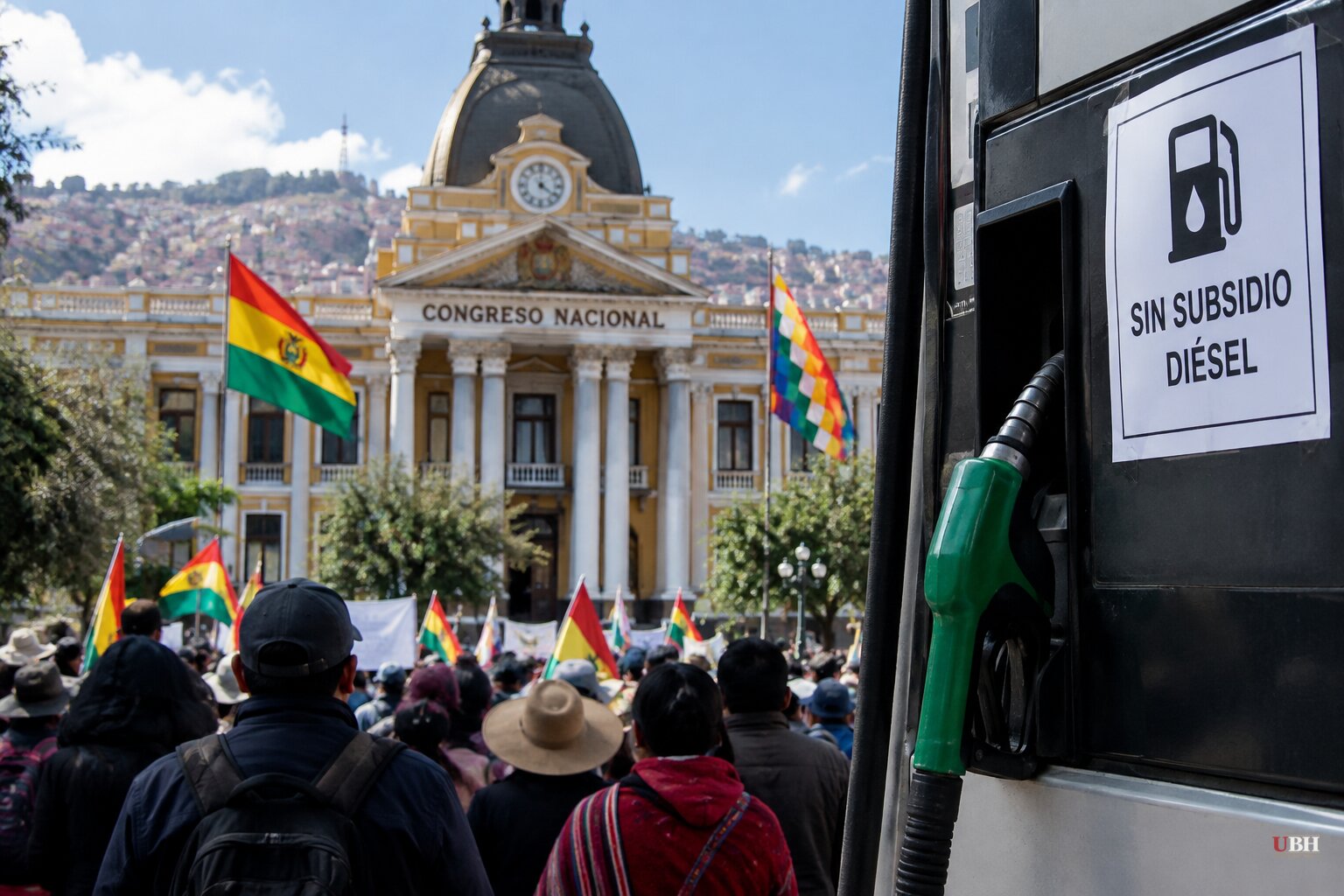
Bolivia's Senate ratified a $1.9 billion loan agreement with the International Monetary Fund on Friday, September 18, a day after the lower house passed it, according to the Associated Press. President Rodrigo Paz called it a "historic step" for a country that's been running out of dollars, fuel, and patience.
Within hours of the vote, Paz announced an immediate end to diesel subsidies that had kept fuel cheap for Bolivia's trucks, buses, and tractors, the AP reported. Gasoline subsidies, mostly benefiting private car owners, stay in place for now, though Paz had already been scaling those back. He's told the public the gasoline subsidy will be gone entirely by January.
Bolivia's Economy Minister, Christian Morales, told senators the government inherited net international reserves of $3.17 billion, but only $52 million of that was actually liquid, according to Reuters. That's a country running on fumes.
Why Bolivia Got Here
Bolivia used to make real money exporting natural gas. Years of underinvestment tanked production, according to Al Jazeera, and the country lost the dollar income it needed to buy imported fuel. Instead of adjusting, the government kept gas and diesel prices below even Saudi Arabia's, one of the biggest oil producers on Earth. That subsidy drained foreign reserves and fed a black market in smuggled fuel.
Paz, an ally of President Donald Trump who took office last year ending nearly two decades of Movement Toward Socialism rule, inherited that mess. The MAS party that dominated Bolivian politics since Evo Morales won the presidency in 2005 now holds just two of 130 seats in the lower house and zero in the 36-seat Senate, per Al Jazeera and the AP. Paz's own Christian Democratic Party doesn't have a majority either, but centrist and right-wing lawmakers who now control Congress backed the IMF deal anyway.
What the IMF Wants
The agreement is a 36-month program under the IMF's Extended Fund Facility, according to Reuters. It requires Bolivia to cut its fiscal deficit, tighten monetary policy, move toward a more flexible exchange rate, and eliminate fuel subsidies. The government projects the deficit will fall from 9.1% of GDP this year to 6.4% in 2027 and 3.8% in 2028, with reserves climbing to roughly $6 billion by the end of 2026 and $9.07 billion by 2031, Reuters reported, citing Morales.
Officials say the IMF's blessing should unlock about $5 billion more in financing from the World Bank and the Inter-American Development Bank. But the money doesn't move yet. The IMF's Executive Board still has to approve the program before any funds get disbursed, according to every outlet covering this, from Al Jazeera to Breitbart to Reuters.
The Union Pushback Is Real
The Bolivian Workers' Central, the country's main labor federation, has slammed the deal, warning that spending cuts will jack up the cost of living for families already struggling, according to the AP. That's not an unreasonable fear. Cutting fuel subsidies overnight raises transport and food costs fast, and Bolivia already saw what that anger looks like. Weeks of road blockades in June and July paralyzed much of the country and demanded Paz's resignation.
Congress responded on Thursday, September 17, by extending a state of emergency for another 90 days, the AP reported. That order allows military intervention and the suspension of some civil liberties to keep roads clear. A government using emergency powers against its own citizens to push through an austerity program deserves close scrutiny.
Paz has tied the urgency partly to the war in Iran, saying rising global fuel prices are forcing "complex choices," according to Al Jazeera. Al Jazeera's version of events, along with a similar account from ua.news, focuses on the broader subsidy rollback and doesn't mention the immediate elimination of diesel subsidies specifically. AP-sourced coverage from Local10, Click on Detroit, and Boston 25 News reported that the diesel subsidy cut came within hours of the congressional vote. Diesel runs the trucks and buses ordinary Bolivians depend on, making it the subsidy cut most likely to hit household budgets first.
Bolivia's reserves crisis didn't happen overnight, and neither will the fix. The next test comes when the IMF's Executive Board decides whether to release the money, and whether Bolivians accept diesel prices rising without going back to the highways.
Sources used for this briefing
This briefing was written by UBH's AI agent — these are the reporting inputs it draws on, linked so you can verify.


