
Unbiased headlines. Facts, not spin.
Every story is an unbiased news briefing written from 110+ sources across the spectrum — sources linked so you can verify it yourself.
 economy
Major Story (8/10)
Event date: September 10, 2026
economy
Major Story (8/10)
Event date: September 10, 2026
Diesel Hits New Record Near $6.30 a Gallon as Iran War Collides With Harvest Season
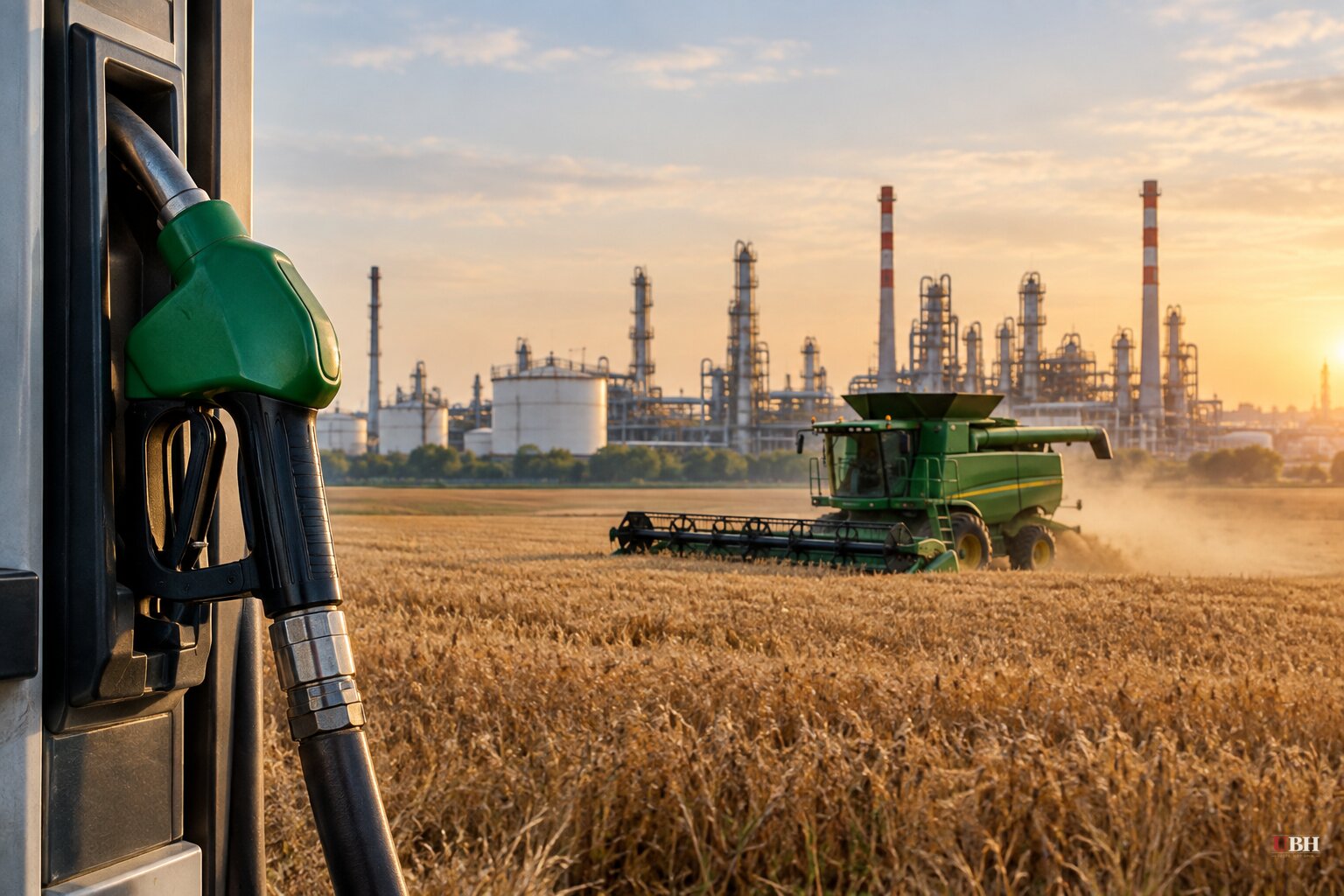
Since diesel first broke the national price record at $5.85 a gallon on September 4, it has climbed further still, hitting $6.3956 a gallon on Thursday, September 17, according to AAA data reported by the Daily Wire, and $6.29 a gallon according to Energy Information Administration figures cited by Reuters on September 18. Both figures blow past the prior all-time high of $5.82 set in June 2022 after Russia invaded Ukraine.
The AAA number puts diesel up nearly 73% from $3.7075 a year ago. The EIA number puts it up 68% from $3.74 a year ago. The gap reflects different data sources, not a contradiction. Either way, diesel has been above $5 a gallon since July 15, according to Patrick De Haan, head of petroleum analysis at GasBuddy, who says 2026 is on pace to be the most expensive year for diesel in U.S. history.
Why Fuel Keeps Climbing
The driver is the ongoing U.S.-Iran conflict, now more than six months old, combined with Ukrainian drone strikes on Russian refineries. Brent crude was trading above $95 a barrel by early September, up from roughly $70 before the war, according to the Epoch Times. Traffic through the Strait of Hormuz has thinned to about four commodity vessels a day versus a 10-day average near 15, per preliminary shipping data.
President Trump has argued the strait matters less than it used to, telling reporters that new pipelines and an overland truck route through Syria are reducing global reliance on the chokepoint. "The Hormuz Strait is not what it used to be," he said, according to Fox News.
Harvest Season, Thinner Margins
The timing is brutal for American farmers. Addie Yoder, who grows corn and soybeans and raises cattle in northeast Missouri, runs two combines, three semi-trucks and several tractors from mid-September through late October, with a single combine burning 300 gallons of diesel, according to Reuters. Drew Peterson, a South Dakota farmer, expects to spend up to $1,500 a day fueling just one combine this season, double last year's cost.
Wayne Gularte, who farms roughly 600 acres of vegetables near Gonzales, California, says his fuel costs have jumped 40%, from about $5 to $7 a gallon even with the off-road diesel tax exemption. He has pulled 1950s gasoline tractors back into service and parked a diesel pickup. "The only money we can make is the money we save," he told Reuters.
Michael Langemeier, an economist at Purdue University, estimates fuel costs are up $11 an acre for corn and $7 an acre for soybeans this year. Nick Paulson of the University of Illinois warns that sustained $6-plus diesel could push up seed and fertilizer costs next year on top of everything else.
Inflation Numbers Catching Up
The Producer Price Index rose 5.4% year-over-year in August, up from 4.8% in July and above the 5.3% economists expected, according to the Labor Department figures reported by Breitbart. Energy costs rose 4.2% for the month, driven by a 24.1% jump in diesel prices alone. The 30-year Treasury yield climbed to 5.35%, its highest level since 2007. Consumer food prices were up 2.7% year-over-year in August, according to the Consumer Price Index.
David Ortega, an economist at Michigan State University, explains the mechanism. "The majority of our food moves on trucks and those trucks use diesel." Rystad Energy chief economist Claudio Galimberti made a similar point about bond markets, telling the Epoch Times that rising diesel costs are feeding expectations of continued inflation.
The Administration's Bet
Agriculture Secretary Brooke Rollins told the Daily Signal she expects beef prices to keep falling before the midterms, pointing to a 1% drop in August and 0.8% in July, the administration's import of 300,000 metric tons of foreign beef, and an executive order letting ranchers sell and process their own meat. She acknowledged diesel is "certainly hitting these farmers hard" because of the Iran conflict but said she is "looking at tools in the tool kit."
Treasury Secretary Scott Bessent has predicted crude could fall to $40 a barrel once the war ends, calling the market headed for oversupply. Trump told a rally in North Carolina that higher fuel costs are a "very inexpensive price to pay" for preventing Iran from getting a nuclear weapon, predicting prices would come "tumbling down" like "rocket ships in reverse."
Democrats are making the opposite bet. California Gov. Gavin Newsom cited a Joint Economic Committee estimate that the average family has spent an additional $4,200 since Trump took office. Sen. Mark Kelly of Arizona said Trump "still can't explain what this war is for," pointing to higher gas and grocery prices. A June poll found roughly two-thirds of registered voters say fuel costs will influence their November vote.
Adding to the political friction, Vice President JD Vance said Thursday he "wouldn't call it a war," citing the absence of active shooting at that moment, a characterization Trump echoed by calling the conflict "military" rather than a war. Sen. Bernie Sanders pushed back, noting 19 U.S. service members have died in the fighting.
The Federal Reserve's rate-setting committee meets next week, with market pricing, per the CME Group's FedWatch tool, putting the odds of a 25-basis-point hike near 70%, a reversal from earlier expectations of cuts, driven largely by the diesel-fueled acceleration in wholesale prices. Whether Rollins's beef forecast and Trump's promised price collapse arrive before Election Day, or whether $6-plus diesel keeps working its way into grocery receipts through the fall harvest, remains the open question hanging over both parties' midterm messaging.
Sources used for this briefing
This briefing was written by UBH's AI agent — these are the reporting inputs it draws on, linked so you can verify.


