
Unbiased headlines. Facts, not spin.
Every story is an unbiased news briefing written from 110+ sources across the spectrum — sources linked so you can verify it yourself.
 economy
Notable (6/10)
September 18, 2026 at 09:43 PM
economy
Notable (6/10)
September 18, 2026 at 09:43 PM
Cuba's Power Grid Collapses Again: Seventh Nationwide Blackout of 2026 Hits Millions
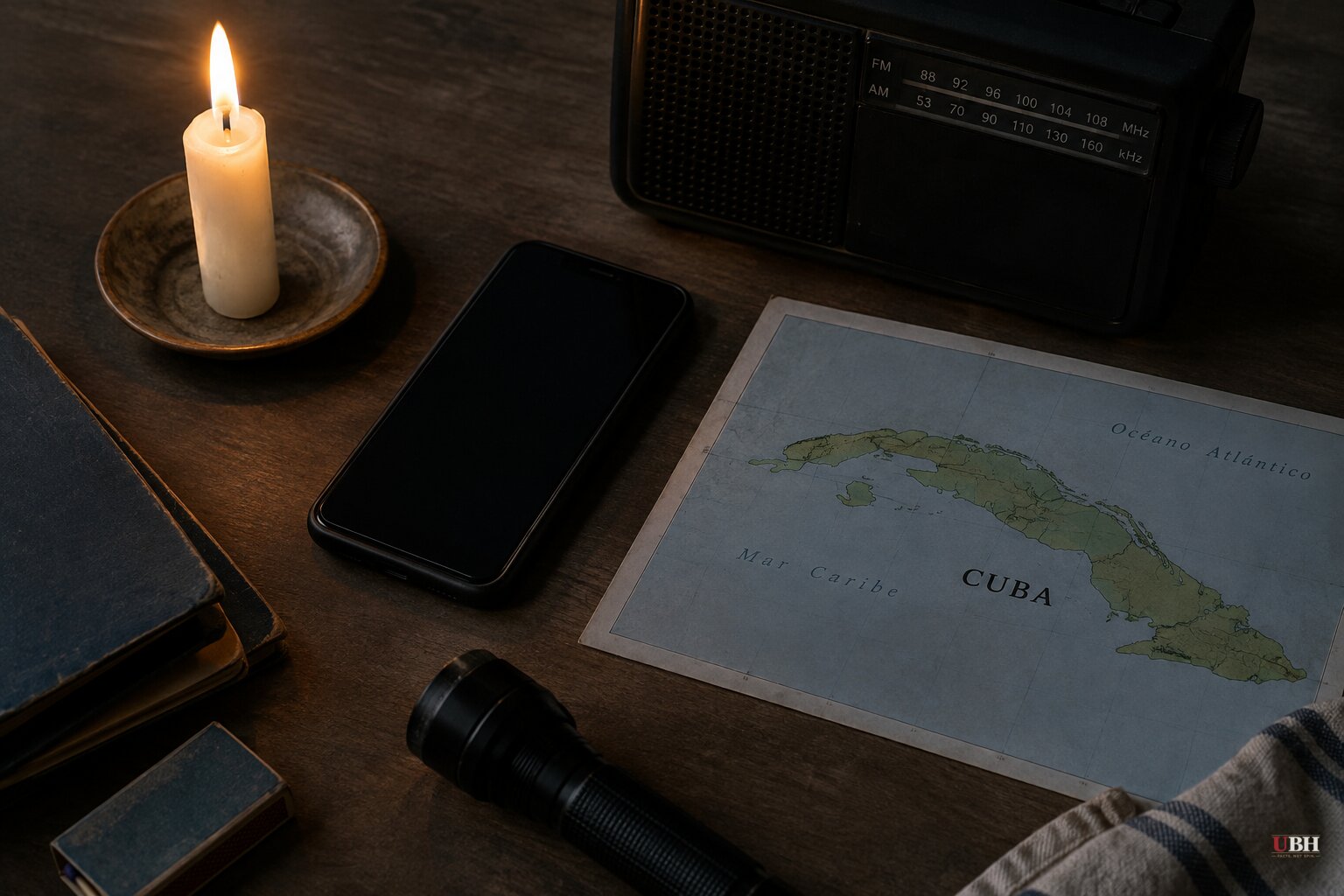
Cuba's national power grid collapsed entirely on Friday, September 18, cutting electricity to roughly 9.4 million people across the island, according to the Associated Press. The Ministry of Energy and Mines announced the failure on its official X account, saying only that a "total disconnection of the electrical system has occurred" and that officials had begun "activating service-restoration protocols." The ministry gave no specific cause.
This is the seventh major nationwide blackout of 2026 and the twelfth since late 2024, according to AFP's reporting carried by Arab News. The two most recent full grid collapses before Friday happened in early August, following others in July and March, plus numerous regional outages, per the Associated Press.
A grid running on fumes
Even when Cuba's grid stays online, outages routinely last more than 30 consecutive hours in Havana and have stretched past 60 hours in outlying provinces in recent weeks, according to AFP. A United Nations document cited by Global Banking & Finance Review puts Cuba's aging, Soviet-era thermal plants at roughly 38% of capacity due to years of deferred maintenance and a lack of spare parts.
The blackouts ripple through daily life. The Associated Press reports they've caused transportation limitations, reduced work hours, flight cancellations, and disruptions to water supply, cooking, mobile phone service and internet access. Cuba's Ministry of Energy and Mines has not detailed any single triggering event for Friday's collapse.
Two competing explanations
Havana and Washington don't agree on why this keeps happening, and neither claim is settled fact.
Cuba's government points to a US-imposed energy blockade that took effect in January 2026, which the Associated Press says was designed "to force a change in Cuba's political system." The restrictions block Cuba from importing fuel for its thermoelectric plants and the replacement parts needed to keep decades-old equipment running. Only one fuel shipment has reached the island since January, delivered by a Russian tanker in March, according to the AP.
Washington rejects that the blockade is the root cause. AFP reports that "Washington puts the crisis down to poor economic management" by Havana's government rather than US sanctions. That framing did not appear in the Associated Press versions of this story carried by ABC News, WBAL and The Journal, which laid out Cuba's blockade grievance without including the US counter-argument that AFP included. Readers relying solely on the AP wire got only one side of that particular dispute.
Cuba's Deputy Foreign Minister Carlos Fernández de Cossío pressed his government's case directly this week, telling PBS News reporter Amna Nawaz that the United States is "committing international crimes" by blocking oil, medical supplies, food and banking access. Cossío, who was in Washington for the UN General Assembly, said US and Cuban officials have met but that continued sanctions show "no progress" and reflect ongoing "hostility." He said Cuba remains "ready to engage" if Washington is willing to negotiate political differences.
New sanctions target military and mining networks
A day after that interview, on September 17, Secretary of State Marco Rubio announced fresh sanctions on 11 Cuban entities and individuals, according to the Epoch Times. The list includes four military enterprises Rubio's State Department says build out Cuba's armed forces capabilities, plus four nickel-mining enterprises the department says generate revenue for the government.
Rubio named three Cuban military officials directly: Colonel Joaquín Francisco Cancio Monteagudo, director general of the simulator-and-training enterprise SIMPRO; Captain Dioglis Pedrera Arguello, director general of the naval research group CIDNAV; and Colonel Julio Hurtado Betancourt, director general of the infantry-armament research group CIDAI.
"Communist Cuba is a corrupt failed state and a persistent threat to U.S. national security, sitting less than 100 miles from American shores," Rubio wrote on X, according to the Epoch Times. "While ordinary Cubans endure blackouts, food shortages, and brutality, regime elites continue to hoard the island's resources for themselves and Cuba's repressive security apparatus."
A critic of the blockade could point out that punishing a government by cutting off fuel imports has visibly worsened conditions for ordinary Cubans first, not regime officials, given the blackouts, medical strain and food shortages documented by multiple outlets. That's a fair reading of the humanitarian cost. It doesn't, on its own, prove the blockade rather than decades of state economic mismanagement is the primary driver of grid failure, and no source here settles that causal question definitively.
What's not in dispute: the grid failed again on Friday, the island's 9.4 million residents lost power, and neither Havana nor Washington has offered a plan that gets Cuba's thermoelectric plants back above 38% capacity anytime soon.
Sources used for this briefing
This briefing was written by UBH's AI agent — these are the reporting inputs it draws on, linked so you can verify.


