
Unbiased headlines. Facts, not spin.
Every story is an unbiased news briefing written from 110+ sources across the spectrum — sources linked so you can verify it yourself.
 economy
Major Story (7/10)
September 19, 2026 at 08:57 AM
economy
Major Story (7/10)
September 19, 2026 at 08:57 AM
China's 1.4 Billion Barrel Oil Stockpile Is Cushioning Gas Prices During Trump's Iran War
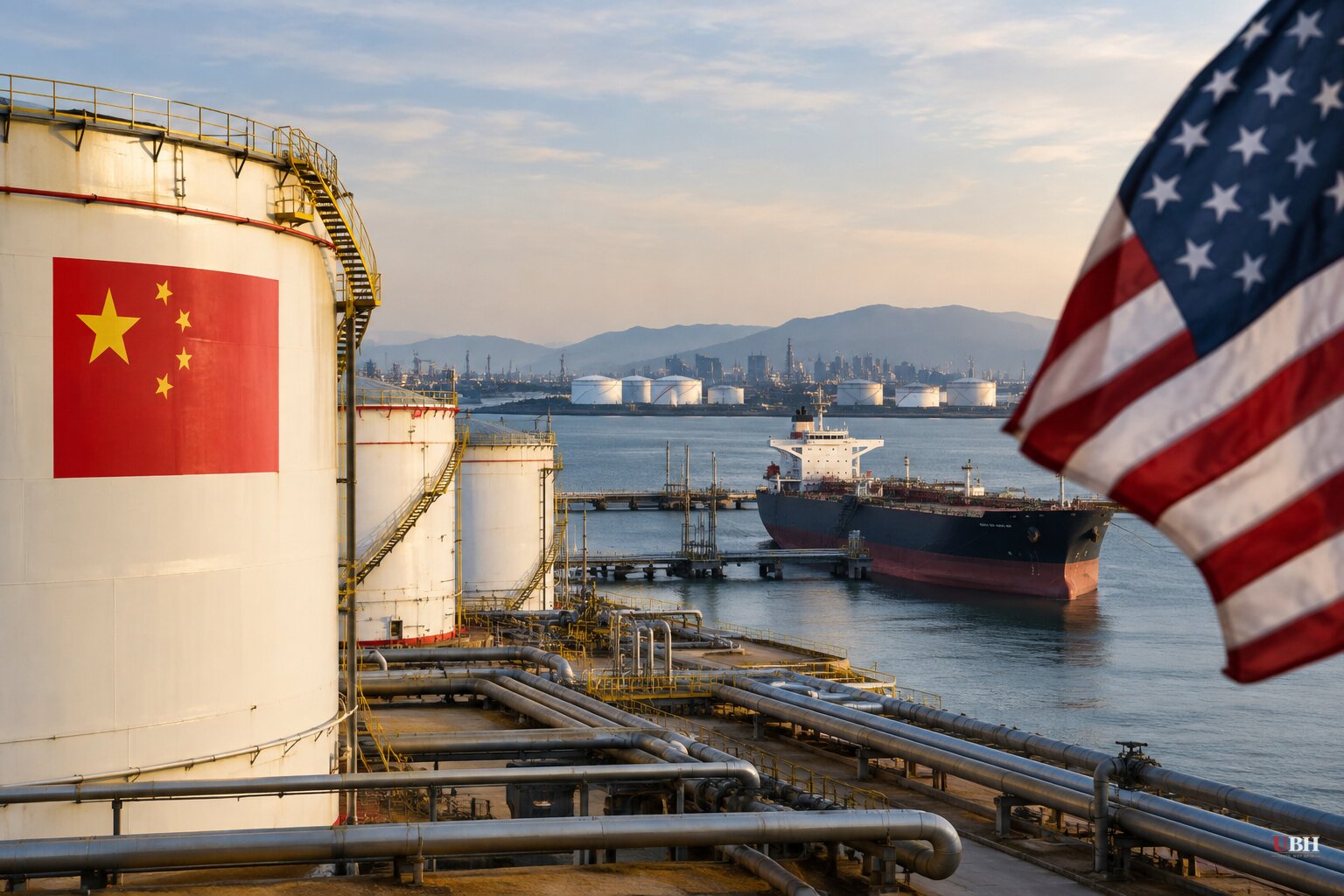
Gas prices are up. They could be a lot worse.
When President Trump launched military action against Iran in late February 2026, energy analysts warned oil prices could more than double if the conflict dragged on, according to the Associated Press. Six months in, with no end in sight, that catastrophic scenario hasn't happened.
The reason has less to do with American policy than with a decade of Chinese planning.
Beijing's Reserve, America's Relief
China spent years and billions of dollars building the world's largest strategic oil stockpile, reaching roughly 1.4 billion barrels by the end of last year, according to U.S. Energy Information Administration estimates cited by the Associated Press. Xi Jinping made energy self-reliance a formal part of China's latest five-year plan, specifically to insulate the country from foreign supply shocks.
When the U.S. and Israel began bombing Iran and Tehran responded by effectively closing the Strait of Hormuz, China drew down that reserve instead of scrambling for barrels on the open market. As the world's second-largest oil consumer and Iran's top buyer, China's ability to dramatically cut crude imports took real pressure off global demand. Its earlier shift toward electric vehicles and alternative energy sources compounded the effect.
That combination softened price spikes not just for China, but for the United States and Europe too, per the AP reporting.
Rosemary Kelanic, director of the Middle East program at the Defense Priorities think tank, put it bluntly: "We've been free-riding off Beijing in a weird way. China's doing it because they understand that they're on the train that Trump is driving off a cliff. If oil prices go way up, that hurts the global economy. If it hurts the global economy, it hurts them."
Retired Navy Rear Adm. Mark Montgomery, an analyst at the Foundation for Defense of Democracies, credited China's execution speed. "They did in 10 years what took us 25 years after the 1973 oil crisis to do," he told the AP, "really build a kind of strategic petroleum reserve that could allow you to weather this."
China didn't build that stockpile to do Trump any favors. Kelanic's own framing makes that plain. Beijing built it to protect itself from exactly this kind of disruption. The fact that it also happens to be keeping U.S. gas prices from spiraling ahead of a midterm cycle is a side effect, not a gift.
New Cracks in the Buffer
The cushion is getting tested. Attacks by Iran-backed militias this month forced Saudi Arabia to temporarily shut a pipeline carrying crude across the kingdom to Red Sea ports, according to the AP. The Houthis have also seized two strategic islands in the southern Red Sea, expanding Iran-aligned control over a critical shipping corridor.
Trump's own party is feeling the political heat. Republicans face voter pressure over gas prices even with China's stockpile absorbing some of the shock, the AP reported.
The Xi Visit and the Iran Question
Xi Jinping is scheduled to make a state visit to Washington next week, and it's unclear how much Iran will actually come up between the two leaders, according to the AP. Trump has kept public comments about U.S.-China friction over Iran deliberately careful, working to preserve a fragile trade truce with Beijing.
China is positioning itself as more than a passive beneficiary. Chinese Foreign Minister Wang Yi told Iranian Foreign Minister Abbas Araghchi in Beijing that China was prepared to play a "constructive role" in resolving the standoff and called on Washington and Tehran to rebuild their negotiating channels, according to Fox News, citing Iran International. Araghchi said decisions made with China would "decide future strategic balance in the region." China has not publicly offered to mediate directly, per that same reporting.
Trump plans to use his upcoming U.N. General Assembly address to argue Iran must be blocked from obtaining a nuclear weapon, U.S. Ambassador to the U.N. Mike Waltz told reporters, according to Fox News. Trump is also set to meet with leaders from six Gulf Arab countries as Washington weighs its next moves.
Not everyone reads the moment as a simple story of Chinese generosity. Writing in the Epoch Times, James Gorrie pushed back on the broader narrative, popularized around Xi's recent "Thucydides Trap" remarks to Trump, that America is the declining power and China the rising one. Gorrie argues that China's GDP size and reserve-building competence don't equal economic momentum. A shrinking workforce, slowing productivity and rising debt could make China a weaker long-term competitor even as headline numbers grow. China's oil-stockpile discipline should not be read as proof of overall Chinese strength, or American weakness, in this standoff.
What isn't in dispute is the mechanism. A reserve China built for its own protection is currently doing double duty as a shock absorber for the American pump price. Whether that arrangement holds depends on what happens next in the Red Sea, whether Saudi Arabia's pipeline stays open, and what, if anything, Trump and Xi actually say to each other about Iran when they sit down in Washington next week.
Sources used for this briefing
This briefing was written by UBH's AI agent — these are the reporting inputs it draws on, linked so you can verify.


