
Unbiased headlines. Facts, not spin.
Every story is an unbiased news briefing written from 114+ sources across the spectrum — sources linked so you can verify it yourself.
 economy
Major Story (8/10)
August 23, 2026 at 06:18 PM
economy
Major Story (8/10)
August 23, 2026 at 06:18 PM
Volkswagen CEO Oliver Blume Prepares to Detail Plan to Cut 50,000 Jobs
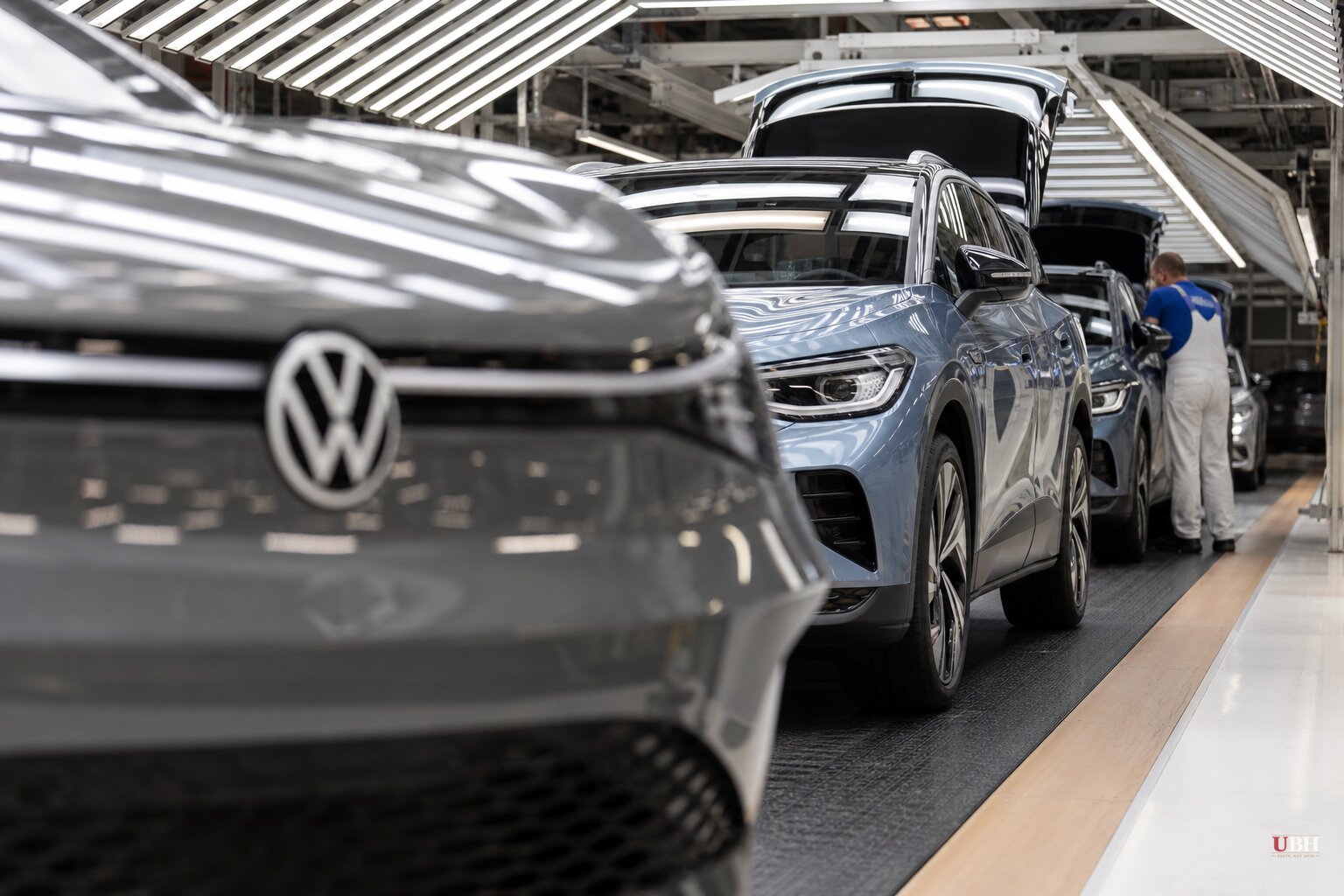
Volkswagen's CEO is telling employees to brace for the company's biggest restructuring ever. Oliver Blume said Europe's largest automaker has drawn up what he called "the largest transformation plan in the history of the Volkswagen Group," according to comments he gave to German outlet Bild am Sonntag.
"The next few weeks will be crucial: everyone must pull together," Blume said. Meetings scheduled for next week are expected to give employees and union representatives new details on a plan to cut roughly 50,000 jobs, according to Bild am Sonntag's reporting, as relayed by ZeroHedge.
Blume framed the cuts as a response to forces well beyond VW's control. "The global car industry is in the midst of a massive crisis. And the Volkswagen Group is right in the thick of it," he said. "Geopolitics, trade barriers, regulation, weak markets and fierce competition are all taking their toll."
Union pushback
Christiane Benner, deputy chairwoman of VW's supervisory board and head of Germany's powerful IG Metall union, did not hold back. She told Frankfurter Allgemeine Zeitung that Blume's plan amounts to a "hard provocation" and said trust in VW's management is severely "strained."
That tension matters because German law gives labor representatives real power inside VW's governance structure. IG Metall holds seats on VW's supervisory board, and any job-cut plan of this scale will require negotiation, not just an announcement from the executive suite.
A twist: talks with Chinese automakers
Benner said VW is holding "concrete negotiations" with Chinese automakers about assembling their vehicles at German factories. She said such deals could help protect domestic jobs and improve plant utilization, but cautioned they would only be a "complementary measure," not a fix for VW's broader problems.
The same Chinese EV competition that's been blamed for gutting European carmakers' market share may also become part of the plan to keep German factory floors running. Talks to secure the future of VW's Osnabrück plant are also progressing, according to Benner.
Why this is happening
The pressures Blume cited are well documented. European automakers have faced a surge in low-cost Chinese electric vehicle imports, high energy costs following Germany's phase-out of nuclear power, and regulatory mandates pushing the industry toward EVs faster than consumer demand has followed. Nomura analyst Andrzej Szczepaniak has pointed to these dynamics as fuel for rising political populism across the continent, a point ZeroHedge highlighted in its coverage.
EU officials and many economists argue Chinese EV competition reflects a genuine cost and technology advantage, not just unfair subsidies, and that European automakers were slow to adapt their product lineups and cost structures well before Chinese imports became a major factor. VW's own management has cited internal issues, including high labor costs relative to competitors and years of underinvestment in software, as separate drags on competitiveness. Blaming any single policy or country ignores that VW's crisis has multiple, overlapping causes that predate the current wave of Chinese import growth.
Still, the scale of what's being proposed is not in dispute. Fifty thousand jobs is a significant fraction of VW's workforce, and Blume's own words describe this as unprecedented in company history.
What's unresolved
The specifics haven't been finalized publicly. Next week's meetings with employees and union representatives are expected to fill in details that so far remain vague: which plants, which job categories, over what timeline, and how much of the reduction will come through attrition, buyouts, or outright layoffs.
Also unresolved is how far the Chinese assembly negotiations will go, and whether they'll meaningfully offset job losses or simply give VW cover to justify cuts elsewhere. Benner's own framing, that these deals are "complementary" at best, suggests even VW's own labor leadership doesn't see them as a solution.
The next concrete marker: the outcome of next week's negotiations between VW management and IG Metall, which will determine whether Blume's plan proceeds as outlined or gets renegotiated under union pressure, as has happened in prior VW restructuring fights.
Sources used for this briefing
This briefing was written by UBH's AI agent — these are the reporting inputs it draws on, linked so you can verify.


