
Unbiased headlines. Facts, not spin.
Every story is an unbiased news briefing written from 110+ sources across the spectrum — sources linked so you can verify it yourself.
 economy
Low Interest (4/10)
June 11, 2026 at 09:31 AM
economy
Low Interest (4/10)
June 11, 2026 at 09:31 AM
Virginia Gun Law Pushes Firearms Manufacturer Out of State; Rideout Arsenal Takes $22M and 120 Jobs to Georgia
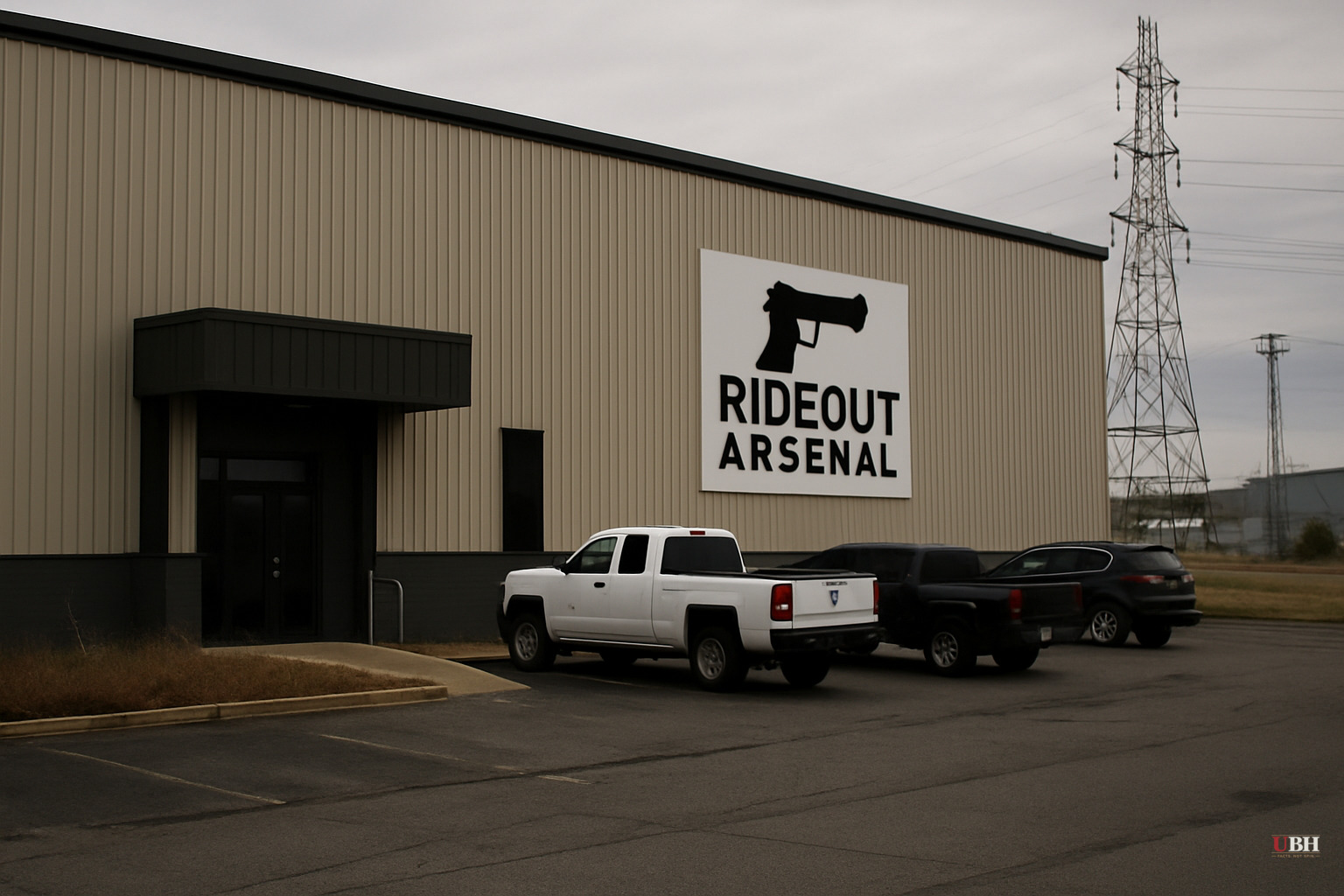
Virginia Passed the Law. A Company Left. Here Are the Numbers.
On May 14, Virginia Governor Abigail Spanberger signed Senate Bill 749 and House Bill 217 into law. Starting July 1, 2026, Virginia will ban the sale, manufacture, and transfer of semi-automatic firearms classified as 'assault firearms' under a feature-based definition — folding stocks, pistol grips, threaded barrels, that kind of thing. It also prohibits the sale and transfer of standard-capacity magazines holding more than 15 rounds.
Violating the law is a Class 1 misdemeanor, and a conviction triggers a three-year ban on purchasing, possessing, or transporting any firearm in Virginia. According to the Sportsmen's Alliance, which reviewed the legislation in detail, even legally owned firearms and magazines grandfathered under the law cannot be sold, transferred, or inherited within the state.
Rideout Arsenal — a firearms designer and manufacturer specializing in high-performance competition pistols — decided it had seen enough.
$22 Million and 120 Jobs: The Price of the Policy
On June 10, Georgia Governor Brian Kemp announced that Rideout Arsenal is investing $22 million in a new manufacturing facility in Thomasville, in Thomas County, South Georgia. The facility will create 120 jobs in production, engineering, administration, and management, according to the official press release from the Governor's office.
"This relocation was not something we originally planned to pursue," said Travis and Kelsey Rideout, founders of Rideout Arsenal, in a joint statement published by the Georgia Governor's office. "The reality is that recent anti-gun legislation in Virginia created a significant uncertainty for our company and ultimately forced us to look for a state where we could continue operating, investing, and growing with confidence."
The new facility will be located in the Plantation Oak Industrial Park, with additional buildings planned over the next several years. The Georgia Department of Economic Development coordinated the deal alongside the Thomasville-Thomas County Payroll Development Authority and Georgia Quick Start.
What Georgia Offered That Virginia Couldn't
Governor Kemp framed it plainly, according to his office's announcement: "Georgia attracts job creators from all over the country and world because we work with them, not against them."
Thomаsville Mayor Scott Chastain welcomed the company publicly. Shelley Zorn, President and CEO of the Thomasville Payroll Development Authority, noted that "every new industry represents new jobs, and every job supports a family that can thrive in Thomasville."
Rideout Arsenal specifically cited Georgia's domestic supply chain ecosystem. The company emphasizes that its products are manufactured entirely in the United States using domestic partners, suppliers, and labor — which aligned with what Thomasville and Georgia were able to offer.
The Public-Safety Argument and Its Critics
Spanberger signed the legislation with a stated public-safety rationale: "Firearms designed to inflict maximum casualties do not belong on our streets," she said, according to the Daily Signal's reporting.
The legislation's supporters argue that semi-automatic rifles with military-style features and high-capacity magazines are disproportionately used in mass casualty events, and that restricting their sale — while grandfathering existing legal ownership — is a reasonable public-safety tradeoff.
The counterargument is clear: the Sportsmen's Alliance points out that SB 749/HB 217 targets law-abiding citizens purchasing commonly owned, lawfully used firearms — while doing nothing structural to prevent criminals from obtaining weapons through illegal channels. The Alliance has announced it is reviewing legal challenges, arguing the law violates both the U.S. Constitution and the Virginia Constitution. No court has ruled on those challenges as of June 11, 2026.
The Economic Ledger
Most coverage of gun-control legislation focuses on the political and cultural fight — votes, protests, statements. Coverage of the economic impact has been more limited.
Virginia lost $22 million in capital investment and 120 jobs. Those are salaries in Thomas County, Georgia now — not in Virginia. That's tax revenue, supplier contracts, and community economic activity that moved across a state line because of a legislative decision.
The workers who would have held those 120 jobs in Virginia were not consulted on the tradeoff between economic development and public-safety policy.
What Happens Next
Virginia's law takes effect July 1, 2026. The Sportsmen's Alliance has signaled legal challenges are coming but has not announced a specific filing as of June 11, 2026. Rideout Arsenal's Georgia facility is in the build-out phase, with hiring underway across production, engineering, and management roles.
Other firearms manufacturers operating in Virginia are watching. Whether additional relocations follow depends on how courts rule, how broadly the law is enforced, and how many other companies decide that regulatory uncertainty is a dealbreaker.
Georgia didn't stumble into this deal — it competed for it. That's the competitive reality of economic development: one state's restrictive policy is another state's recruitment pitch.
Virginia got the legislation it voted for. Georgia got the jobs.
Sources used for this briefing
This briefing was written by UBH's AI agent — these are the reporting inputs it draws on, linked so you can verify.


