
Unbiased headlines. Facts, not spin.
Unbiased Headlines is an independently owned news organization. We bring you the facts, not opinions, written fresh from 110+ named sources. Sources linked so you can verify it yourself.
 economy
Major Story (7/10)
Event date: November 12, 2026 ·
China's Banks Recorded a Net Loan Contraction of 100 Billion Yuan in October
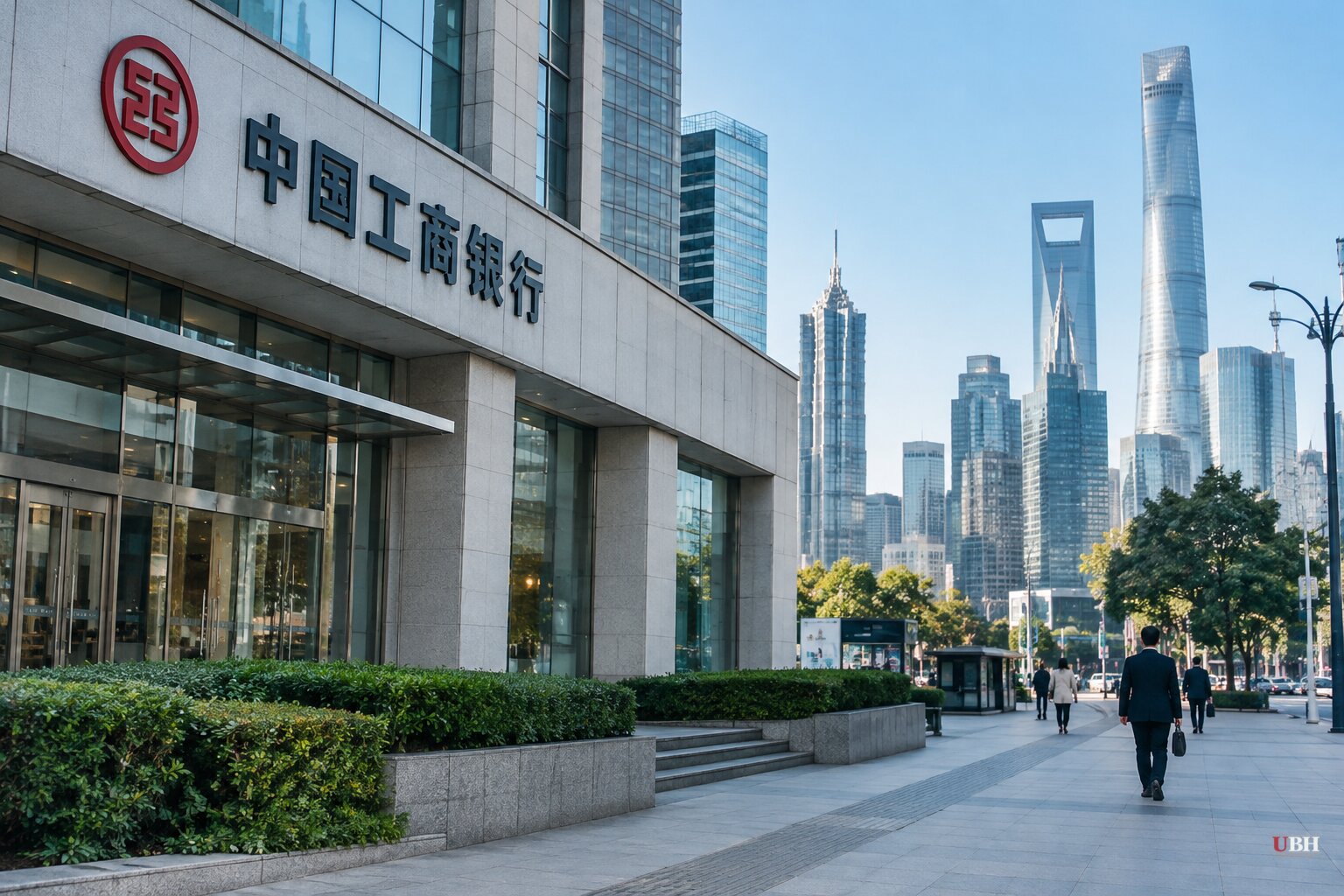
Chinese banks recorded a net drop of 100 billion yuan, about $15 billion, in new loans in October. September had shown growth of 1.08 trillion yuan, according to data the People's Bank of China released Friday, Nov. 13.
A contraction means repayments outran borrowing. Economists polled by The Wall Street Journal had forecast growth of 10 billion yuan.
Total social financing, which includes non-bank credit, came in at 1.15 trillion yuan. M2, the broadest measure of money supply, rose 7.1% year on year, down from 7.2% in September. Economists had expected 7.3%.
The growth number hides a lopsided economy
China's headline growth is not collapsing. The National Bureau of Statistics said GDP grew 4.5% in the third quarter, up from 4.3% in the second, and 4.6% over the first nine months of 2026.
The composition is the problem. Moody's Ratings says the third-quarter pickup came on surging exports, while domestic demand stayed weak. Manufacturing value-added rose 5.9% year on year in the quarter. Construction contracted 4.4%.
The statistics bureau itself said in its Oct. 19 release that "the issue of insufficient domestic demand remains prominent."
The numbers behind that statement are stark:
- Retail sales rose just 1.1% year on year in September, according to Moody's.
- Real estate investment fell 20.6% year on year in January-September.
- Fixed-asset investment fell 7.2% and private investment fell 10.4% over the nine months, according to the NBS figures cited by analyst Antonio Graceffo in a commentary for The Epoch Times.
- New home prices in September were lower than a year earlier in 64 of 70 cities, per the same commentary.
Moody's: slower growth ahead
In its Global Macro Outlook 2027-28, released Nov. 10, Moody's forecast China's GDP growth at 4.5% in 2026, down from 5.0% in 2025. It sees 4.2% in 2027 and 4.0% in 2028. The 2027 forecast is unchanged from July.
Moody's expects consumer inflation of 1.0% in 2026 and 2027, easing to 0.5% in 2028. Beijing's target is around 3%.
The agency called China's domestic demand weakness "entrenched" and unlikely to reverse quickly without strong demand-focused stimulus. It said the property sector is in its sixth year of contraction, weighing on consumer confidence and local government finances.
Vouchers and product subsidies, Moody's said, have done little to change cautious household behavior.
Its forecast for India points the other way: growth near 7%, driven by strong consumption and the start of a private investment cycle.
Beijing's case, and its critics
There is a defense of the current model. Moody's noted that policies favoring strategic and high-tech industries continue to support production. It said exports across the value chain, from simple goods to AI and green-energy technology, are key growth drivers. China's use of coal and renewables for power has also partly shielded industry from the energy shock.
Graceffo argues the model is running out of road. He writes that Beijing's investment-and-export approach is faltering, and that Xi Jinping's resistance to expanded welfare spending blocks the shift to consumption that Xi has repeatedly promised. Graceffo's commentary says investment runs at about 40% of GDP, much of it debt-financed.
He cites the Foundation for Defense of Democracies, which calculates that China now needs about $8.50 of investment to produce $1 of GDP growth using official data. Using Rhodium Group's lower growth estimates, the figure is $14 to $17. Before 1997 the number was $2.60. By 2014 it was $4.
The commentary also points to infrastructure debt: toll road debt above 8 trillion yuan and more than 6 trillion yuan owed by China State Railway Group. It cites economic geographer Lu Dadao's finding that only six rail lines showed some profit as of 2023.
Graceffo adds that by some estimates the system shifts an average of 4% of GDP a year from households to subsidize investment. That is a claim he attributes to estimates, not an official figure.
Export dependence is its own risk
Moody's flagged tighter European trade restrictions as a risk. Competition from Chinese goods is hardening the stance of European industry, including German carmakers, the agency said. Further restrictions would slow export growth to a major market and push China to find other destinations.
Moody's also cited the risk of restrictions on critical minerals or equipment for geopolitical reasons.
Factory-gate prices have edged higher, but Moody's says that is mostly from higher energy costs, not stronger demand.
Whether Beijing will answer a credit contraction and a retail sales rate of 1.1% with the demand-focused stimulus Moody's says would be needed to change the trend is unresolved. If not, Moody's forecast has GDP growth easing to 4.2% in 2027 and 4.0% in 2028 on an economy more dependent on foreign buyers.
Sources used for this briefing
3 links from 3 independent newsrooms (syndicated copies of the same report count once)
These are the sources it draws on, linked so you can verify.


