
Unbiased headlines. Facts, not spin.
Unbiased Headlines is an independently owned news organization. We bring you the facts, not opinions, written fresh from 110+ named sources. Sources linked so you can verify it yourself.
 economy
Major Story (7/10)
Event date: November 12, 2026 ·
Bessent Announces Plan to Stop Benefit Recipients From Wiring Money Abroad
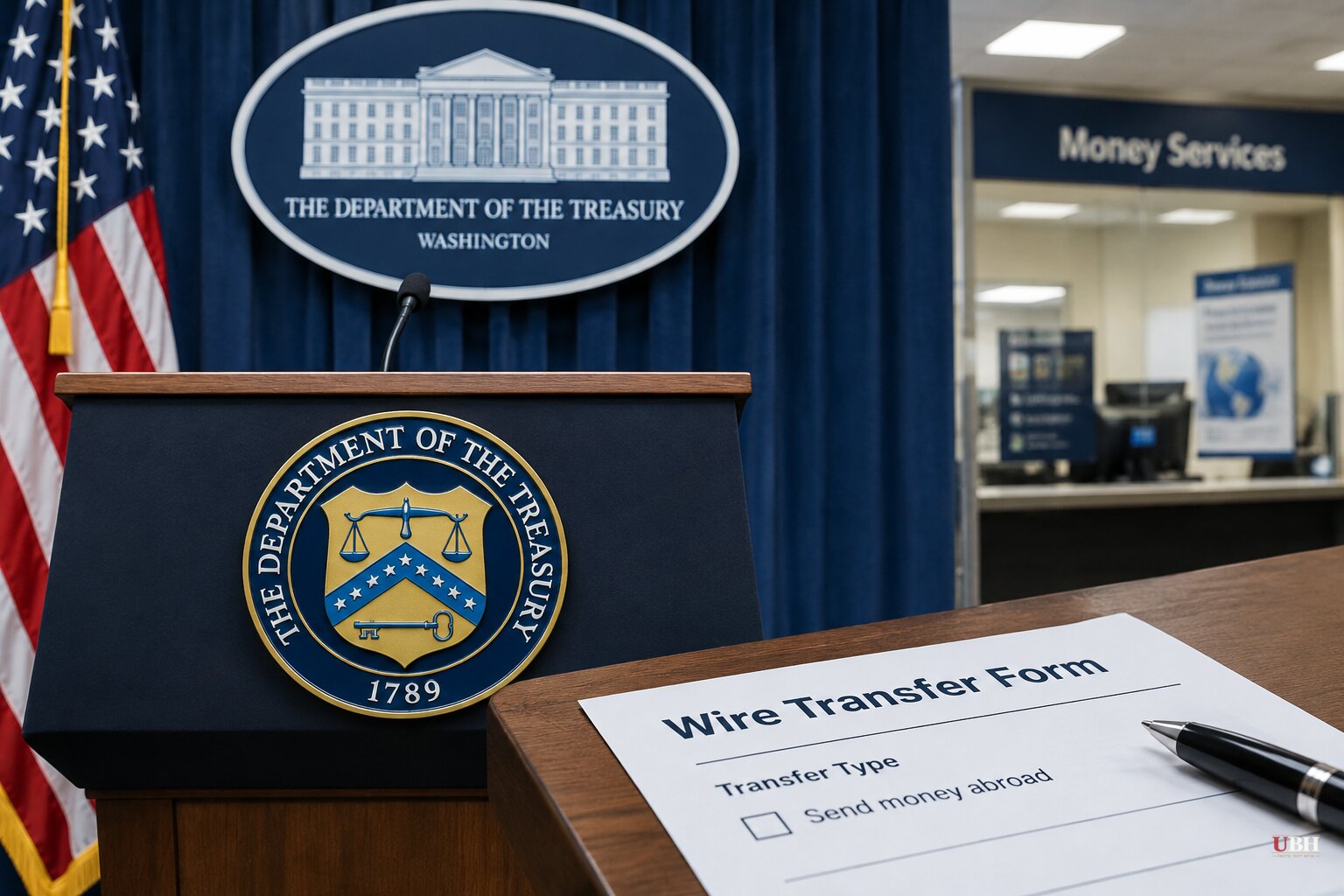
Treasury Secretary Scott Bessent says people who receive federal assistance should not be able to wire money out of the United States. He laid out the plan in a Fox News interview as part of a federal crackdown on benefits fraud in Minnesota.
The mechanism he described is simple. Anyone sending money through a money service business will have to check a box saying whether they are on public assistance.
"From now on, anyone who wires money out from one of these money service businesses has to check a box saying whether they are on public assistance," Bessent said.
"And if you are on public assistance, we are going to start pushing that you cannot wire money out of the country," he added.
A ban, or a plan to push one
Some headlines call this a done-deal ban. Bessent's own words are more forward-looking: "we are going to start pushing." The checkbox requirement is stated as taking effect "from now on." The prohibition itself is described as the next step.
He also left a door open. Anyone who can prove where their money came from should be able to send it abroad "with no worries," Bessent said, according to Reuters.
That shifts the burden. A recipient who wants to send money home would need to show the funds are not benefit dollars.
Bessent framed the logic bluntly. "If you are wiring the money out of the country, one of two things must be true: you're either getting too much money and your benefits must be cut, or you're part of this conspiracy. Where did that money come from? We're gonna find out."
The Minnesota backdrop
The announcement is part of a broader federal effort in Minnesota targeting abuse of social benefit programs. That effort includes IRS audits of certain banks suspected of money laundering.
Bessent has said he is concerned that money sent to Somalia from the Somali community in Minnesota has ended up with al-Shabaab, the terrorist group. That is his claim. The sources do not include charges or court findings tying specific remittances to the group.
He said the Treasury will "deploy all tools to bring an end to this egregious unchecked fraud and hold perpetrators to account."
He also described the scope as wider than one state. "I am here this week to signal the U.S. Treasury's unwavering commitment to recovering stolen funds, prosecuting fraudulent criminals, preventing scandals like this from ever happening again, and investigating similar schemes state by state," he said.
The $200 billion figure
The Federation for American Immigration Reform, which advocates for lower immigration levels, estimates that remittances take as much as $200 billion out of the U.S. economy. That covers money sent abroad by legal and illegal immigrants alike. It is an advocacy group's estimate, and it covers all remittances, not just those from benefit recipients.
The figure does not measure fraud. It is the total flow, and Bessent's policy targets only the slice sent by people on public assistance.
What still needs answers
Several practical questions follow from the plan as Bessent described it.
First, a checkbox is self-reported. Treasury has not said how it would verify an answer, or what happens to someone who checks "no" and is later found to be on assistance.
Second, "public assistance" covers a range of programs. Bessent has not said which ones trigger the restriction.
Third, a working recipient who also gets some aid would have to document which dollars are which. How that proof would be submitted, and to whom, has not been spelled out.
Fourth, the remarks do not identify the legal authority for a prohibition on individual transfers, or an effective date. Money service businesses would carry the compliance load at the counter.
The fraud problem Bessent is pointing at is real enough to have drawn IRS bank audits, and tracing public money that leaves the country is a legitimate enforcement goal. Government benefits are taxpayer money. The harder test is whether a self-declared checkbox and a proof-of-source requirement can separate fraud from ordinary family support without a formal rule behind it.
The next marker is whether Treasury publishes the compliance requirement for money service businesses and the criteria for what counts as proof of a legitimate source of funds.
Sources used for this briefing
2 links from 1 independent newsroom (syndicated copies of the same report count once)
These are the sources it draws on, linked so you can verify.


