
Unbiased headlines. Facts, not spin.
Unbiased Headlines is an independently owned news organization. We bring you the facts, not opinions, written fresh from 110+ named sources. Sources linked so you can verify it yourself.
 economy
Major Story (7/10)
SpaceX Announces $74 Billion for AI Data Centers in Texas and Arizona, Arizona Still Needs County Approval
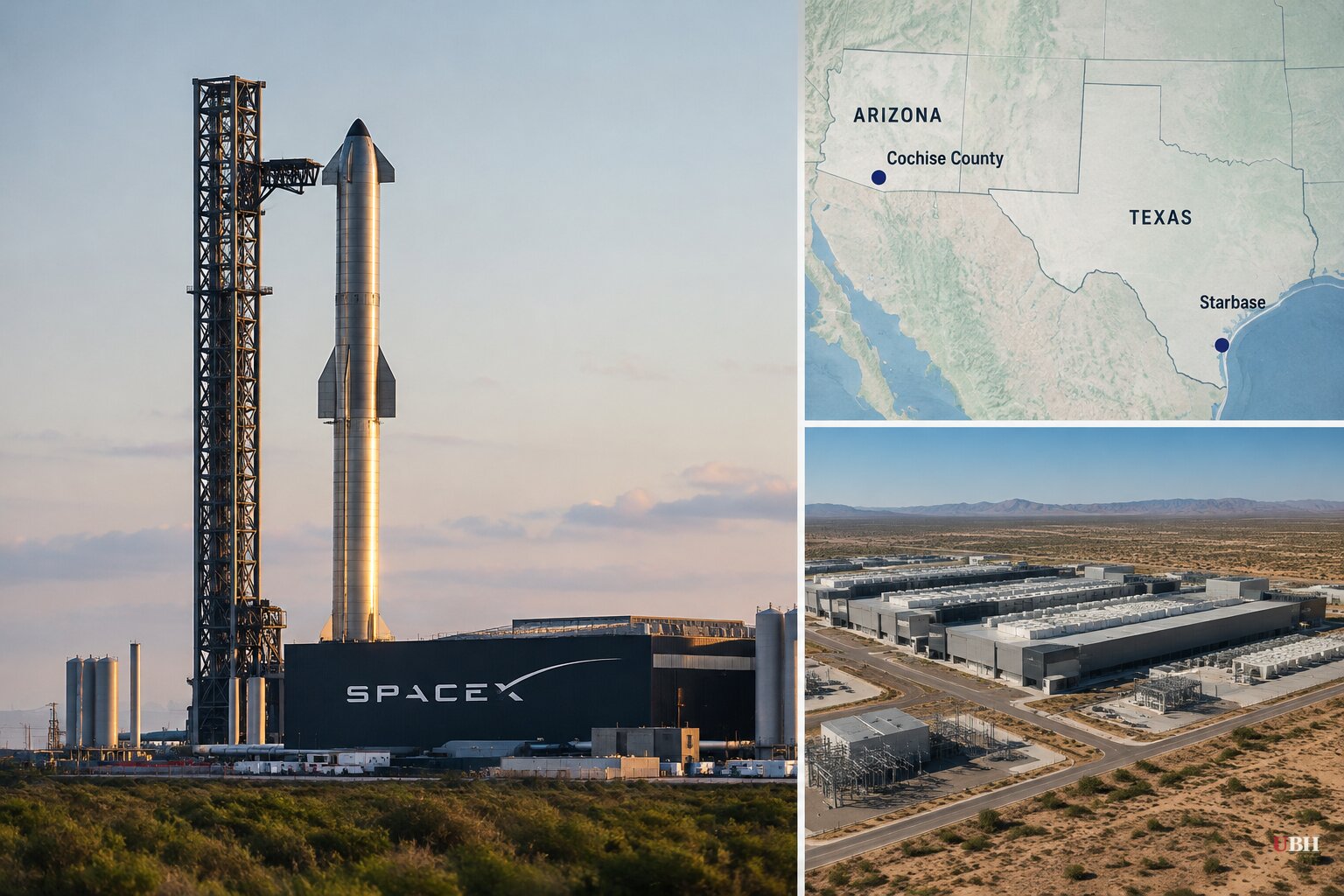
Since SpaceX went public in June, its AI business has grown from a sideline into the largest part of the company. Thursday's announcement puts a price on where it wants to take it: more than $74 billion across two campuses.
SpaceX said it expects to spend more than $24 billion at its Starbase site in South Texas and roughly $50 billion on a campus in Cochise County, Arizona. These are planned amounts, not money already spent.
The money behind the AI push
The company's SEC filing puts third-quarter Super Intelligence revenue at $7.56 billion. That is 51.9% of SpaceX's $14.575 billion total, so AI now brings in more than rockets and Starlink satellite internet.
SpaceX described the campuses as a way to expand computing for the AI segment. It said the Texas facility would help train systems for medical research, emergency response, manufacturing and national security.
Texas: 444 acres next to Brownsville
The Texas campus sits on 444 acres of Starbase-controlled land near the Port of Brownsville and the city's landfill. SpaceX says it will generate its own electricity and not draw from the public grid.
Construction has started, and permit records show approval for land grading. The supercomputer facility and its planned gas power plant are not yet running. SpaceX says the project has already generated more than 3,000 construction jobs and will support more than 500 permanent ones. Those job counts come from the company.
The land's status is the sticking point. Earlier this year Brownsville voted to remove the parcel from its city limits at SpaceX's request. In exchange, SpaceX committed up to $220 million to close a funding gap in the city's water and wastewater system, which the company says will add about 20 million gallons of daily capacity.
SpaceX says public financing of that gap would have cost ratepayers $370 million over 25 years with interest. About three-quarters of Brownsville's primary water supply comes from two Rio Grande reservoirs, both of which have faced critically low levels, according to SpaceX.
The boundary change also put the site outside a 90-day moratorium on data center applications in Brownsville, which took effect Nov. 5.
The city says it stands by the deal. "Residents should have confidence that their concerns about data center development, water resources, energy consumption and responsible growth are being taken seriously," Brownsville officials said in a statement.
The South Texas Environmental Justice Network held a protest against the project. The group argues the facilities will pollute the air, use up water and raise energy bills for residents.
The Starbase City Commission will hold a public hearing Dec. 9 on SpaceX's request for a property tax exemption and the related development agreement. The hearing is not a final approval vote on the project.
Arizona: 747 acres near Willcox Playa
The Arizona campus would occupy about 747 acres near Willcox Playa, roughly 80 miles east of Tucson. County records show an application from Tombstone Resources L.L.C. for up to nine computing buildings built in four phases. The site would need about six gigawatts of power at full capacity, a figure county officials have not independently verified.
SpaceX has not yet received county approval. A petition urging Cochise County to reject the permit has gathered about 2,400 signatures.
The company says it is working with local electric cooperatives on a power project that would use existing renewable resources and could lower cooperative members' bills by as much as 20%. The plan includes a proposed $3.6 billion in electrical infrastructure and a 24-gigawatt-hour battery storage system. SpaceX also says the campus would use dry cooling, a closed-loop system, with no planned industrial groundwater use.
SpaceX projects 5,500 construction jobs and 1,000 permanent jobs. The bill-reduction figure and the job counts are company projections.
The political backdrop
The announcement lands days after Texas Democrats won the governor's office for the first time in more than three decades. Governor-elect Gina Hinojosa backs a data center moratorium. Investment bank Jefferies estimates 13.3 gigawatts of announced Texas data center projects could be at risk under such a policy. Texas has at least 248 data center projects planned.
Brittany Kaiser, CEO of Alpha Compute, told Fox News Digital the election results make developers and investors "pause and think if we should be investing somewhere else." She argued for "common-sense regulations, not sweeping bans or moratoriums."
No source ties SpaceX's announcement to the election, and the details of any state moratorium have not been published. Whether such a policy would reach a site like Starbase, which sits outside Brownsville's jurisdiction, is an open question.
The pitch is hard to dismiss on its face: a private company says it will pay for its own electricity and water rather than hand the bill to ratepayers. Its critics counter that the Texas land was shifted outside a city's moratorium and that water and air impacts remain unresolved. The Dec. 9 Starbase hearing on the tax exemption is the next public test, with the Cochise County permit decision still ahead in Arizona.
Sources used for this briefing
6 links from 6 independent newsrooms (syndicated copies of the same report count once)
These are the sources it draws on, linked so you can verify.


