
Unbiased headlines. Facts, not spin.
Unbiased Headlines is an independently owned news organization. We bring you the facts, not opinions, written fresh from 110+ named sources. Sources linked so you can verify it yourself.
 economy
Notable (6/10)
Event date: November 12, 2026 ·
Displaced Somali Families Outside Mogadishu Go Hungry as U.S. Aid Shrinks, PBS Reports
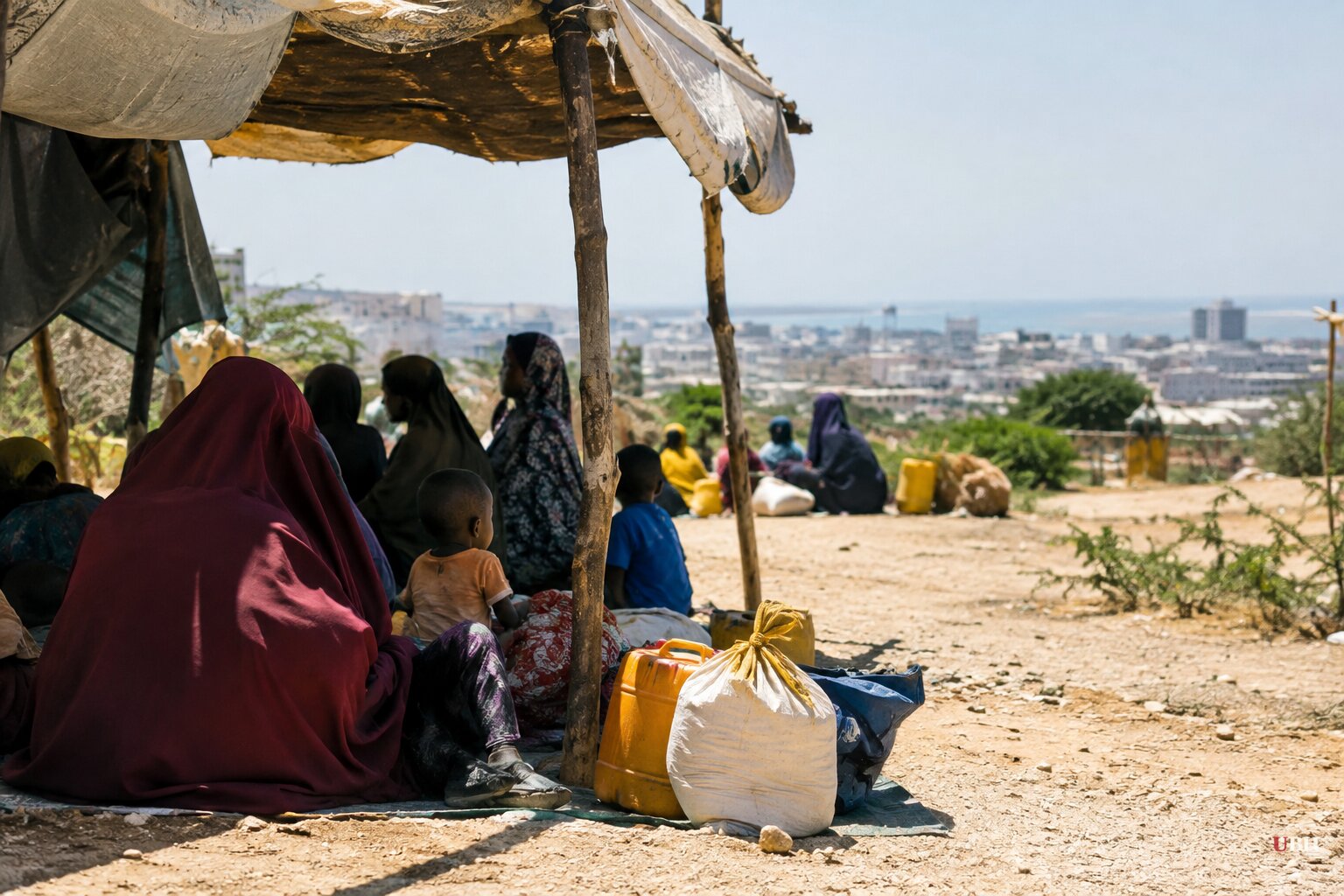
A newborn named Mawlid has spent his first 25 days of life outdoors in the heat on the outskirts of Mogadishu, Somalia's capital. He was born two months early.
His story anchors a PBS NewsHour segment that aired Nov. 12, reported by Neha Wadekar and filmmaker Ed Ram in partnership with the Pulitzer Center. It is the first of two reports from Somalia.
A birth on the road
Mawlid's mother, Isho Aweys Mohamed, fled southern Somalia with her three youngest children. Just over a month ago, a mortar destroyed her neighbor's home. She knew in that instant she had to run.
During the escape she went into early labor and delivered twins on the side of the road. Mawlid was born on that journey.
They now live among thousands of displaced people, mostly women and children. The report says a mix of conflict, drought and flooding forced them from their homes.
"I live off people's goodwill," Isho said through an interpreter. "I only have whatever they bring me."
It is barely enough. Isho said she eats so little that she cannot produce enough breastmilk for her son, so she gives him water instead.
What the report says changed
PBS anchor Geoff Bennett framed the segment around the Trump administration's decision, starting last year, to sharply cut U.S. foreign aid. He said millions of Somalis depend on humanitarian assistance, much of it previously funded by the U.S.
Bennett described that lifeline as disappearing. The reporters say Somalia, battered by decades of conflict and repeated climate disasters, is where the effects are most visible.
The camp itself, though, exists because of war and weather. Isho's family fled a mortar strike, not a budget decision. The report's argument is that the aid pipeline that once cushioned people in her position has thinned, and that people like her are now more exposed.
The other side of the aid debate
Supporters of the cuts have argued that Africa's prospects do not hinge on American handouts. Fox News has reported that sub-Saharan Africa is outpacing Asia in growth forecasts despite predictions of collapse after the USAID reductions, with trade and private investment driving the numbers.
A State Department official has also said the U.S. aims to offer African countries alternatives to China's state-subsidized imports and to secure critical minerals supply. That is the administration's pitch: trade and investment over aid.
Those are regional growth forecasts. The PBS report deals with one displacement camp outside Mogadishu, where the people described have no income and depend on what neighbors and aid groups can spare.
Washington's attention in the Horn of Africa
U.S. interest in the region has not gone away. Fox News has reported that the U.S. is exploring military access to the port and airbase at Berbera in Somaliland, a breakaway territory, as Houthi attacks threaten Red Sea shipping. Sen. Ted Cruz has advocated recognizing Somaliland.
The security focus is on shipping lanes, bases and China's expanding presence, not on the camps near Mogadishu.
What the Mogadishu camp shows
Fiscal restraint is a legitimate principle, and foreign aid has long been a target for anyone who wants Washington to spend less. Taxpayers are entitled to ask where the money goes.
But the report puts a specific, checkable human cost in front of that argument. A premature infant is living outdoors, and his mother says she is feeding him water because she is not eating enough herself.
The report does not say how many people in the camp lost aid or which programs ended. The administration has not been quoted in the segment explaining how the people in this camp are supposed to be served now.
The second part of the NewsHour series from Somalia is still to come.
Sources used for this briefing
4 links from 3 independent newsrooms (syndicated copies of the same report count once)
These are the sources it draws on, linked so you can verify.


