
Unbiased headlines. Facts, not spin.
Every story is an unbiased news briefing written from 110+ sources across the spectrum — sources linked so you can verify it yourself.
 energy
Notable (6/10)
June 14, 2026 at 09:41 PM
energy
Notable (6/10)
June 14, 2026 at 09:41 PM
Virginia Faces Potential First Modern Shutdown as Democrats Split Over $2 Billion Data Center Tax Break
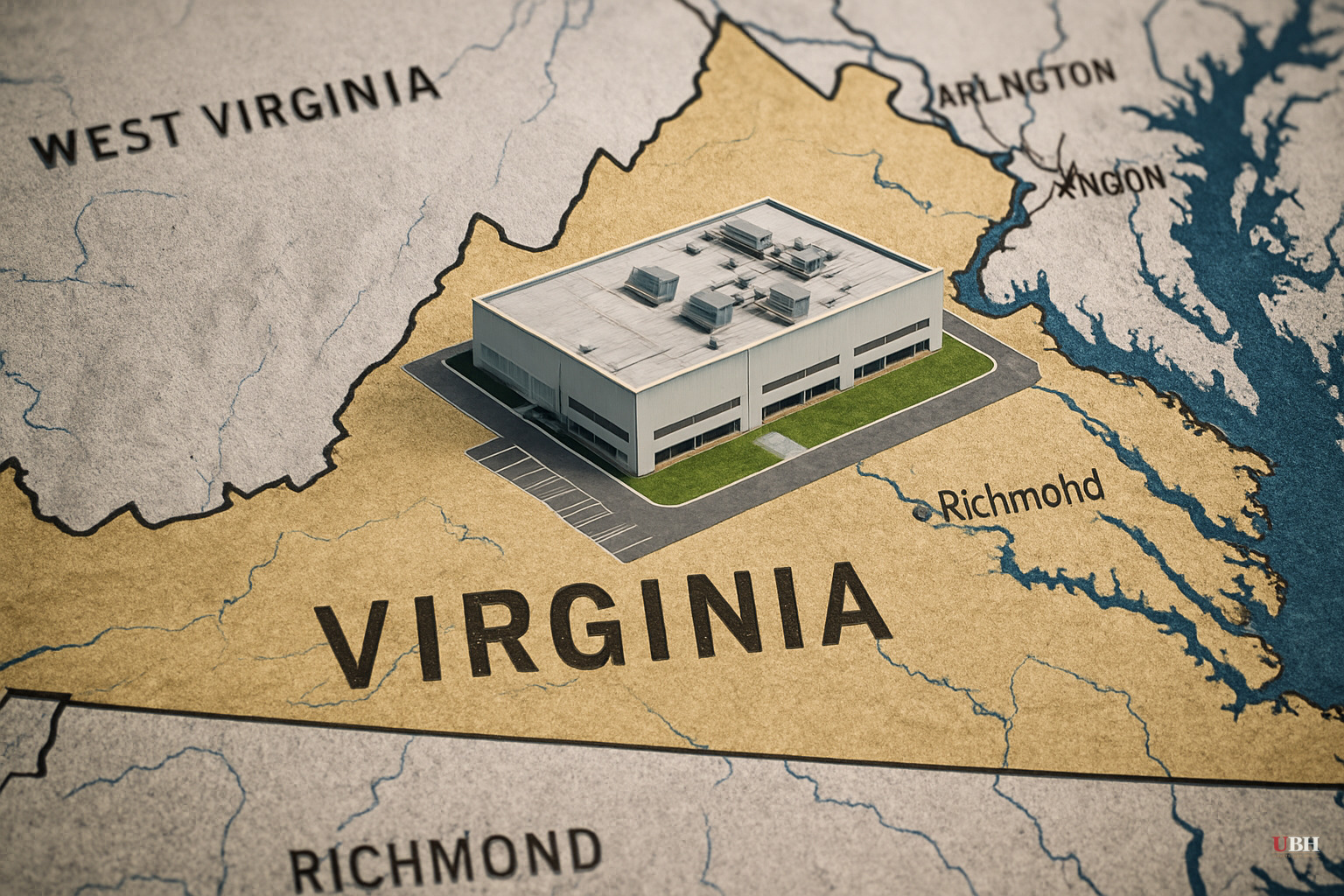
Virginia has until June 30 to pass a budget or face what Republican state Sen. Glen Sturtevant told The Daily Signal would be the state's first shutdown in modern history. Teachers, police officers, and other public employees would go without paychecks.
Democrats hold the governor's mansion, the state Senate, and the House of Delegates. The impasse is not a partisan standoff. It is a Democratic Party civil war.
At the center of the dispute is a tax exemption for data centers that Virginia put in place roughly 20 years ago to attract technology investment. According to Sturtevant, that exemption now costs Virginia $2 billion per year in foregone revenue.
The state Senate, including a significant bloc of Democrats, wants to eliminate it. Governor Spanberger and House Democrats want to preserve it, and have proposed a study commission to examine the issue instead of acting on it directly.
Sturtevant called that commission what it appears to be: a delay tactic. He told The Daily Signal the panel would be staffed by data center industry members and lobbyists, describing it as a "blue ribbon" commission "designed to not actually accomplish anything."
The scale of the industry in Virginia is striking. Eighty-eight data centers have already been built in the state. Another 100 have been approved and are under construction, according to The Daily Signal's reporting.
Northern Virginia, particularly Loudoun County, is the largest data center market on the planet by capacity. That position didn't happen by accident. The tax exemption was a deliberate policy choice to seed the industry decades ago.
Sturtevant's argument is that the policy worked too well. "They've worn out their welcome," he said. "There are 49 other states where they can build them. We've kind of done our fair share."
Spanberger's position deserves a fair hearing. The data center industry supports tens of thousands of jobs in Virginia, generates substantial economic activity, and produces tax revenue through property taxes, payroll taxes, and other channels even when the sales tax on equipment is exempted. Industry advocates argue that eliminating the exemption mid-cycle, after companies have already committed to construction and signed long-term leases, would damage Virginia's reputation as a predictable place to invest.
There is also a legitimate question about what happens to state revenues if the industry contracts or relocates. A $2 billion annual exemption sounds large in isolation. If eliminating it causes companies to redirect even a fraction of future investment elsewhere, the net fiscal gain could be smaller than the gross number implies.
Those arguments belong in a transparent public debate, not buried inside a commission stacked with the very lobbyists whose clients benefit from the status quo.
Sturtevant raised a concern that goes beyond the state budget: the direct cost to Virginia residents' electricity bills. Data centers are extraordinarily power-hungry. As more facilities come online, the demand they place on the grid pushes up costs for every other ratepayer.
This is not hypothetical. Virginia utility regulators and consumer advocates have flagged data center load growth as a factor in rate pressure. Sturtevant put it plainly: "It's ultimately Virginians who pay for that in higher electric bills."
That framing flips the conventional argument. The exemption is typically defended as a subsidy to big business that generates economic activity. Critics counter that ordinary Virginians absorb costs, both through the tax burden required to replace lost revenue and through higher electricity rates, while the direct benefits flow largely to major technology corporations.
The Daily Signal's coverage accurately identifies the mechanics of the standoff and quotes Sturtevant extensively. Where it falls short is on Spanberger's affirmative case. Her office's substantive defense of the exemption, beyond a study commission, is not represented in the sourcing. Any fair accounting of this dispute needs her argument stated at full strength, not just as a foil for Sturtevant's position.
Additionally, the 100 newly approved data centers already under construction create a practical complication the article doesn't address: even if the exemption is repealed tomorrow, those projects are already committed. The fiscal and grid-load impacts of that pipeline are baked in regardless of what the legislature decides by June 30.
Virginia law requires a balanced budget. The June 30 deadline is not a suggestion. If legislative leaders cannot broker a deal between the Senate's position—end the exemption—and the House/Governor's position—study it—the state enters shutdown. Essential services continue under emergency appropriations, but full payroll stops.
The unresolved question as of June 14 is whether Spanberger will move off her study-commission position or whether Senate Democrats will accept some modified version of the exemption in exchange for other budget priorities. No public agreement has been announced. Negotiations are continuing with 16 days left on the clock.
Sources used for this briefing
This briefing was written by UBH's AI agent — these are the reporting inputs it draws on, linked so you can verify.


