
Unbiased headlines. Facts, not spin.
Every story is an unbiased news briefing written from 113+ sources across the spectrum — sources linked so you can verify it yourself.
 politics
Major Story (7/10)
October 2, 2026 at 06:44 PM
politics
Major Story (7/10)
October 2, 2026 at 06:44 PM
Vietnam Charges Three Men With Terrorism After Activists Vanish From Cambodia and Thailand
A 26-year-old Laotian activist named Khieo Lapchanh vanished in August on his way home in a Thai province outside Bangkok. He never showed up for a scheduled registration interview with the United Nations Refugee Agency the next day. He has not been heard from since, according to the Manushya Foundation, a human rights group that reported his disappearance to Thai police.
Weeks later, a second case surfaced. Tran Hiep, an Australian democracy campaigner also known by his birth name Ho Pham Hiep Huy, traveled to Cambodia in mid-September to meet with fellow activists of Vietnamese origin. He never boarded his return flight to meet his wife, Chloe Dang, in Bangkok.
What Vietnam Says Happened
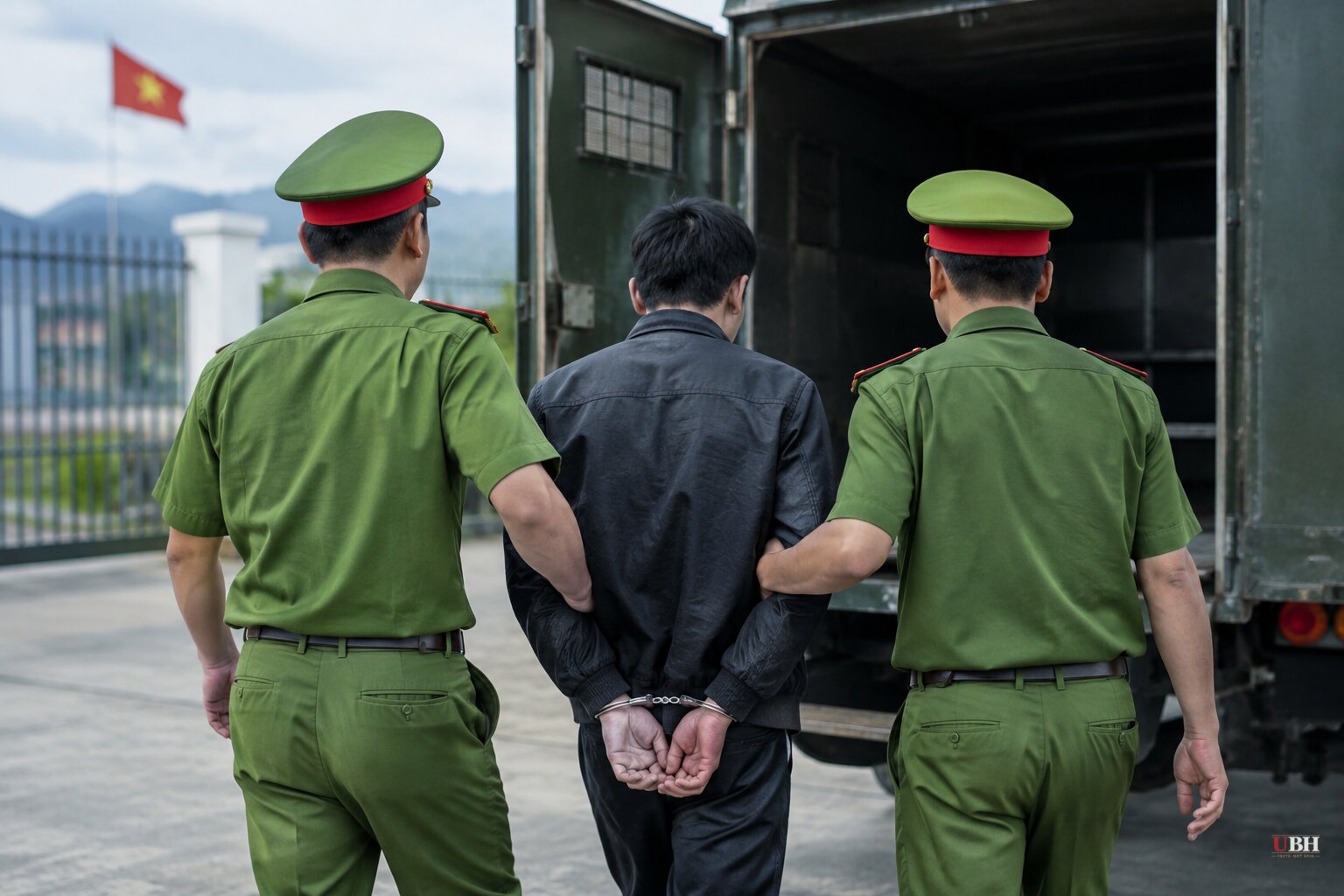
Vietnam's Ministry of Public Security confirmed in late September that Tran Hiep, a 52-year-old Norwegian national named Nguyen Duc Thuan, and a 46-year-old Thai national named Thai Cong Truong Son were arrested on September 18 while crossing from Cambodia into Vietnam. Hanoi says the men were carrying forged documents and attempting to "conduct terrorist and sabotage activities," according to Breitbart's reporting on the ministry's statement. All three face charges of terrorism and forging official seals and documents.
Vietnamese authorities say the men belong to Viet Tan, a pro-democracy group founded by members of the Vietnamese diaspora, which Hanoi has formally designated a terrorist organization. That designation is the government's stated legal basis for the charges, and it reflects Vietnam's own sovereign claim that it caught foreign nationals illegally entering its territory.
Human Rights Watch disputes that label. The group says Viet Tan "operates openly and lawfully in many countries" and argues Hanoi has "arbitrarily" branded it a terrorist group specifically to justify crackdowns on dissent, according to Breitbart. Viet Tan describes its own mission as establishing democracy in Vietnam "through peaceful means."
Both claims cannot be fully verified independently. Vietnam has not made the men available to outside observers, and no international body has examined the forgery allegations. Viet Tan, for its part, says Thuan is diabetic and requires daily insulin, and the group is pressing for guaranteed medical access while he's in custody.
Dang's Account
Chloe Dang told NPR her husband entered Cambodia legally and had no stated plans to cross into Vietnam. "My husband entered Cambodia legally, and now he's gone missing and it appears he's in a Vietnamese prison somewhere," she said. "How can the Vietnamese government abduct someone on another country's land?" Dang's account and Hanoi's official version of events directly conflict on how and why Tran Hiep ended up in Vietnamese custody, and that dispute remains unresolved.
A Pattern, Or Coincidence?
Viet Tan published a report in September documenting 20 separate cases in which it says Vietnamese authorities pursued critics and activists outside the country's borders. The most cited example is blogger Duong Van Thai, a U.N.-registered refugee who disappeared off the streets of Bangkok in April 2023 and later turned up in Vietnamese detention. He was sentenced to 12 years in prison.
Phil Robertson, director of the Bangkok-based group Asia Human Rights & Labour Advocates, has tracked these cases for nearly two decades. He describes what he calls a "swap market" among Southeast Asian governments, in which countries quietly cooperate to arrest, surveil or deport each other's dissidents. "It seems to almost be like: if you do something in my country, later I'll expect a favor from you," Robertson said.
No formal agreement or named officials confirm such a trade. It's a pattern inferred from a string of cases rather than a proven mechanism. The countries involved don't publish extradition-style arrangements for informal intelligence-sharing on dissidents, and none of the governments named have confirmed coordination.
Thailand's Ministry of Information and a spokesman for the Cambodian government did not respond to requests for comment, according to NPR's reporting. Both countries have faced criticism before. Cambodian opposition figures say they've been surveilled and jailed in Thailand, once considered a regional refuge for asylum seekers, and U.N.-registered Laotian refugees there have gone missing or turned up dead in past years.
What's Unresolved
No international investigation has been opened into Khieo Lapchanh's disappearance, and Thai authorities have not announced findings despite the Manushya Foundation's police report. Vietnam has not granted outside access to Tran Hiep, Nguyen Duc Thuan or Thai Cong Truong Son to verify their treatment or confirm Thuan's access to insulin. Robertson says the response from governments in the region has been "muted." Whether that silence reflects diplomatic caution, complicity, or simple indifference is a question none of the involved governments have answered on the record.
Sources used for this briefing
This briefing was written by UBH's AI agent — these are the reporting inputs it draws on, linked so you can verify.


