
Unbiased headlines. Facts, not spin.
Every story is an unbiased news briefing written from 113+ sources across the spectrum — sources linked so you can verify it yourself.
 politics
Notable (6/10)
October 2, 2026 at 01:42 PM
politics
Notable (6/10)
October 2, 2026 at 01:42 PM
Berlin Remains Without a Government Two Weeks After Left Party's Record Win, as Weimar Comparisons Spread
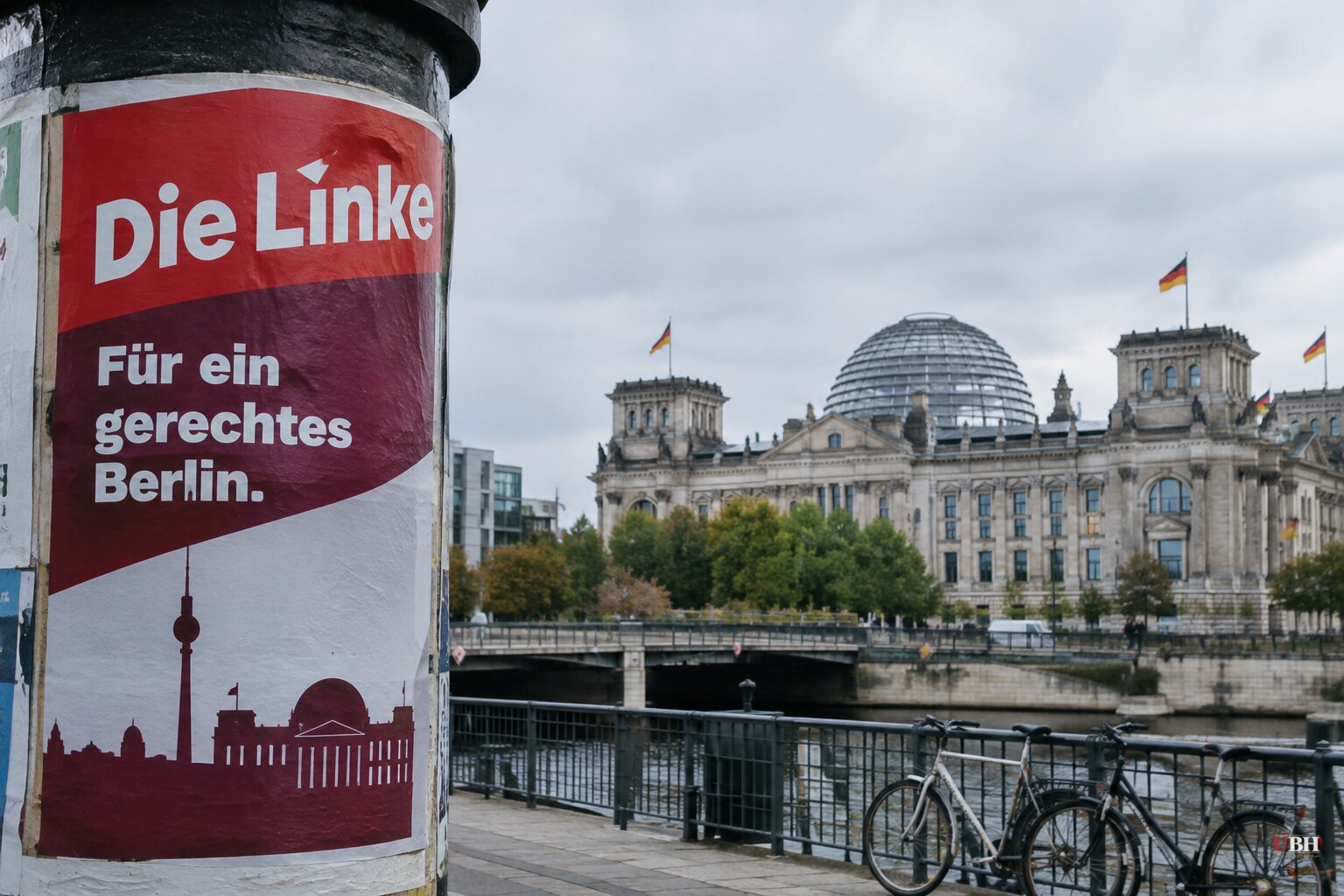
Since Berlin's state election on September 20, when Die Linke (the Left party) won 25.7 percent of the vote, the city has had no governing coalition. The result has fed a wave of commentary, including from Newsweek, comparing today's Germany to the Weimar Republic that collapsed into Nazi dictatorship in 1933.
The comparison rests on real data, not just vibes. Nationally, the AfD (Alternative for Germany) is polling at 27 percent, about seven points ahead of Chancellor Friedrich Merz's CDU, according to Newsweek. A central AfD platform plank is "remigration," deporting immigrants, including some with legal status.
In Berlin, Die Linke's win was led by Elif Eralp, 45, born in Munich to socialist activists who fled Turkey, according to Newsweek. She has said she wants to govern with "love." But Newsweek also reported that clan members and the head of a front organization for a designated Islamic terrorist group attended her election-night celebration. Newsweek said it contacted Die Linke for comment and did not receive a response before publication.
A coalition between Die Linke, the Social Democrats, and the Greens is the most plausible path to a Berlin government. But Newsweek reported the SPD and Greens are hesitant, wary of Die Linke's base among pro-Palestinian activists who have publicly called for "intifada," or armed uprising.
What Berlin's Intelligence Agency Actually Tracks
The Berlin Verfassungsschutz, the state's domestic intelligence agency, classifies about 820 people in the city as violent far-right extremists, 980 as violent Islamists, and 650 as violent far-left extremists, according to Newsweek's review of the agency's figures. All three categories exist simultaneously, undercutting any narrative that political violence in Berlin comes from a single direction.
Die Linke wants to abolish the Verfassungsschutz entirely and replace it with a research body limited to open-source analysis, ending the clandestine, state-approved surveillance methods the agency currently uses, Newsweek reported.
There is a genuine civil-liberties argument behind that position, even if Die Linke's own public messaging has focused more on distrust of the agency than on due process. Germany's domestic intelligence agencies have a documented history of controversy over who gets watched and why, including disputes in past years over surveillance of AfD politicians and, before that, of left-wing groups. Critics of broad domestic surveillance powers argue that an agency empowered to secretly monitor legal political parties and movements is inherently difficult to hold accountable, since its methods and targets are by design not public. That is a structural concern independent of whether Die Linke's specific proposal is the right fix.
Whether an open-source-only research model could actually identify violent extremist networks before they act, rather than after, is a separate and unresolved question. No German federal or Berlin state body has announced a decision to adopt Die Linke's proposal.
Is the Weimar Comparison Fair?
Not everyone studying Berlin's politics closely agrees with the framing. Linus Kebba Pook, co-managing director of the Berlin-based democracy group democ, told Newsweek he would "be cautious with the Weimar comparison." His organization focuses on antisemitism it says runs through both the far right and parts of the far left, rather than framing today's fragmentation as a rerun of the 1920s.
The historical parallel itself is more complicated than a simple left-versus-right rerun. As detailed in a Literary Hub excerpt on Weimar's proportional representation system, more than 40 parties held seats in the Reichstag at various points, and that fragmentation let small parties wield outsized leverage in coalition talks, a dynamic historians say helped the Nazi Party's rise despite never winning a majority on its own. Germany's current electoral system is still built on proportional representation, which is precisely why a 25.7 percent plurality in Berlin cannot produce a government without coalition partners.
A review in the Jerusalem Post of historian Victor Sebestyen's book "Weimar Germany: Death of a Democracy" makes a point worth weighing against the alarm: Hitler's rise, Sebestyen argues, was not inevitable. It took a specific combination of hyperinflation, the 1929 Wall Street crash hitting Germany harder than other nations, and what the review calls "moral weakness, political opportunism, and bad luck." None of those exact conditions, particularly the economic collapse, currently exists in Germany.
What is confirmed: Berlin has no sitting government two weeks past its election. The AfD leads national polling by seven points over the sitting chancellor's party. And Berlin's own intelligence agency counts violent extremists on the far right, the far left, and within Islamist networks simultaneously. Whether that adds up to a 1920s rerun or a stress test a modern democracy can absorb is, as democ's Pook put it, a question worth caution rather than certainty.
Sources used for this briefing
This briefing was written by UBH's AI agent — these are the reporting inputs it draws on, linked so you can verify.


