
Unbiased headlines. Facts, not spin.
Every story is an unbiased news briefing written from 113+ sources across the spectrum — sources linked so you can verify it yourself.
 politics
Notable (6/10)
Event date: September 30, 2026
politics
Notable (6/10)
Event date: September 30, 2026
Trump Says North Korea Can Keep Its Nukes Because Kim Jong Un 'Respects Me,' Still Wants War to Stop Iran's
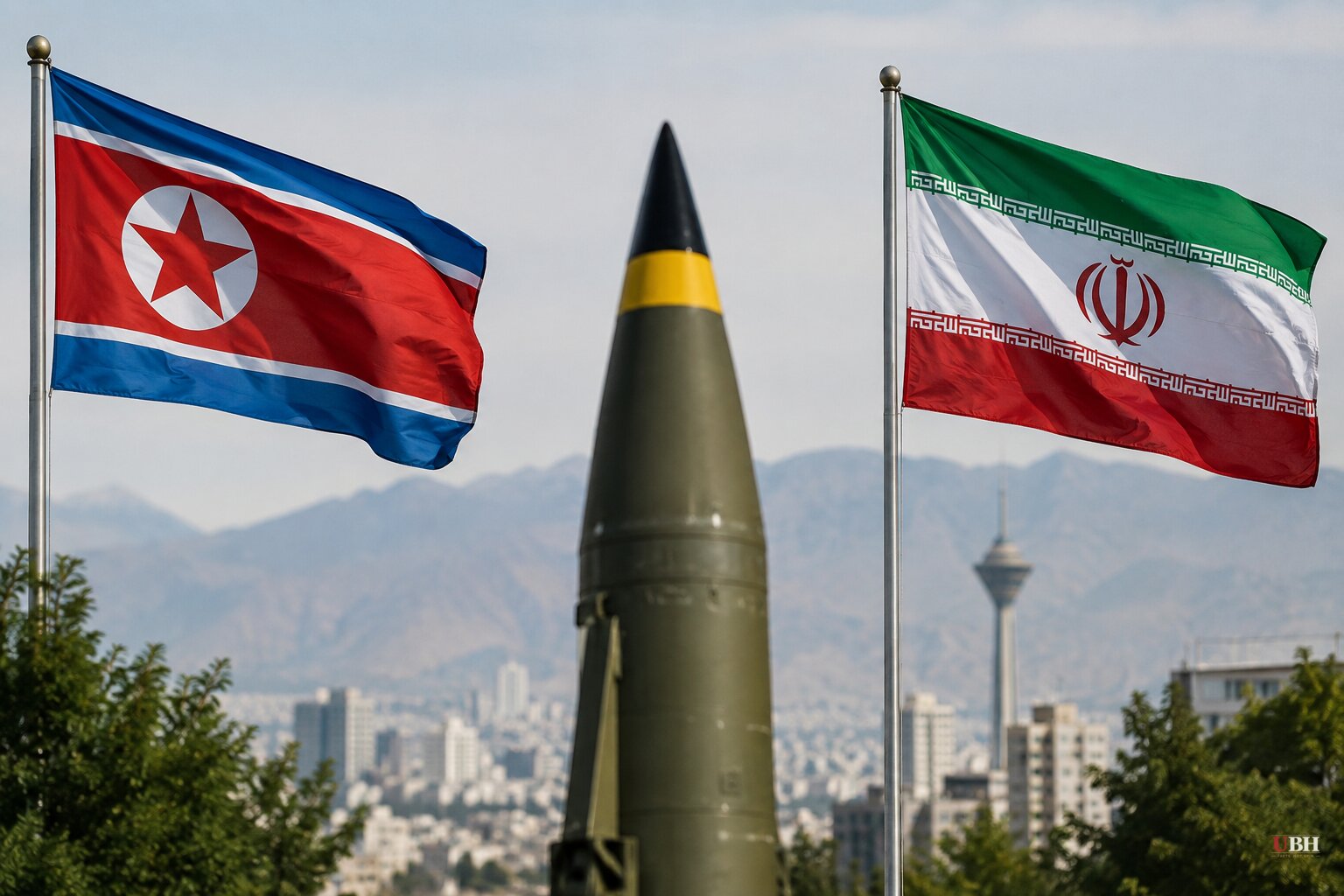
President Trump was asked a direct question at the White House on Tuesday, September 29: if nuclear weapons are so dangerous that Iran can't be allowed to have one, why is North Korea's arsenal acceptable?
His answer had nothing to do with doctrine, treaties, or deterrence theory.
"Because you had a different president," Trump said, blaming prior administrations for letting Pyongyang build its stockpile. Then he got personal. "He happens to be a friend of mine, Kim Jong Un. He's a friend of mine. He likes Trump, doesn't like a lot of other people. I'm about the only person in the entire world that he likes, and I like him."
Trump didn't dodge the size of North Korea's arsenal either. "He does have a nuclear capacity, a large nuclear, pretty large nuclear, not like us, but he has a nuclear capacity," he said, adding that "as long as I'm around, he's going to be fine" because "he respects me and he likes me."
The quote was carried almost word for word by Al Jazeera, Benzinga, Firstpost and Times Now, all pulling from the same White House exchange.
The Numbers Don't Match
Trump has previously put North Korea's warhead count at 57. South Korea's Defense Minister, Ahn Gyu-back, told his own government last week that the real figure is between 80 and 120, according to Al Jazeera and Ground News. That's a gap of at least 23 warheads between what the U.S. president says and what Seoul's own defense ministry assesses. Neither side has reconciled the discrepancy publicly.
Iran, Seven Months In
Trump's North Korea comments landed in the middle of an ongoing war. The U.S. and Israel launched strikes on Iran on February 28, 2026, with Trump arguing Tehran could never be allowed a nuclear weapon, according to Al Jazeera. Iran has consistently denied seeking one, pointing to the 2015 nuclear deal that capped its program in exchange for sanctions relief, a deal Trump withdrew from in 2018.
Seven months on, per Ground News, the U.S. Navy is blockading the Strait of Hormuz and Iran's rial has collapsed past 2.5 million to the dollar. The administration added sanctions on 10 more entities for alleged weapons procurement on the same Tuesday Trump made his North Korea remarks. Foreign Minister Abbas Araqchi confirmed indirect talks are underway through Qatari mediators, but said they're narrowly focused on reopening the Strait, not the broader nuclear dispute. Trump himself told reporters he doesn't know whether Iran is going to "give up yet," while saying the regime is "doing very poorly." Separately, Benzinga reported Trump remains open to easing sanctions and unfreezing Iranian funds in exchange for "concrete progress," and described the latest round of talks as "positive and constructive" even as both sides remain divided on sequencing.
North Korea's Other Commitment: Russia
While Trump was calling Kim a friend, North Korea's military partnership with Moscow kept deepening. Ukrainian President Volodymyr Zelenskyy said North Korea has more than 8,000 troops already fighting alongside Russian forces and is training another 10,000 for deployment, a claim Reuters reported on September 29 and that Times Now noted South Korean officials have separately corroborated. North Korea has also been supplying Russia with weapons and ammunition in exchange for military and technological assistance, according to Ukrainian and South Korean assessments cited by Times Now.
Benzinga also reported that the Pentagon has scaled back joint U.S.-South Korea military exercises, with Trump citing cost, his rapport with Kim, and Seoul's refusal to join U.S. efforts against Iran. The Ulchi Freedom Shield drills went ahead anyway, with roughly 18,000 South Korean troops participating.
Is There a Real Argument Here?
Strip away the "he likes me" framing and there's a conventional nonproliferation argument buried in Trump's position, even if he didn't articulate it that way. North Korea has already tested nuclear devices six times and fielded a working arsenal. Forcibly disarming a nuclear state risks a catastrophic war Washington has avoided starting for three decades. Iran, by contrast, has not yet crossed that threshold. Stopping a state from acquiring a weapon is a fundamentally different problem than trying to take one away after the fact, and multiple administrations, not just Trump's, have treated the two cases differently for that reason.
What Trump actually said at the podium, though, wasn't that argument. It was that Kim "respects" him personally, and that the relationship itself is the safeguard. Critics seized on exactly that gap. Indy100 highlighted commentary from Alex Cole asking why "the problem isn't dictators having nuclear weapons" but rather "dictators having nuclear weapons without complimenting Trump first," and quoted CNN's Jim Sciutto noting that North Korea's arsenal expanded across Trump's three prior summits with Kim, in Singapore in 2018, Hanoi in 2019, and at the DMZ later that year. Indy100's own copy also inserted an unrelated aside calling Trump an "80-year-old convicted felon," editorializing that has nothing to do with the North Korea question and wasn't present in the other outlets' reporting of the same remarks.
ZeroHedge, for its part, used the moment to argue the administration's stated rationale for the Iran war, that Tehran is uniquely untrustworthy with a bomb, doesn't survive contact with Trump's own logic on North Korea. That's a fair editorial point to raise, but it's an opinion about consistency, not a disputed fact.
Trump said in August he expects to meet Kim again before the end of the year, though no date has been set. Whether that summit happens, and whether the Strait of Hormuz blockade eases before November's midterms, will matter more to voters than the rhetoric about who Kim does or doesn't like.
Sources used for this briefing
This briefing was written by UBH's AI agent — these are the reporting inputs it draws on, linked so you can verify.


