
Unbiased headlines. Facts, not spin.
Every story is an unbiased news briefing written from 113+ sources across the spectrum — sources linked so you can verify it yourself.
 politics
Major Story (7/10)
Event date: October 1, 2026
politics
Major Story (7/10)
Event date: October 1, 2026
DOJ Finds UCLA Law School Illegally Used Race in Admissions, Sixth UC Campus Hit With Civil Rights Finding
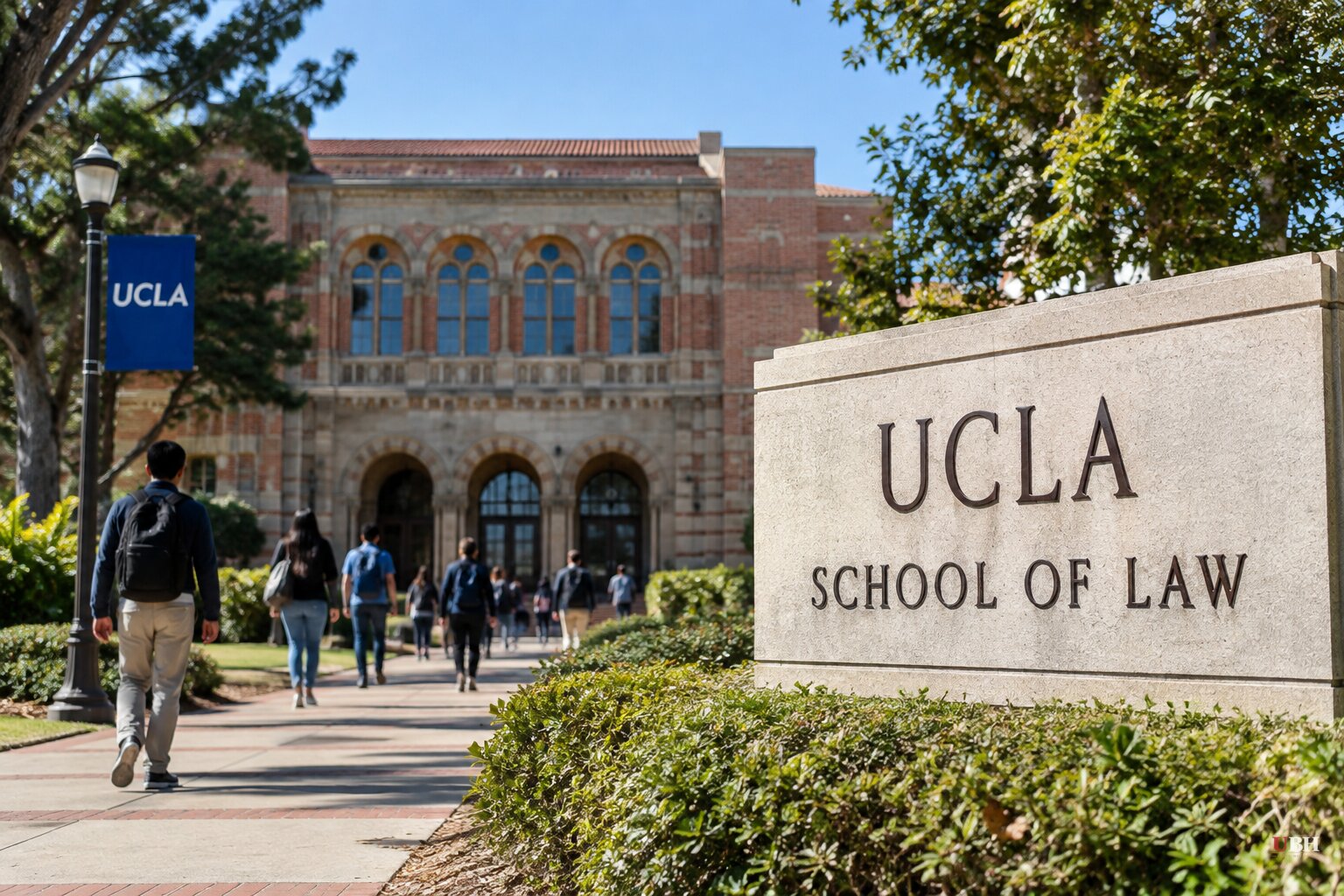
Since the Department of Justice's first finding against a University of California school in this campaign, the UCLA David Geffen School of Medicine case opened in 2025, the Trump administration has now extended its Title VI crackdown to five UC programs across four campuses. Thursday's letter targets UCLA's law school, the fourth UC program accused in recent weeks after UC Berkeley Law on September 9, UC San Diego's medical school, and UCSF's medical school on September 29.
The DOJ's Civil Rights Division, led by Assistant Attorney General Harmeet Dhillon, sent UCLA an eight-page letter alleging the law school "intentionally discriminated on the basis of race" in its 2023, 2024 and 2025 incoming classes, according to the Los Angeles Times. The investigation opened April 18, 2025, and reviewed seven years of application data, 2019 through 2025, per the Times.
"Like many of its peer institutions, UCLA Law School runs a two-tiered admissions system whose academic bar for acceptance shifts up or down depending on the color of your skin," Dhillon said in a statement carried by The Hill. "The use of race as a thumb on the scale that helps or disadvantages any student is illegal."
The numbers DOJ cites
For the 2025 incoming class, the department said Black applicants had roughly seven times the odds of admission of "otherwise equivalent" white applicants, and Latino applicants had roughly double the odds, according to the Los Angeles Times. The median LSAT score for admitted Black students was five to seven points lower than for admitted white students every year from 2019 to 2024, the Times reported. In 2025, the medians were 168 for Black admits and 172 for white admits, on a scale that runs from 120 to 180. The letter noted 168 was also the median score among white and Asian applicants the school rejected.
The Epoch Times reported an additional data point from the letter: for 2024 and 2025 combined, half of admitted Black applicants had LSAT scores at or below the 90th percentile of admitted white applicants' scores.
Beyond test scores, DOJ says it found intent. The letter cites an assistant dean's statement, "We are proud of the fact that 58 percent of this year's incoming class are students of color," and another admissions official telling applicants, "If information about your ethnic/racial background would be helpful for law schools to gain a better sense of who you are, include it," according to the Epoch Times. The department also says admissions staff coached applicants on how to signal race in essays during events including the school's "Diversity Admissions Open House," a claim repeated by the Daily Bruin, the Independent and the San Diego Union-Tribune.
UCLA's defense
UCLA Law said in a statement that it is "committed to making admissions decisions in compliance with all applicable laws" and runs a "comprehensive, merit-based review process that considers each applicant's achievements and experiences." The school added, "We are confident in our process."
California has banned affirmative action in public university admissions since voters passed Proposition 209 in 1996, which UCLA Law cited in its response, according to the Los Angeles Times. The 2023 Supreme Court ruling that ended race-conscious admissions nationally still permits schools to consider how an applicant's personal background, including experiences related to race, shaped their achievements, as long as race itself isn't the deciding factor. UCLA's stated review process, which weighs "economic, physical or other challenges that have been overcome" alongside grades and test scores, is the kind of holistic review the 2023 ruling left room for. Whether DOJ's score-gap statistics and internal emails are enough to prove illegal intent, rather than a permissible consideration of hardship narratives, is a legal question a court would have to decide if this case proceeds.
DOJ doesn't win every university fight it brings. A federal judge dismissed the department's separate antisemitism lawsuit against Harvard in April, and UC has separately asked a federal judge to throw out a similar Title VI antisemitism suit against UCLA's main campus, calling it "political coercion," according to the Los Angeles Times.
What happens next
The DOJ's letter asks UCLA to bring its admissions practices into compliance with federal law. The San Diego Union-Tribune reported the finding sets the stage for either a voluntary resolution or a federal lawsuit if UCLA doesn't comply. UCLA, like Berkeley before it, has not indicated it plans to change its admissions process, meaning a court fight remains the likely next step. The university system also receives tens of millions in federal research funding across its ten campuses, money the Breitbart report notes is already explicitly on the table at UCSF, where federal funding tops $1 billion a year.
Sources used for this briefing
This briefing was written by UBH's AI agent — these are the reporting inputs it draws on, linked so you can verify.


