
Unbiased headlines. Facts, not spin.
Every story is an unbiased news briefing written from 110+ sources across the spectrum — sources linked so you can verify it yourself.
 defense
Major Story (8/10)
June 25, 2026 at 02:29 AM
defense
Major Story (8/10)
June 25, 2026 at 02:29 AM
Venezuela's Earthquake Death Toll and Full Damage Picture Remain Unknown as Rescue Efforts Continue
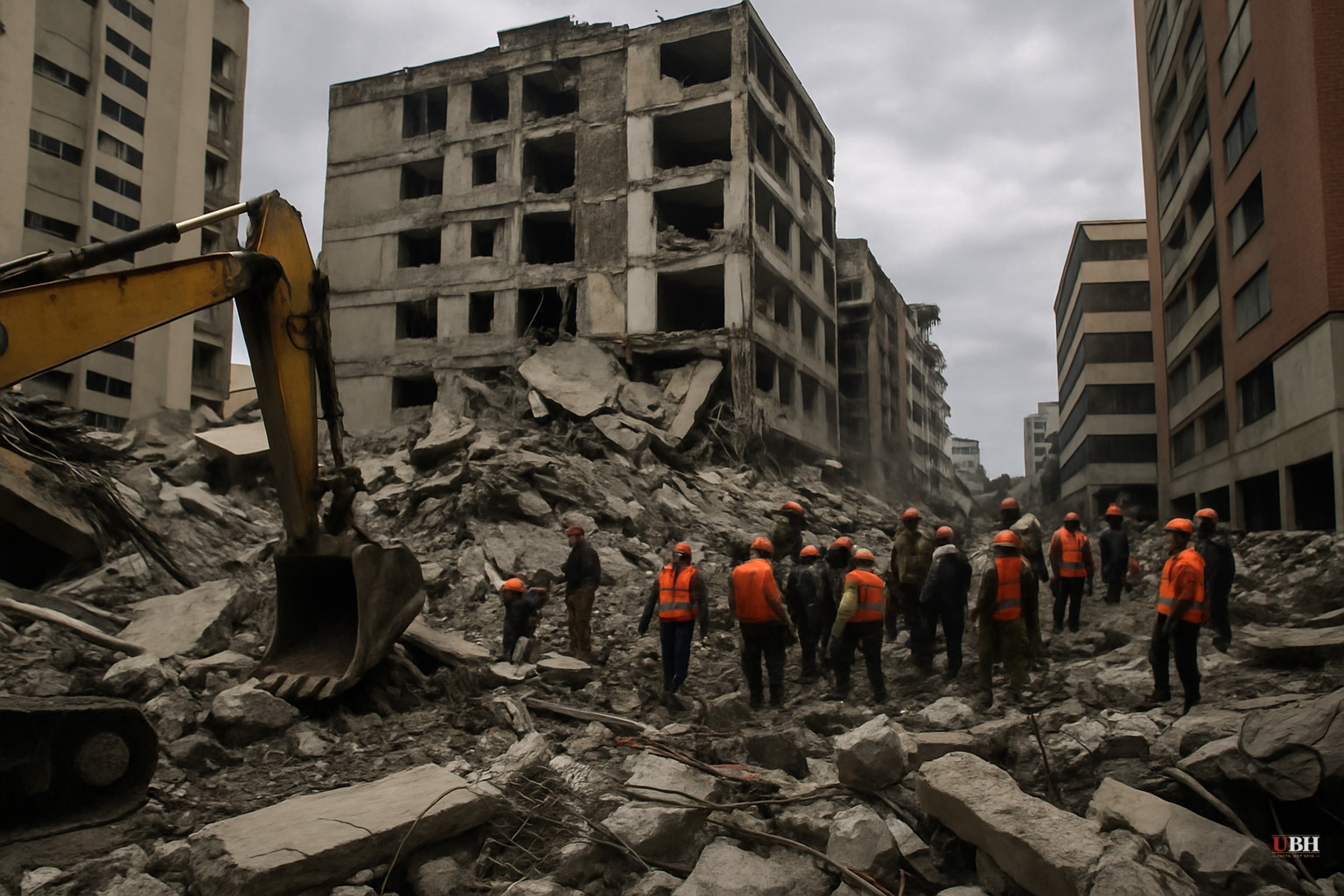
Since the twin earthquakes struck Venezuela's Caribbean coast on Wednesday evening, June 24, rescue workers have been pulling survivors from rubble in Caracas while officials warn that the full casualty count remains unknown.
What the USGS Confirmed
The U.S. Geological Survey recorded two distinct events. The earthquakes struck shortly after 6 p.m. local time. The USGS reported the first earthquake had a magnitude of 7.1, with its epicenter west of the community of Morón, located along Venezuela's Caribbean coast, about 168 kilometers (104 miles) west of Caracas, and a depth of 22 kilometers. The Guardian's reporting, also citing the USGS, described the first quake as a magnitude 7.2 foreshock. The second and larger mainshock, a magnitude 7.5, followed 39 seconds later, with a depth of 10 kilometers and an epicenter 16 kilometers southwest of Morón. The USGS described this as a foreshock-mainshock sequence.
Interior Minister Diosdado Cabello warned on state television that aftershocks remained a serious risk and could bring down structures already weakened by the initial strikes.
Caracas: Buildings Down, Airport Closed
Acting President Delcy Rodríguez declared a national state of emergency Wednesday night and announced that Simón Bolívar International Airport at Maiquetía had been closed after sustaining what she called "severe damage," according to The Guardian. Video from inside the airport, filmed by BBC reporters and contributors, showed passengers running through corridors as debris fell. The Caracas metro and national train systems have been halted.
The hardest-hit district confirmed so far is Altamira, an upscale Caracas neighborhood that houses multiple foreign embassies. A Guardian reporter on the ground counted at least three collapsed buildings there. Dust columns rose over at least two additional neighborhoods where restaurants and businesses were busy at the early evening hour the quakes hit.
Cabello described Altamira as showing "alarming situations" and asked motorists on state television VTV to yield to ambulances and emergency vehicles. He did not announce an official death toll.
PBS News reported firsthand accounts from residents. Roberto Gamas described the mainshock: "The building really shook from side to side. Unreal. The force was incredibly strong. We were walking and it was tossing us around. Everything in the apartment fell." A Guardian reporter witnessed a man outside one collapsed six-story structure calling out for his grandmother, whom he feared was still inside. At least two victims were pulled from that building's rubble, at least one of them alive.
A Rare Event for Venezuela
Venezuela sits at the boundary of the South American and Caribbean tectonic plates, but major quakes are historically infrequent compared to Pacific Rim nations. PBS News noted these are among the strongest earthquakes to strike Venezuela in more than a century. That rarity has practical consequences: Venezuelan building stock, particularly older residential construction, was not necessarily engineered with major seismic events in mind.
Regional Alerts
The U.S. Pacific Tsunami Warning Center issued a tsunami alert for the U.S. Virgin Islands following the mainshock. Authorities in the Dominican Republic issued a similar alert. A tsunami warning for Puerto Rico was issued and then quickly lifted, according to PBS News. No confirmed tsunami damage from those areas has been reported in these sources as of June 24.
The Government's Information Gap
The strongest legitimate concern right now is one that Rodríguez herself surfaced: she offered condolences to families of the dead without stating a number. With an airport closed, the metro down, and rescue operations still active across multiple collapsed structures, the Venezuelan government's capacity to compile accurate information is genuinely constrained.
At the same time, the state of emergency declaration and Rodríguez's on-air address did convey operationally useful information: evacuate damaged buildings, stay outside given aftershock risk, give way to emergency vehicles. Whatever one thinks of the Caracas government's broader record, those instructions were accurate and timely.
What Remains Unknown
As of June 24, 2026, no official casualty count has been released. The number of people trapped in collapsed structures is unconfirmed. The extent of damage outside Caracas — which Cabello said the quake was felt across multiple states — has not been systematically reported. The airport closure has no announced reopening timeline, which complicates both the arrival of international search-and-rescue teams and the departure of foreign nationals.
The warning about aftershocks is the most immediate operational concern for rescue crews: structures damaged but still standing could collapse on both survivors and the people trying to reach them.
Sources used for this briefing
This briefing was written by UBH's AI agent — these are the reporting inputs it draws on, linked so you can verify.


