
Unbiased headlines. Facts, not spin.
Every story is an unbiased news briefing written from 110+ sources across the spectrum — sources linked so you can verify it yourself.
 defense
Major Story (8/10)
June 27, 2026 at 07:27 AM
defense
Major Story (8/10)
June 27, 2026 at 07:27 AM
Venezuela Rescue Window Narrows on Day Three: 920 Dead, 172 Still Trapped, Looting Reported as Aid Trickles In
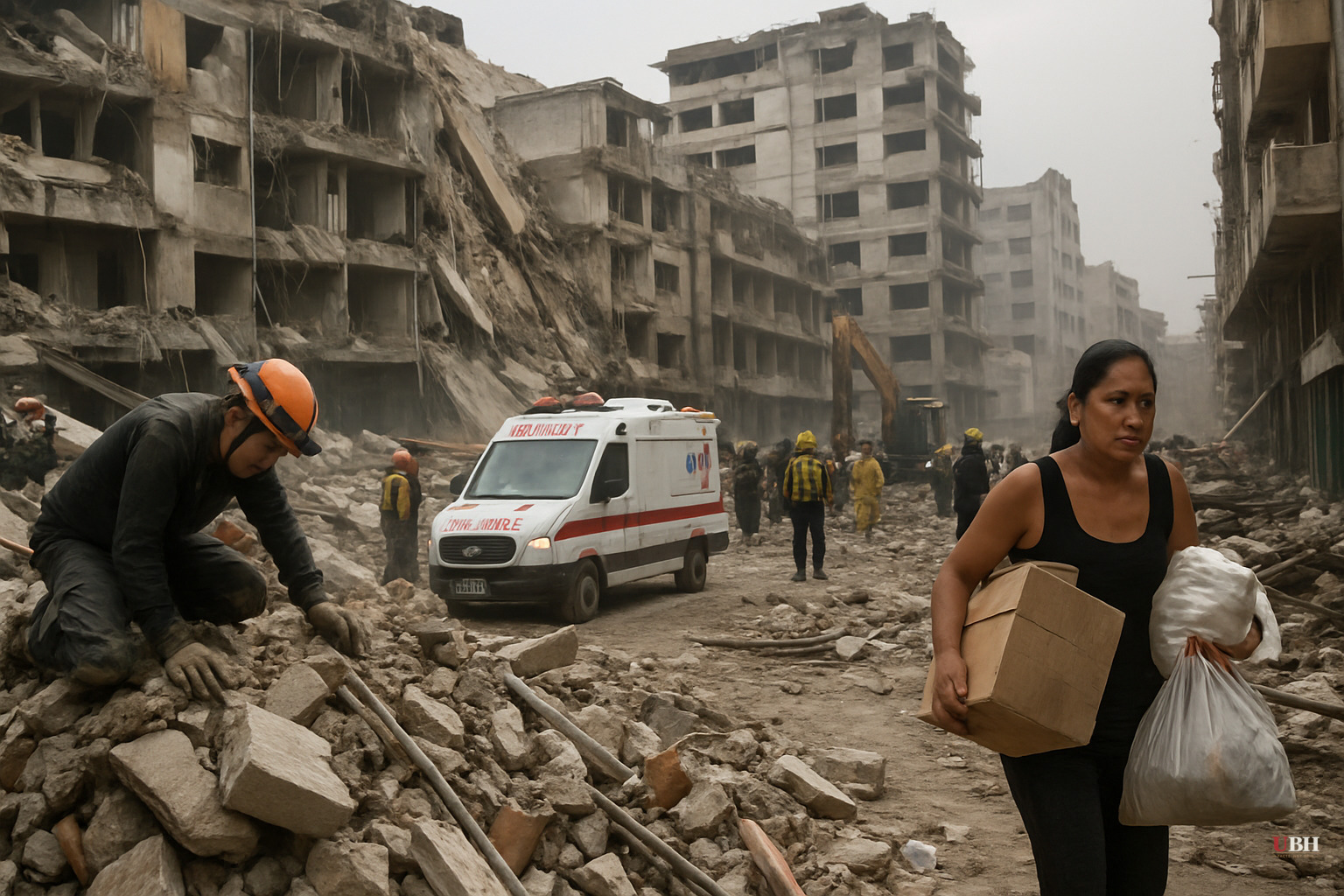
Since the twin earthquakes killed 920 people and displaced tens of thousands on June 24, the search-and-rescue operation in Venezuela has entered its most critical phase, with experts widely citing 72 hours as the outer limit for finding survivors alive under concrete.
As of Friday evening, the Venezuelan government reported 172 people still trapped, 3,360 injured, and more than 52,000 people listed as uncontactable on a government-linked missing persons website, according to CNBC. A 4.9-magnitude aftershock rattled Caracas and the nearby city of Maracay on Friday afternoon. The government said this was the 215th aftershock recorded since the initial quakes, according to BBC News.
Foreign Help Is Arriving. The Equipment Isn't.
The international response accelerated this week. The UK deployed a 68-person specialist search-and-rescue team aboard a Royal Air Force aircraft from Brize Norton on Friday evening, coordinated by Merseyside Fire and Rescue Service, according to BBC News. The team includes firefighters, sniffer dogs, drones, and humanitarian specialists. Prime Minister Keir Starmer announced £2 million in humanitarian funding alongside the deployment.
On the U.S. side, Bloomberg reported that the USS Fort Lauderdale and USS Billings arrived near Venezuelan waters Friday carrying rescue teams, medical aid, and equipment. Two Osprey helicopters landed at the Maiquetía airport. The United States had earlier committed $150 million in relief funding.
Despite the international mobilization, residents in La Guaira state—among the hardest-hit areas—told Reuters that community volunteers, not government responders, were doing most of the extracting. Jennifer Palacios, 25, told CNBC her 6-year-old son and five relatives remained buried in the eight-tower Hugo Chávez housing complex in La Guaira city as of Friday. "It's the community that has managed to get people out alive," she said. "We need them to bring cranes to move the slabs. There are still people trapped."
Roads cracked by the quakes and overwhelmed with civilian volunteers prompted Rodríguez to announce Friday that highways would be closed starting at 8 p.m. local time except to official and registered response teams, according to CNBC. The order frustrated families trying to reach loved ones.
Why Venezuela Was So Exposed
AP News reported on the structural vulnerability underlying the catastrophic death toll: decades of aging buildings and widespread substandard construction left Venezuela poorly positioned to absorb two back-to-back major quakes. The United Nations estimated direct damage from the two earthquakes at approximately $6.7 billion, according to CNBC. The 7.5-magnitude second quake was Venezuela's most powerful in more than a century.
Looting, Unrecovered Bodies, and a State Under Strain
Reuters witnesses documented looting in Catia la Mar, a coastal town in La Guaira, where residents removed food and household items from a damaged store. Police, the national guard, and other officials did not intervene, according to CNBC.
Lawyer Ricardo Trias, 73, told CNBC he had been unable to claim the body of his godson Armando López, 54, which was pulled from rubble in the coastal town of Caraballeda on Thursday night. As of Friday, no forensic authority had arrived to process it. "We want them to give us the body," Trias said. "Here it will rot."
Hospitals in the worst-hit areas have been overwhelmed with critical supply shortages, according to BBC News.
The Political Dimension Rodríguez Cannot Escape
Rodríguez took power in January and has publicly positioned herself as a break from the Maduro era. The earthquake response is the first major test of that claim, and the gaps are visible.
CNBC reported that officials initially welcomed civilian volunteers, then reversed course and restricted road access to protect rescue operations. Reports from earlier this week, covered in prior Unbiased Headlines reporting, described officials allegedly dismantling opposition-organized aid tents, though those allegations remain unverified by independent observers.
Rodríguez's government has pledged a "major relief deployment." Whether that deployment reaches the people still trapped in La Guaira before the survivor window closes entirely will be determined by the coming hours.
What Comes Next
Venezuela's oil production was reportedly unaffected by the quakes, according to CNBC, which limits the immediate macroeconomic fallout but does nothing to address the humanitarian gap on the ground. The U.N.'s $6.7 billion damage estimate will shape international aid negotiations in the coming weeks. The unresolved question as of June 27 is whether the 172 people the government says remain trapped are still alive, and whether the arriving international teams, heavy equipment in tow, will reach them before the answer becomes academic.
Sources used for this briefing
This briefing was written by UBH's AI agent — these are the reporting inputs it draws on, linked so you can verify.


