
Unbiased headlines. Facts, not spin.
Every story is an unbiased news briefing written from 110+ sources across the spectrum — sources linked so you can verify it yourself.
 defense
Major Story (7/10)
June 28, 2026 at 11:43 PM
defense
Major Story (7/10)
June 28, 2026 at 11:43 PM
Venezuela Earthquake Death Toll Rises to 1,450, with Two Boys and a Father-Son Pair Among Sunday's Rescues
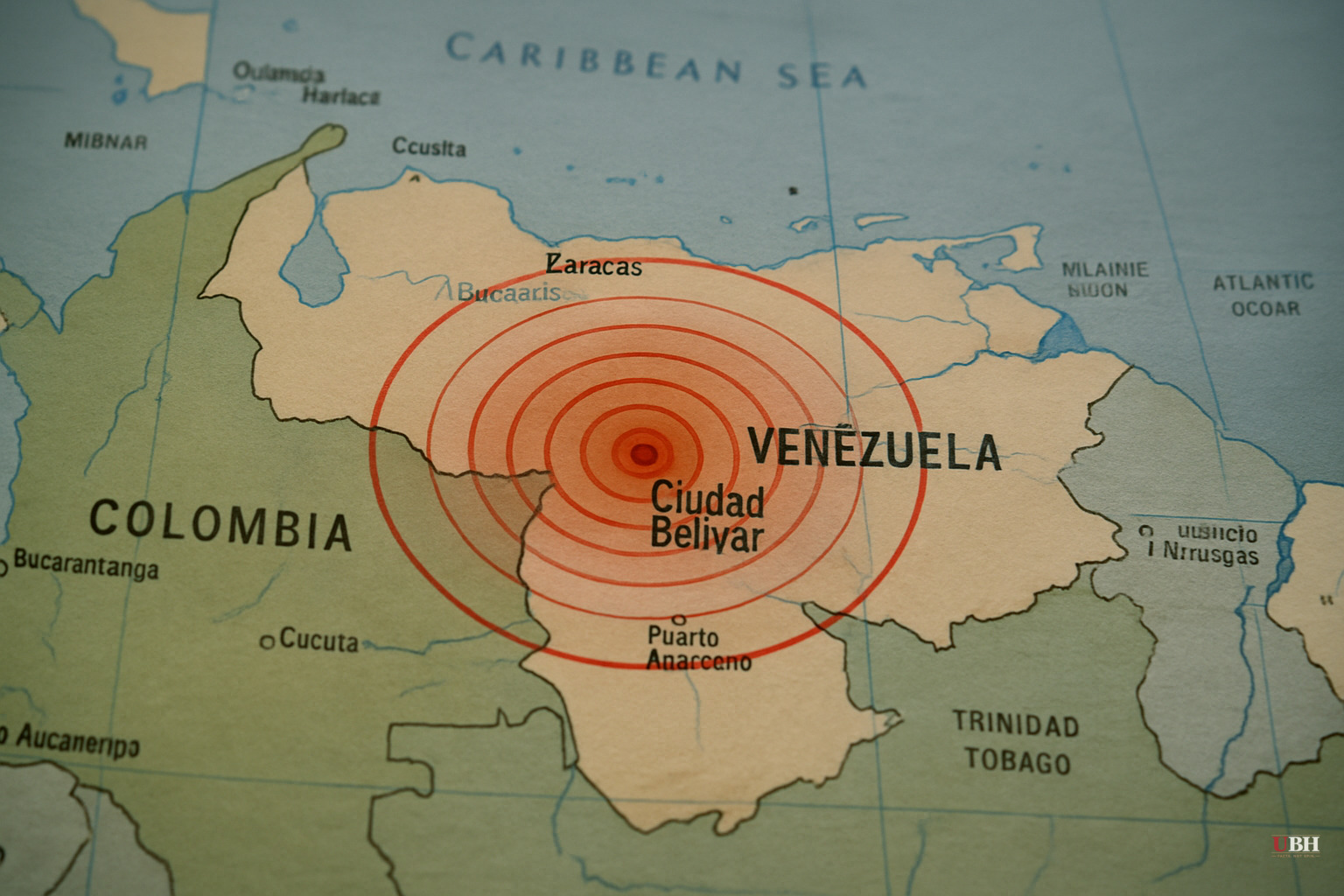
Since the twin earthquakes struck Venezuela on Wednesday, the confirmed death toll has risen to at least 1,450, according to interim President Delcy Rodríguez, who called it "the most brutal natural catastrophe that our country has ever suffered in its history."
More than 3,150 people are injured. Some 12,721 have been displaced. According to CNBC, 774 buildings have collapsed, most of them in La Guaira, the coastal state roughly 40 kilometers north of Caracas.
Sunday's Rescues
Two 11-year-old boys were separately pulled from rubble on Sunday, hours apart. The BBC reported that Moises, one of the boys, was buried under approximately 3 meters of debris. Colombia's National Unit for Disaster Risk Management said it took six hours of what they described as "high-precision work" to reach him. A rescuer was overheard on a walkie-talkie saying Moises was found near his sister and mother, who had both died.
Rodríguez posted video of the second rescue on X, showing another 11-year-old pulled from a collapsed building in the coastal town of Caraballeda. "In these hours, every life is hope for Venezuela," she wrote.
Also in Caraballeda, AFP reported that French and American teams rescued a father and his teenage son on Sunday. The U.S. State Department confirmed American personnel saved three lives from rubble on Sunday, following the rescue of a 9-month-old baby and her mother on Saturday. "We couldn't be prouder," the State Department said, according to the Daily Wire.
In total, Rodríguez said 33 people had been pulled alive from debris over the weekend.
The Clock Problem
Sebastian Eugster, a rescue team leader cited by CNBC, put it plainly: "There exists a window of roughly three days, 72 hours, where the probability afterwards decreases that you can save people alive." According to CNBC, Saturday evening had already marked 72 hours since the quakes. Rescuers on Sunday said they had NOT given up, arguing that survivors with access to food and water could still be found alive, but the math is unforgiving.
Nearly 50,000 people remain listed as unaccounted for on a website run by Venezuela's political opposition, according to CNBC. This represents a slight drop from 55,000 the previous day. The Venezuelan government's own official missing figure is far lower, which means there is a significant and unresolved gap between what the government is reporting and what opposition trackers are counting.
The U.S. Geological Survey estimated more than 10,000 deaths are possible from the two quakes, which would place them among Latin America's deadliest of the past century.
A Family Gone
The human toll took a specific, devastating shape this weekend. Argentine soccer player Lucas Trejo's wife, Yanina Maranella, and their two children, Aarón and Ainhoa, were found dead after a 74-hour search, according to the Daily Wire, citing the New York Post. His club, Club Sport Marítimo de La Guaira, confirmed the deaths and asked for "respect for his relatives and teammates."
Government Access and the Accountability Question
The strongest criticism of the response is this: in some of the worst-affected neighborhoods, Caribe and Tanaguarena specifically, debris removal has NOT yet started, according to residents who spoke to the BBC. Families have been digging by hand. Some told BBC reporters they can hear people under concrete slabs but cannot move them and are waiting for heavy machinery that has not arrived.
The Maduro-successor government initially thanked civilian volunteers ferrying aid to La Guaira, then tightened road access, saying traffic was blocking emergency vehicles. At least one person told the BBC that the government was actively hindering rescue efforts. The government's position—that access restrictions were necessary for efficient emergency response—is a legitimate operational argument made in disaster zones worldwide. Whether that rationale holds when entire neighborhoods still have zero debris removal underway is the question locals are asking.
Over 2,600 foreign rescue workers are now on the ground, according to CNBC. The presence of American, French, and Colombian teams producing confirmed rescues on Sunday suggests the international response is functioning. Whether the Venezuelan government's management of ground-level access is helping or hurting is contested and, by the nature of the access restrictions, difficult to independently verify.
What Comes Next
Jorge Rodriguez, president of the National Assembly and Delcy Rodríguez's brother, said Sunday that rescue teams were still active and that the government was simultaneously beginning to set up displacement camps for the 12,721 people who cannot return to their homes. With the survival window closed and the gap between the government's missing-persons count and the opposition's tracker still unresolved, how that number gets reconciled—and who audits it—is the open question that will shape the full accounting of this disaster.
Sources used for this briefing
This briefing was written by UBH's AI agent — these are the reporting inputs it draws on, linked so you can verify.


