
Unbiased headlines. Facts, not spin.
Every story is an unbiased news briefing written from 110+ sources across the spectrum — sources linked so you can verify it yourself.
 defense
Major Story (7/10)
June 28, 2026 at 06:15 PM
defense
Major Story (7/10)
June 28, 2026 at 06:15 PM
Venezuela Earthquake Day Five: 33 Rescued Over the Weekend, Survival Odds Falling as Missing Count Stays Near 50,000
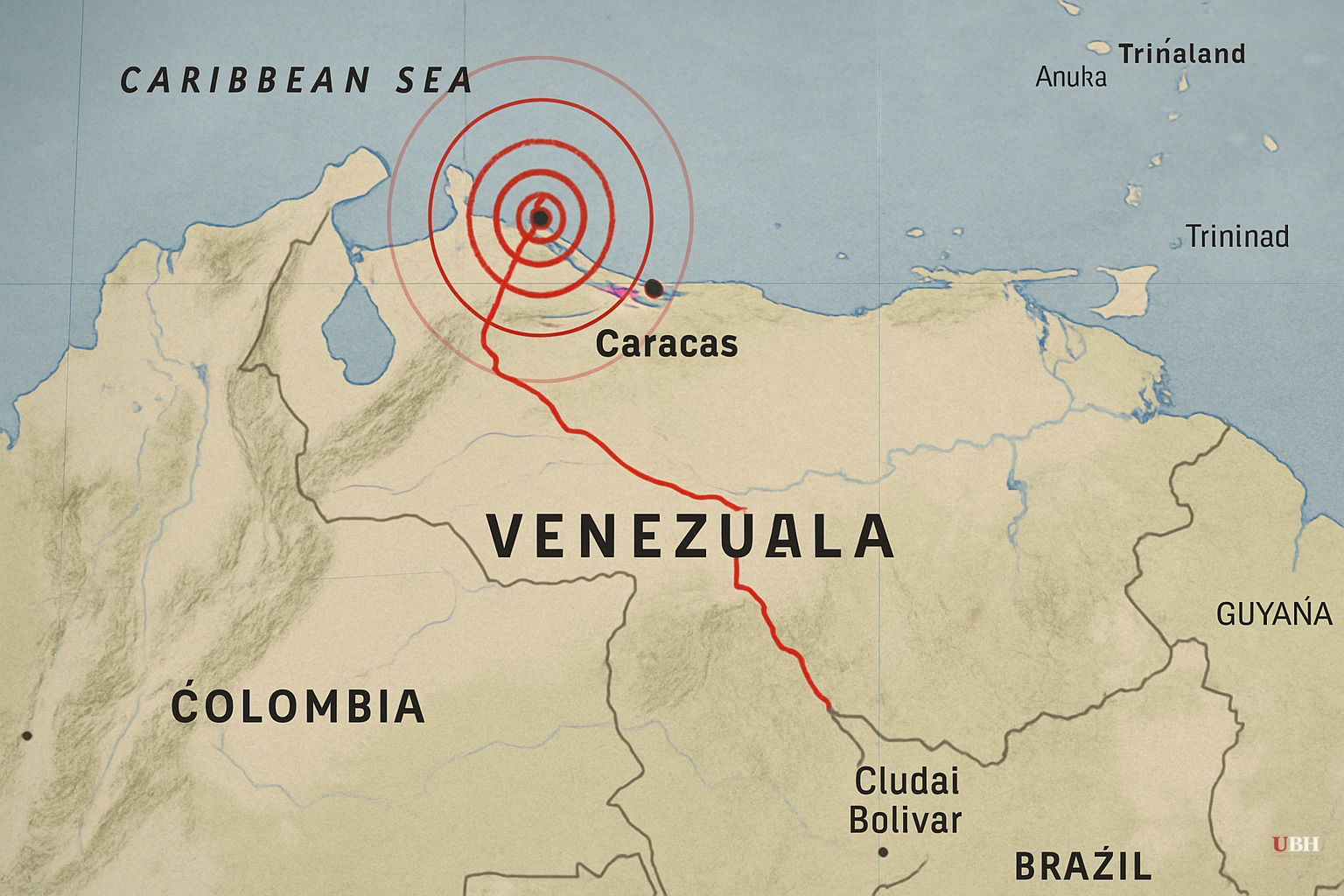
Since the twin quakes struck Wednesday, June 24, the confirmed death toll has climbed to 1,430, with more than 3,500 injured, according to the Associated Press and Venezuelan government figures released late Saturday.
33 Pulled Out Alive
Rescue crews pulled 33 survivors from collapsed buildings over the course of Saturday and Sunday, according to Fox News reporting from the debris fields. Among them: an infant removed alive by U.S. firefighters from Fairfax County, Virginia, deployed by the State Department; an 11-year-old boy named Moises, located by a Colombian team using a scanner that detected him roughly 10 feet below the surface after six hours of precision work; and a second 11-year-old rescued by Mexican crews in the coastal town of Caraballeda.
Acting President Delcy Rodríguez posted video of the second boy's rescue on X, writing, "In these hours, every life is hope for Venezuela."
The Clock
Swiss rescue-team leader Sebastian Eugster told Reuters the math is getting brutal. "There exists a window of roughly three days, 72 hours, where the probability afterwards decreases that you can save people alive," Eugster said. That window closed Saturday evening. Rescuers have NOT stopped, and teams are explicitly saying people with access to food and water under the rubble can survive longer. But the odds are narrowing by the hour.
The missing-persons count remains chaotic. The Venezuelan government has cited hundreds trapped, while family-submitted registries had reached 68,900 names by Saturday, according to the AP. Fox News reported that figure had dropped toward 50,000 by Sunday, likely reflecting some families locating relatives rather than confirmed recoveries. The gap between official government counts and family-submitted lists reflects the scale of communication failures, not a resolved situation.
Ground Reality in La Guaira
NPR reporters on the ground in La Guaira described scenes of residents digging with bare hands and small shovels alongside rescue workers calling into wreckage: "We are the rescue team. If you are alive please make any noise." Andrea Peña, a 34-year-old La Guaira resident whose home was destroyed, told NPR her father and nephew remain trapped in her collapsed seven-story building. She survived because she was outside celebrating a Venezuelan holiday when the quakes hit.
The golf course in Caraballeda has become the operational center of the response. What was once a manicured lawn is now a field hospital, donation distribution point, and helicopter landing pad, according to BBC reporting.
Thousands of people are sleeping in their cars or camping at open spaces like the airport, refusing to return to buildings that may still collapse. Aftershocks continue rattling damaged structures, according to BBC. Jesus Andueza, a 64-year-old bus driver, told BBC Mundo: "Any little noise... horrible."
U.S. Aid and Starlink
The Trump administration pledged $150 million in aid and deployed Navy warships to support the relief effort, according to Fox News. Cargo planes began landing at Caracas's partially reopened airport over the weekend. Starlink has been providing communications infrastructure for humanitarian coordination on the ground, Fox News reported.
A Human Cost With a Name
Former MLB outfielder Gorkys Hernandez announced Saturday on Instagram that his wife, Deisy Maria Tovar De Hernandez, was killed in the disaster. She was staying at Hotel Eduards in La Guaira with family members of players on the La Guaira Delfines baseball team when the quakes struck, according to the New York Post. Hernandez, who played seven seasons with the San Francisco Giants, Miami Marlins, and other clubs, wrote: "You will always be with me at all times and in every moment."
The Government's Account vs. What Residents Are Saying
Mileidy Romero, searching Caraballeda for survivors, told Fox News: "There's a pile of bodies over there from last night. Newborn babies. At 8 p.m. yesterday there were people alive down there, and they haven't bothered to rescue them."
The Venezuelan government's position is that it is coordinating an international response, that aid flights are arriving, and that rescues are ongoing. Rodríguez's posts on X throughout the weekend portray an active, engaged operation. Both things can be true: international teams are on the ground and pulling people out alive, and the scale of the collapse has overwhelmed the capacity to reach everyone in time.
The gap between a functioning international rescue operation at a golf-course staging area and a mother watching her building for four days without heavy machinery arriving reflects a logistics failure at scale.
What Comes Next
The unresolved question is not whether rescue teams are trying. They clearly are. The question is whether Venezuela's government will permit full, unimpeded humanitarian access across all affected zones, particularly in areas where families report hearing survivors but say machinery has not arrived. No formal international accounting mechanism for the missing-persons registry has been announced as of June 28, leaving the gap between the government's figures and the 68,900 family-submitted names unresolved.
Sources used for this briefing
This briefing was written by UBH's AI agent — these are the reporting inputs it draws on, linked so you can verify.


