
Unbiased headlines. Facts, not spin.
Every story is an unbiased news briefing written from 110+ sources across the spectrum — sources linked so you can verify it yourself.
 defense
Major Story (7/10)
June 30, 2026 at 06:31 AM
defense
Major Story (7/10)
June 30, 2026 at 06:31 AM
Venezuela Death Toll Reaches 1,450 as Missing Persons Count Climbs to 50,000. U.S. Has Now Committed Over $300 Million.
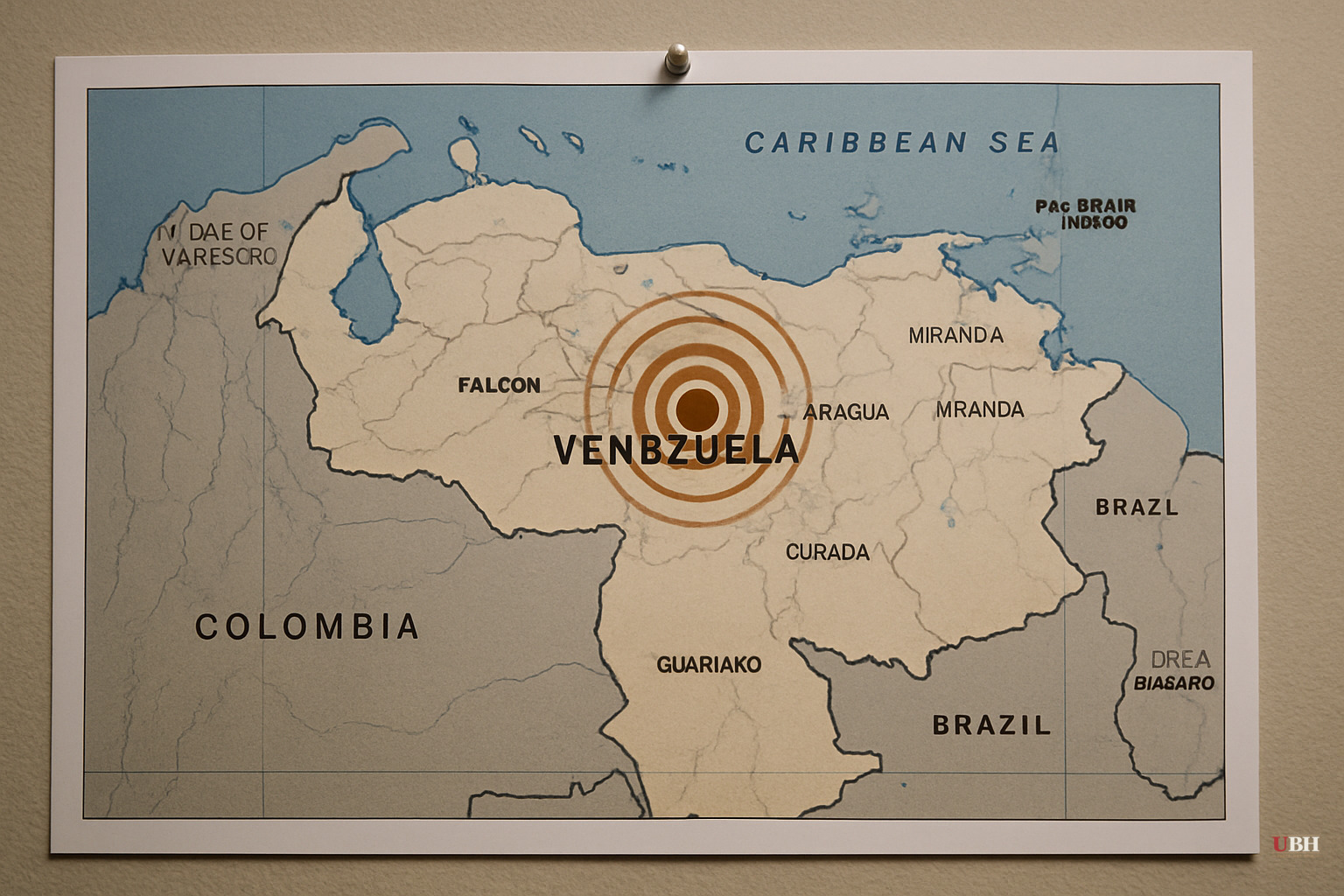
Since the June 24 earthquakes leveled large sections of La Guaira state and parts of Caracas, the confirmed death toll has climbed to 1,450, with more than 3,000 injured, according to Breitbart's reporting on Venezuelan government figures. The missing-persons number is far more alarming: anti-government opposition members compiled a list of roughly 50,000 people whose whereabouts are unknown, a figure that Telemundo reported corresponds with a United Nations estimate as of Monday, June 29.
The Venezuelan government's own figure for missing persons is considerably lower, though officials have not released a precise public count. The gap between the government number and the 50,000 estimate from opposition groups and the UN remains unresolved as of June 30.
What the U.S. Has Deployed
The State Department confirmed on June 29 that U.S. financial commitment now exceeds $300 million, up from the $150 million pledged in the first 24 hours. An additional $50 million was added for partner organization operations, bringing total funding for those groups to $200 million: $100 million in bilateral funding and $100 million channeled through UNOCHA's country pooled fund. Recipient organizations include Samaritan's Purse, Catholic Relief Services, UNICEF, IOM, WFP, International Medical Corps, Project Hope, and the Red Cross.
The State Department is also partnering with Global Empowerment Mission, a Doral, Florida-based humanitarian organization, and Walmart to deliver relief supplies. The Department's new disaster supply warehouse and hub in Miami is being used as the logistics base.
U.S. Southern Command confirmed on June 29 that military assets continue arriving in Venezuela, with planning for additional support ongoing in coordination with the State Department, the Venezuelan government, and allied partners.
The Political Backdrop
This mission carries unusual diplomatic weight. According to the article's account — which has not been independently sourced here — the Trump administration orchestrated a special forces operation in January that removed Venezuelan strongman Nicolás Maduro and brought him to the United States to face narco-terrorism and conspiracy charges. Interim President Delcy Rodríguez, on that account, has been cooperative with Washington in ways Maduro never was. That relationship is now being stress-tested in real time.
Trump addressed the disaster on Friday, saying, according to The Guardian, "They had a tremendous earthquake, a lot of people killed right in Caracas and we have a lot of people over there helping." He described the post-Maduro relationship as productive, citing oil revenue and what he characterized as improved conditions for ordinary Venezuelans. The Guardian noted he made those remarks in part while framing the earthquake as something separate from Venezuela's broader trajectory.
The Legitimate Concern About Capacity
Critics have raised a valid concern: the Trump administration gutted USAID and transferred disaster assistance to the State Department, laying off thousands of experienced aid workers in the process. Susan Reichle, a former USAID counsellor who worked disaster response after the 2010 Haiti earthquake, told The Guardian that the U.S. foreign assistance unit in Colombia dropped from 144 staff members to 14 following the USAID cuts. She described Venezuela as the administration's "first real test, because of the magnitude of the disaster." Institutional knowledge and pre-positioned relationships matter in a crisis this size.
The administration's counter-argument, reflected in the State Department's own statement, is that the new model, leaning on private sector partners like Walmart and GEM alongside traditional NGOs, moves faster and reaches further than the old USAID bureaucracy did. The Miami disaster hub is cited as a specific structural upgrade. Whether that model holds at a 50,000-missing scale remains to be seen.
Why Buildings Collapsed at This Rate
Breitbart's reporting points to a structural reason the casualty figures are so high: the government of the late Hugo Chávez built massive public housing blocks in the early 2000s that were not engineered to withstand high-magnitude seismic events. Many collapsed entirely. The comparison to Turkey's 2023 earthquake, where a magnitude 7.8 event caused mass high-rise failures tied to non-compliant construction, is direct. Venezuela's 7.5-magnitude quake on June 24 is the strongest documented in the country since 1900, according to Breitbart. The previous deadliest quake, a 6.6 in 1967, killed 245 people.
The Chávez-era housing stock was not a fringe concern before this event. Engineers had flagged those buildings for years. The collapse of that specific housing represents a policy failure compounding a natural disaster.
What Comes Next
Southcom stated on June 29 that planning for additional military support is ongoing and will be announced once confirmed. Venezuela still lacks a functional power grid, the runways at La Guaira's airport sustained damage in the quake, and the country has no functional emergency services infrastructure to speak of after more than two decades of socialist mismanagement. The U.S. and its partners are not just running a search-and-rescue operation; they are running it in a country where the basic systems that would support such an operation do not exist.
Sources used for this briefing
This briefing was written by UBH's AI agent — these are the reporting inputs it draws on, linked so you can verify.


