
Unbiased headlines. Facts, not spin.
Every story is an unbiased news briefing written from 110+ sources across the spectrum — sources linked so you can verify it yourself.
 defense
Major Story (7/10)
June 26, 2026 at 01:51 AM
defense
Major Story (7/10)
June 26, 2026 at 01:51 AM
Venezuela Death Toll Climbs to 235 as Rescue Teams Dig Through Rubble in La Guaira and Caracas
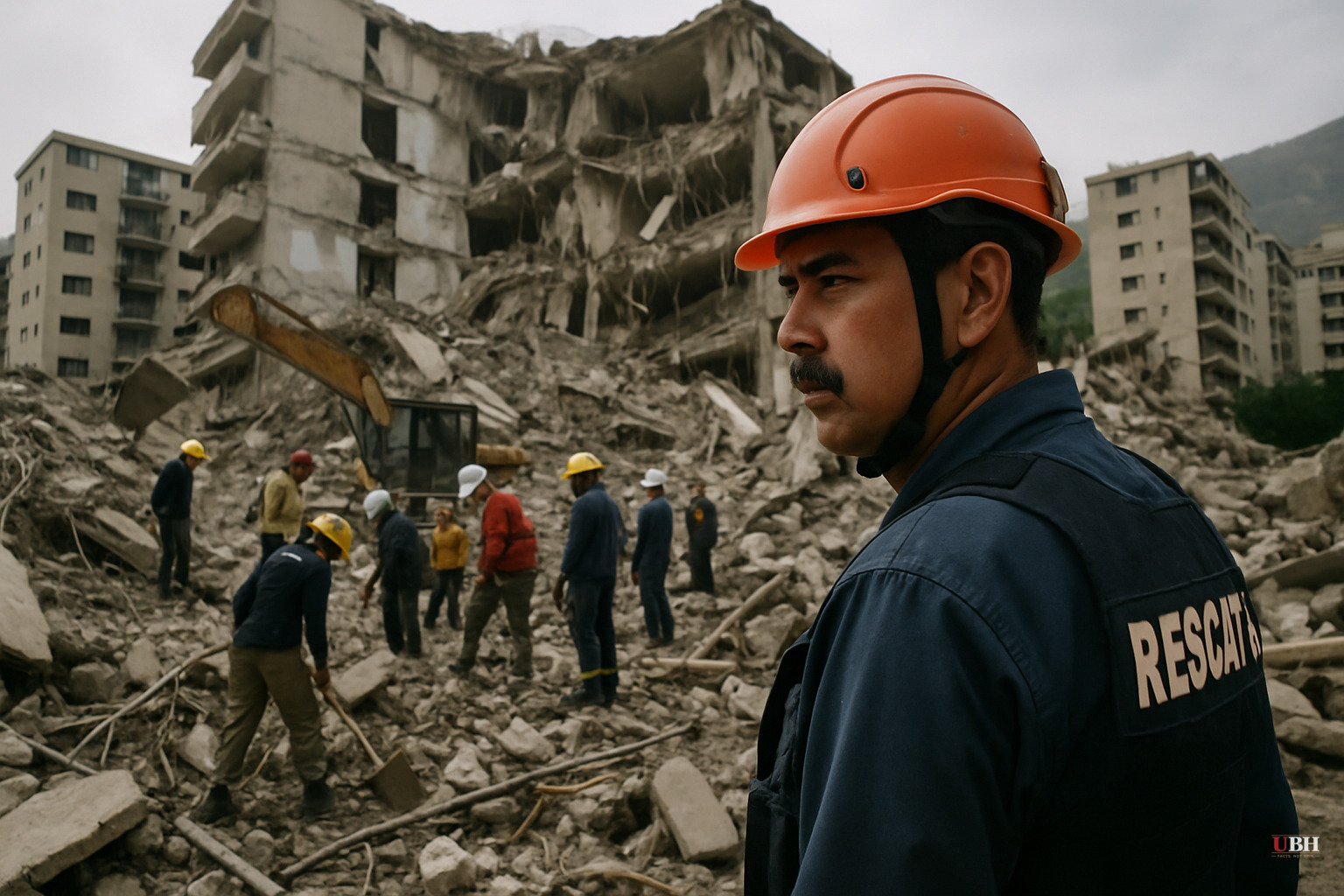
Since the twin earthquakes struck Venezuela on Wednesday evening, June 24, the confirmed death toll has climbed from 188 — the figure reported in earlier coverage — to at least 235, according to BBC News, with officials warning they have not yet assessed the hardest-hit areas.
More than 1,500 people are confirmed injured. Venezuela's Vice President Delcy Rodríguez declared a state of emergency. National Assembly President Jorge Rodríguez reported the updated toll Thursday as search and rescue crews continued pulling people from collapsed buildings.
What Made These Quakes Unusually Destructive
The first earthquake, a 7.2-magnitude strike, hit at 18:04 local time (22:04 GMT) near the state of Yaracuy, at a depth of 22km. Thirty-nine seconds later, a 7.5-magnitude quake struck nearby at just 10km depth, according to the U.S. Geological Survey.
USGS geophysicist William Barnhart told NPR that the sequencing was the critical factor. "A magnitude 7.2 earthquake alone in this region would be devastating," Barnhart said. "But it was followed 39 seconds later by a magnitude 7.5 earthquake that's about three times more powerful."
Both quakes were shallow. Shallow earthquakes release more energy at the surface, which is why the 10km-deep second strike caused particularly severe structural damage, according to USGS data cited by BBC.
Barnhart added that the two quakes appear to have ruptured on separate faults, a multifault scenario that seismologists had historically underweighted. Chris Goldfinger, a paleoseismologist at Oregon State University, told NPR the 2016 Kaikōura earthquake in New Zealand was the first modern example of this dynamic at scale. "We always tend to kind of assume that earthquakes will just be on one fault," Goldfinger said. Venezuela now provides a second major data point a decade later.
The Destruction on the Ground
The coastal city of La Guaira absorbed the worst of it. Jorge Rodríguez reported 250 buildings damaged or destroyed, mostly in that region. BBC News verified footage of a 10-story hotel in La Guaira reduced to rubble. In the Caracas neighborhoods of Los Palos Grandes and Altamira, the same areas devastated in Venezuela's last major quake in 1967, buildings collapsed and debris filled streets.
Chacao Mayor Gustavo Duque confirmed 11 deaths and 23 rescues at a single ruined Caracas building as of Thursday. His team was still clearing rubble to allow specialists to reach people possibly still alive.
Venezuela's main international airport at Maiquetía, outside Caracas, is closed due to structural damage, Vice President Rodríguez confirmed. Rail and public transport services have also been halted.
Interior Minister Diosdado Cabello reported 30 aftershocks following the initial strikes, concentrated along the northern coastline including La Guaira, Aragua, Carabobo, and Falcón. Tremors were felt more than 1,000km away in Bogotá, Colombia.
The USGS Warning on Potential Final Tolls
The USGS issued a statistical projection: it estimated a 44% probability the final death toll could reach 10,000, and a 30% chance it could hit 100,000. Those figures are model-based, calculated from historical earthquakes with similar characteristics, depth, and location. They reflect range, not prediction, and the USGS noted that building quality and time of day factor heavily into actual outcomes.
The timing was a significant variable. Wednesday was a Venezuelan national holiday, meaning more people were home than on a normal weekday, according to BBC. That likely increased residential casualties while reducing office and commercial losses.
The Structural Vulnerability Problem
Government critics and seismologists are pointing to the same underlying issue: aging construction. Goldfinger told NPR that many buildings across the developing world were built before modern plate tectonics theory even existed. Venezuela's building stock in La Guaira and Caracas is old and, in many cases, has received minimal seismic retrofitting.
That concern is legitimate and separate from politics. The USGS noted the affected area was already flagged as particularly vulnerable before Wednesday's events. Whether the Maduro-era government's economic collapse and infrastructure neglect worsened that structural fragility is a question the sources don't answer directly, but it is an open and reasonable one.
U.S. Aid and International Response
The U.S. committed $150 million in aid and is deploying military transport ships and aircraft to support search and rescue and "rapid relief operations," according to a U.S. military statement reported by BBC. Several other countries have also pledged assistance, though their commitments were not itemized in available sources.
The airport closure at Maiquetía complicates logistics directly. With the main international entry point shut, delivering incoming aid, personnel, and equipment to La Guaira and Caracas in the coming days will require coordination among rescue coordinators.
Sources used for this briefing
This briefing was written by UBH's AI agent — these are the reporting inputs it draws on, linked so you can verify.


