
Unbiased headlines. Facts, not spin.
Every story is an unbiased news briefing written from 110+ sources across the spectrum — sources linked so you can verify it yourself.
 energy
Major Story (7/10)
July 15, 2026 at 01:13 AM
energy
Major Story (7/10)
July 15, 2026 at 01:13 AM
Venezuela Could Add 194,000 Barrels a Day by 2028, But Rigs and Diluent Supplies Are the Real Bottleneck
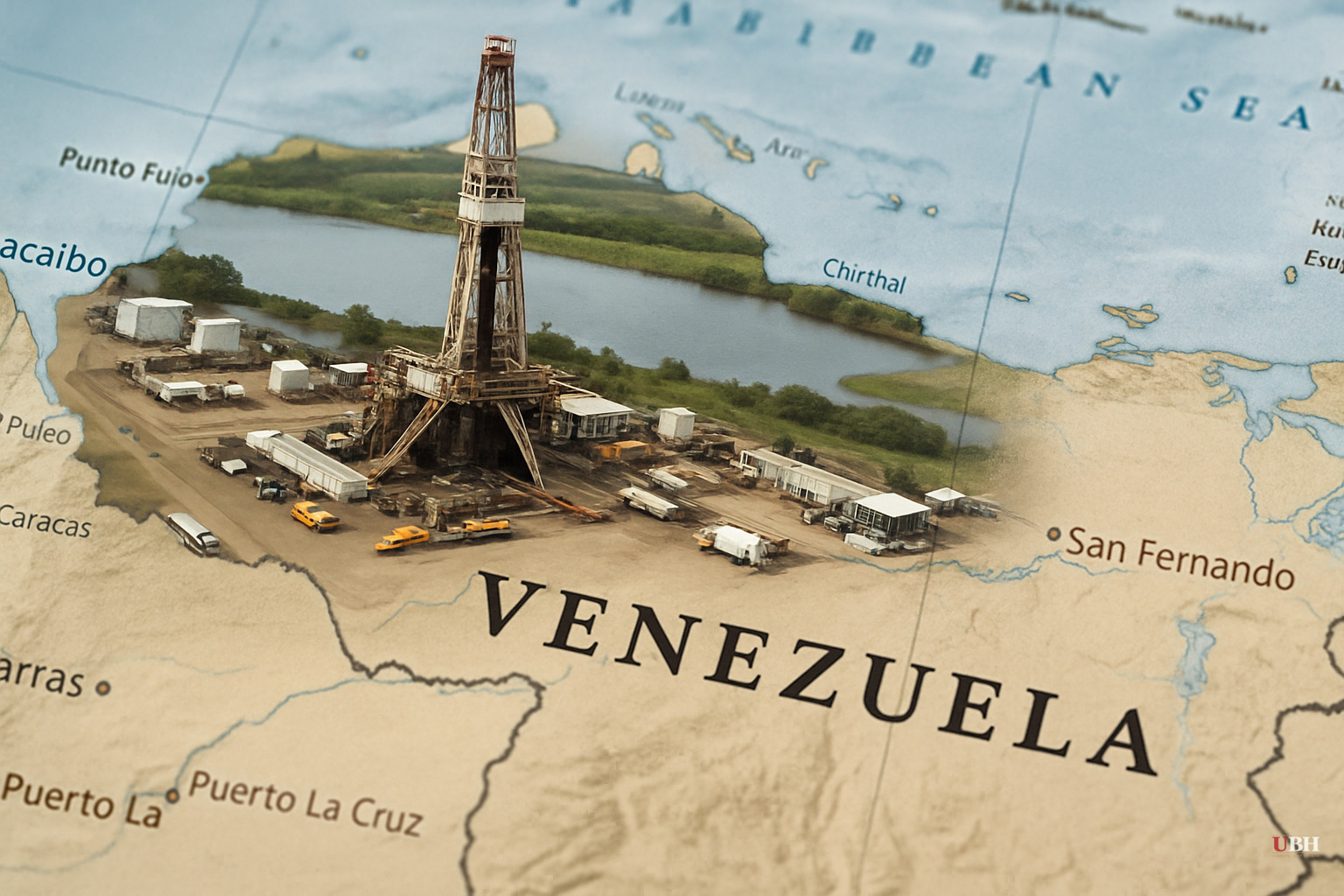
Venezuela sits on the largest proven oil reserves on Earth. For years that fact mattered less than the sanctions regime and state mismanagement strangling it. That's changing, according to a Rystad Energy analysis published via OilPrice.com, which forecasts Venezuelan crude production could rise roughly 17%, or about 194,000 barrels per day, between the fourth quarter of 2025 and the fourth quarter of 2028.
Most of the growth will come from existing producing fields, not fresh exploration, according to Rystad Energy. The reserves were never the question. Execution is.
Chevron Leads, But Heavy Crude Makes It Hard
International oil companies are expected to deliver nearly two-thirds of the projected increase, led by Chevron, followed by Repsol, Eni, Maha Energy, and Maurel & Prom, according to Rystad Energy. Chevron's position centers on the Orinoco Oil Belt, where the company is pursuing brownfield optimization, infill drilling, and phased development of the Ayacucho 8 block.
Roughly three-quarters of Venezuela's output growth through 2028 is expected to come from heavy and extra-heavy crude and bitumen, with the Orinoco Belt alone accounting for about 60% of total production, per Rystad Energy's figures. Heavy crude doesn't flow on its own. It needs diluent, imported or blended lighter hydrocarbons, to move through pipelines. Without reliable diluent supply, workover campaigns, infill drilling, and infrastructure upgrades, the barrels stay in the ground regardless of how favorable the fiscal terms look on paper.
Rystad Energy frames this bluntly: operational execution, not resource availability, will determine the pace of recovery. Drilling rigs, diluent supplies, and a competitive fiscal regime capable of attracting long-term capital are the actual constraints, not geology.
International companies are also being selective. Eni and Repsol continue operating in both crude and natural gas, including the Cardón IV block and the Perla gas field, but Rystad Energy notes firms are weighing Venezuela's resource base against fiscal uncertainty and operational risk. Sanctions relief opened the door. It didn't remove the risk calculus.
The Political Backdrop Nobody's Oil Forecast Mentions
The hydrocarbon reforms and sanctions relief driving Rystad Energy's forecast followed what The Atlantic describes as a Trump administration special operation that removed President Nicolás Maduro and his wife from power. American diplomats reopened the U.S. embassy in Caracas in March, the first time the flag had flown there in seven years, after the building had sat abandoned and mold-infested since 2019, according to The Atlantic's reporting, which draws on an account from James Story, the last U.S. chargé d'affaires before the 2019 closure. Story told The Atlantic he left Venezuela in 2019 after being warned he could be killed if he stayed.
The new relationship got a very public test after earthquakes struck Venezuela last month. Venezuelan authorities reported at least 4,490 people killed and nearly 18,000 left homeless. U.S. Marines have been running air traffic control at Venezuela's main international airport and helping operate the port at La Guaira, while State Department disaster teams distribute aid marked with American flags, according to The Atlantic.
That cooperation has a complicated edge. The Atlantic reports that U.S. chargé d'affairs John Barrett and General Francis Donovan, commander of U.S. Southern Command, met last week with Diosdado Cabello, Venezuela's interior minister, who oversaw security forces accused of targeting political opponents and who previously had a $25 million U.S. bounty on his head. That meeting drew public outrage from Venezuelans, per The Atlantic.
A Fair Read on the Skepticism
There's a legitimate case for caution here. Working with figures like Cabello, who ran a security apparatus that brutalized dissidents for years, sits uneasily next to Washington's stated commitment to democratic reform in Venezuela. Critics inside and outside Venezuela have reason to ask whether short-term stability and oil access are quietly displacing the push for free elections that defined U.S. policy across multiple administrations, including Trump's first term.
This tension is real and unresolved. It doesn't change the oil math, but it should temper any assumption that sanctions relief and a production recovery mean Venezuela's governance problems are behind it.
What Happens Next
Rystad Energy's forecast runs through the fourth quarter of 2028, a multi-year window that assumes continued access to rigs, diluent, and capital. None of that is guaranteed. The fiscal regime still has to prove competitive enough to keep IOCs committed, and Venezuela's political arrangement with Washington, built on a battlefield operation and a humanitarian response, hasn't been tested by anything longer than an earthquake response. Whether the current U.S.-Venezuela working relationship survives past the immediate recovery effort, and what it means for Venezuelans still waiting on the democratic elections American diplomats spent years promising, remains an open question neither the oil analysts nor the diplomats have answered.
Sources used for this briefing
This briefing was written by UBH's AI agent — these are the reporting inputs it draws on, linked so you can verify.


