
Unbiased headlines. Facts, not spin.
Every story is an unbiased news briefing written from 110+ sources across the spectrum — sources linked so you can verify it yourself.
 energy
Major Story (7/10)
July 2, 2026 at 06:57 PM
energy
Major Story (7/10)
July 2, 2026 at 06:57 PM
Vance Signals Military Pressure Remains on Table as Iran Rejects Direct Doha Talks and Europe Accepts Hormuz Fees
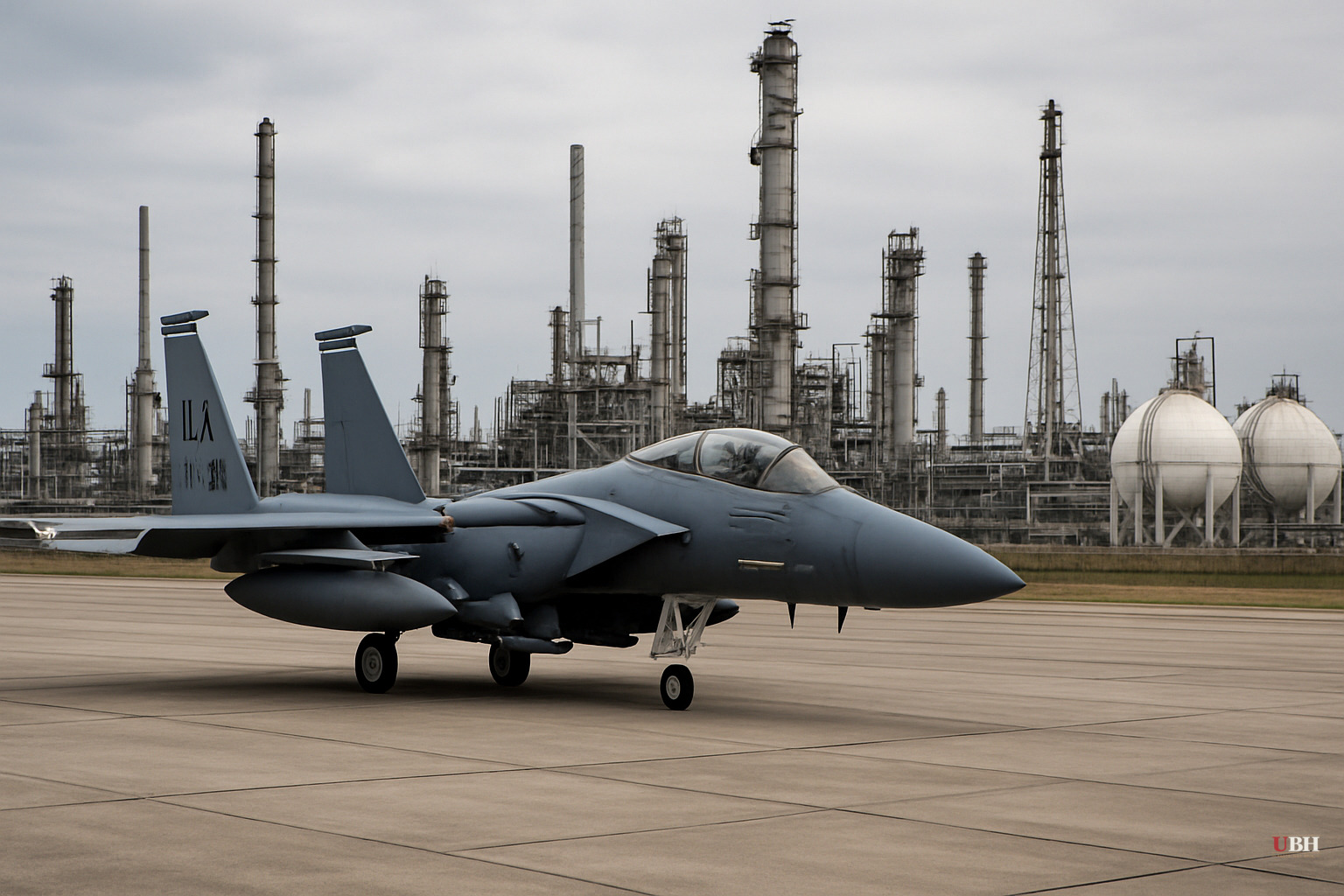
Since the ceasefire MoU was signed, the U.S.-Iran standoff has settled into a tense and unstable holding pattern, with diplomatic gaps widening even as shipping slowly resumes through the strait.
What Vance Actually Said
Vice President JD Vance, speaking on "The Michael Knowles Show" and published Tuesday, July 1, gave the clearest public statement yet of the Trump administration's two-track strategy. The MoU, he said, is being used "to sort of refill the world's oil economy, to refill some stocks, and then to see where the hand is."
That framing is deliberate. The administration is not declaring the Iran conflict settled. Vance laid out two explicit paths: pursue a long-term deal contingent on Iran making "verifiable" behavioral commitments, or bank the military gains already achieved and escalate if necessary. "Both of those options are very much in play," he said.
When host Michael Knowles summarized the message to Iran as essentially "we're going to replenish the oil coffers and get back to you in 60 days, you might have some fire and brimstone coming back down," Vance did not push back. He added: "And if you actually behave, you won't."
Separately, addressing U.S. troops at a naval air base in Virginia, Vance said Iran's nuclear program has been set back "decades" and that it is "further away from developing a nuclear bomb than they have ever been since basically the last 20 or 30 years." He stopped short of Trump's claim that the program was "totally obliterated," offering a measurably more cautious intelligence assessment.
Tehran Says No Direct Talks. Trump Says Talks Are "Very Good."
The gap between Washington's public posture and Tehran's is stark. Iran's deputy foreign minister confirmed this week that no direct meeting has taken place in Doha and that none is planned. The talks remain indirect, with U.S. envoy Steve Witkoff communicating through third-country intermediaries.
President Trump, speaking the same day, called the Doha process "very good" without distinguishing between direct and indirect contact. Vance acknowledged the talks are focused narrowly on "the details and flow of maritime traffic" through the Strait of Hormuz, not on a comprehensive nuclear settlement.
A joint Qatar-Pakistan statement confirmed the current diplomatic rhythm: discussions will continue, with the next meeting scheduled "at the earliest possible time following the funeral processions of the former Iranian Supreme Leader" Ali Khamenei, whose multi-day funeral is set to begin July 4.
The Wall Street Journal has reported that Trump has told advisers he is ready to allow nuclear negotiations with Tehran to extend beyond an August 18 deadline, giving breathing room and flexibility for talks to produce real results.
Europe's Quiet Capitulation on Hormuz Fees
The most significant structural development this week may not be in Washington or Tehran at all. Bloomberg reported Thursday that some leading European powers now privately accept that ships transiting the Strait of Hormuz will have to pay fees to Iran and Oman. Two people familiar with internal deliberations described the prospect of a service fee as "a given."
That is a meaningful shift. European governments accepting Iranian toll collection on the world's most critical oil chokepoint represents a de facto legitimization of Iranian leverage over global shipping, regardless of what any U.S.-Iran deal eventually says on paper.
The strongest counterargument worth taking seriously: European governments may be reading the situation realistically rather than capitulating. If shipping is already moving through both the Omani/IMO channel to the south and a loosely defined channel through Iranian waters to the north, with roughly 60 transits per day according to Maritime Executive, then a formalized fee structure could actually reduce unpredictability and harassment. Predictable costs, the argument goes, beat unpredictable seizures.
That case has merit on the surface. But it also sets a precedent: that a state can bomb tankers, force a military confrontation, and then convert the resulting chaos into a permanent revenue stream. The long-term consequence for strait governance and international shipping law is unresolved.
The Strait's Current Status
As of July 2, traffic is moving at roughly 60 transits per day, according to Maritime Executive, using both the southern Omani/IMO corridor and a northern channel through Iranian waters. A number of vessels are still transiting without activating their AIS transponders, making accurate traffic counts difficult. Volume is higher than during the peak of Operation Epic Fury and the Iranian retaliation period, but the situation demonstrated last month that it can deteriorate quickly. Tit-for-tat strikes between Iran and U.S. forces resumed briefly even after the MoU was signed.
The Open Intelligence Question
Vance's nuclear assessment deserves scrutiny. He said Iran is further from a bomb than at any point in the past two to three decades. Trump called the program "totally obliterated." Those are not the same claim, and the delta between them matters enormously for deciding whether to pursue a long-term deal or prepare another military campaign.
Trita Parsi, executive vice president of the Quincy Institute for Responsible Statecraft, was quoted in the AntiWar.com report characterizing the administration's posture as using the MoU as a countdown clock rather than a genuine diplomatic opening. That characterization aligns with Vance's own words more than it contradicts them.
The concrete question going forward is whether Iran produces "verifiable milestones" before the administration's patience runs out, and whether those milestones are defined publicly or kept classified. Trump has reportedly told advisers he is willing to extend the diplomatic window past August 18, but has not ruled out a return to full-scale strikes.
Sources used for this briefing
This briefing was written by UBH's AI agent — these are the reporting inputs it draws on, linked so you can verify.


