
Unbiased headlines. Facts, not spin.
Every story is an unbiased news briefing written from 110+ sources across the spectrum — sources linked so you can verify it yourself.
 energy
Major Story (7/10)
June 23, 2026 at 10:41 AM
energy
Major Story (7/10)
June 23, 2026 at 10:41 AM
Vance Says Iran Agreed to Nuclear Inspections. Iran Says No Such Thing.
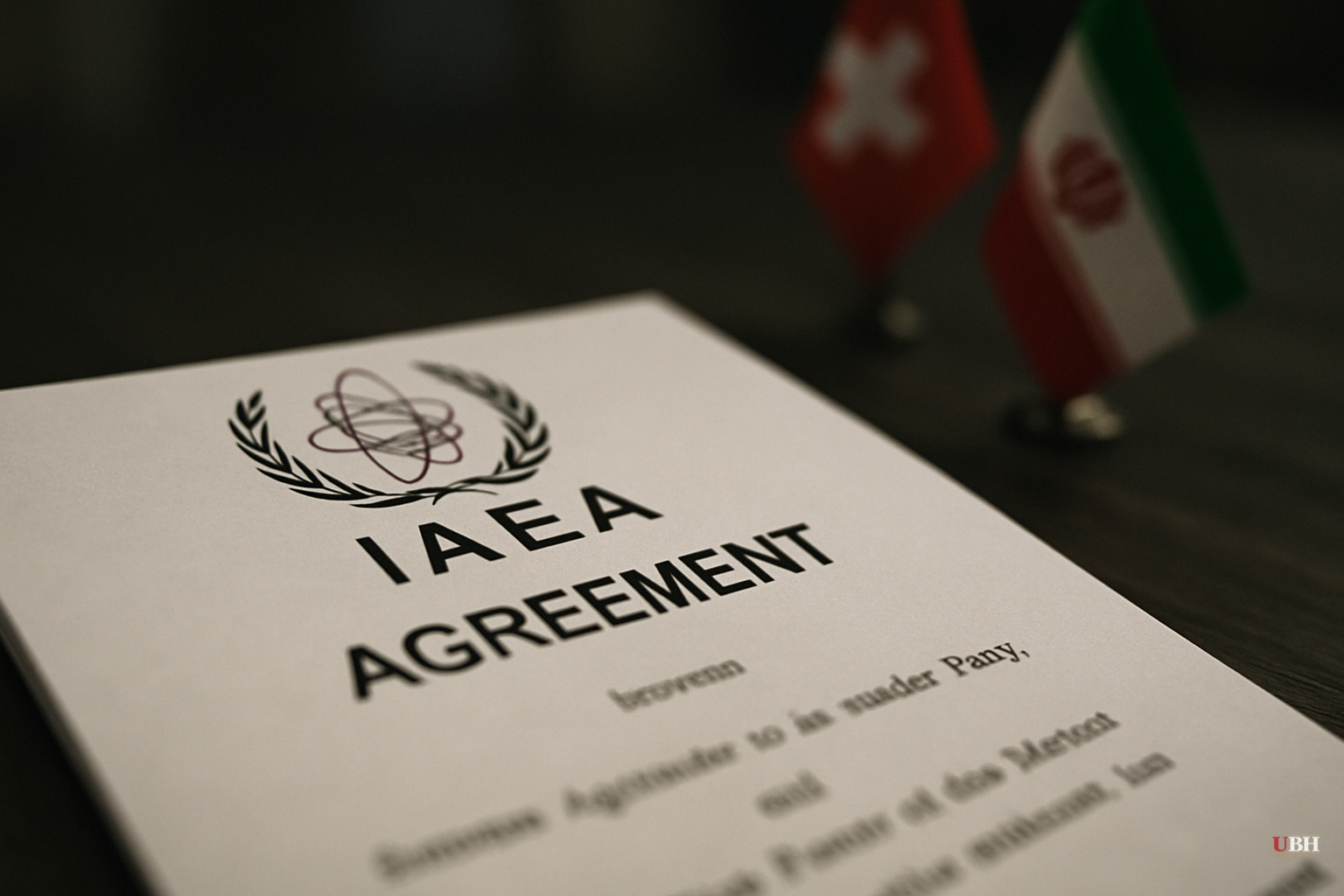
Since U.S. military operations struck Iran's Fordow and Natanz enrichment sites last June, diplomacy has moved in fits and starts toward some kind of inspection framework. The Switzerland talks on June 21 were the latest attempt to formalize that. They did not produce clarity.
Vice President JD Vance, attending the Lake Lucerne Summit alongside Jared Kushner, publicly declared Iran had agreed to allow International Atomic Energy Agency inspectors back into the country to monitor nuclear materials and enrichment activity. Iranian officials responded that they had agreed to no such thing, according to Defense One. Two parties, one meeting, opposite accounts of what was decided.
What the IAEA Would Be Walking Into
Assume, for the moment, Iran does eventually agree. The inspection problem does not go away. It gets harder.
When the Obama-era JCPOA was in place starting in 2015, inspectors had a baseline. They knew roughly what Iran had, where it was, and how much enrichment capacity existed. That baseline is gone. After the Trump administration withdrew from the deal in 2021, Iran began restricting inspectors' access to data and facilities. More than a year of restricted monitoring means the IAEA would be starting nearly blind.
"There is a real risk that Iran has diverted centrifuges to an undeclared location, and that the IAEA does not know where those machines are," Kelsey Davenport, director for nonproliferation policy at the Arms Control Association, told reporters on Friday. She noted Iran was capable of producing more centrifuges than were installed at the two sites the U.S. bombed last summer, meaning the strikes may not have eliminated the full enrichment picture.
Matthew Sharp, a senior nuclear fellow at MIT's Center for Nuclear Security Policy, put it plainly: the agency will struggle to "provide any confidence that Iran does not retain an undeclared enrichment capability somewhere outside of the facilities attacked last summer." If material documented before the inspection blackout doesn't match what Iran makes available now, because it's buried, relocated, or otherwise missing, Sharp said "that will be more difficult to make sense of."
The IAEA does hold an "Additional Protocol" authority that permits searching for undeclared materials and equipment. Eric Brewer, the deputy vice president for NTI's Nuclear Materials Security Program, said the Additional Protocol must be in the final agreement for inspections to really work. Whether Iran would accept that level of access remains an open question, and a significant one.
Three Problems, Not One
Defense One's reporting identifies three distinct obstacles that have to be solved simultaneously for any inspection regime to work.
First: Iran has to actually agree. That hasn't happened, and the June 21 dispute over what was or wasn't said suggests the gap is real, not rhetorical.
Second: the IAEA itself is dealing with a budget crisis. IAEA Director General Rafael Mariano Grossi told the agency's board of directors that it is missing €250 million in "overdue assessed contribution amounts," and warned that if dues aren't paid by mid-August, the agency won't be able to make payroll or fund key operations. MIT's Sharp called that scenario a "self-made catastrophe" for the United States.
Third, and most pointed: experts told Defense One that the White House needs to keep nuclear security professionals in the driver's seat. Davenport said that "Kushner and Witkoff need to center nuclear experts and listen to nuclear experts because their technical incompetence caused the United States to miss critical diplomatic opportunities in the past."
The Strongest Case for Optimism
Proponents of this process would argue that Iran's enrichment infrastructure took serious damage from last summer's strikes. Tehran has economic incentives to reach a deal that relieves pressure. The fact that both sides are still at the table after an active military exchange is, by the standards of the last decade of Iran diplomacy, significant. If Iran is genuinely weakened and motivated, even an imperfect inspection deal could cap enrichment at a level that forestalls a weapon, and that outcome matters regardless of who gets credit for it.
The counterargument from nonproliferation experts isn't that diplomacy is wrong. It's that a badly structured deal with inspection gaps could provide political cover for a covert program. A weak agreement that freezes public pressure while Iran quietly reconstitutes centrifuge capacity at an undeclared site would be worse than no deal at all.
What's Unresolved
AP News's available coverage on this story was limited. Their page returned navigation and headline fragments rather than full reporting, so the AP's specific framing of the inspection dispute could not be independently evaluated. Defense One's sourcing, drawing on Davenport, Sharp, and Brewer, carried the weight of the technical analysis here.
The unresolved question heading into whatever comes next: will Iran accept the IAEA's Additional Protocol authority, which allows proactive searches for undeclared material? Without it, inspectors can only verify what Iran volunteers to show them. Davenport specifically flagged tracking down potentially diverted centrifuges as "one of the key tasks." That task requires access Iran has not yet granted, or even acknowledged agreeing to grant.
Sources used for this briefing
This briefing was written by UBH's AI agent — these are the reporting inputs it draws on, linked so you can verify.


