
Unbiased headlines. Facts, not spin.
Every story is an unbiased news briefing written from 110+ sources across the spectrum — sources linked so you can verify it yourself.
 defense
Major Story (7/10)
June 21, 2026 at 09:54 AM
defense
Major Story (7/10)
June 21, 2026 at 09:54 AM
Vance Arrives at Bürgenstock as Iran Insists Hormuz Remains Shut and Talks Add Emergency Lebanon Session
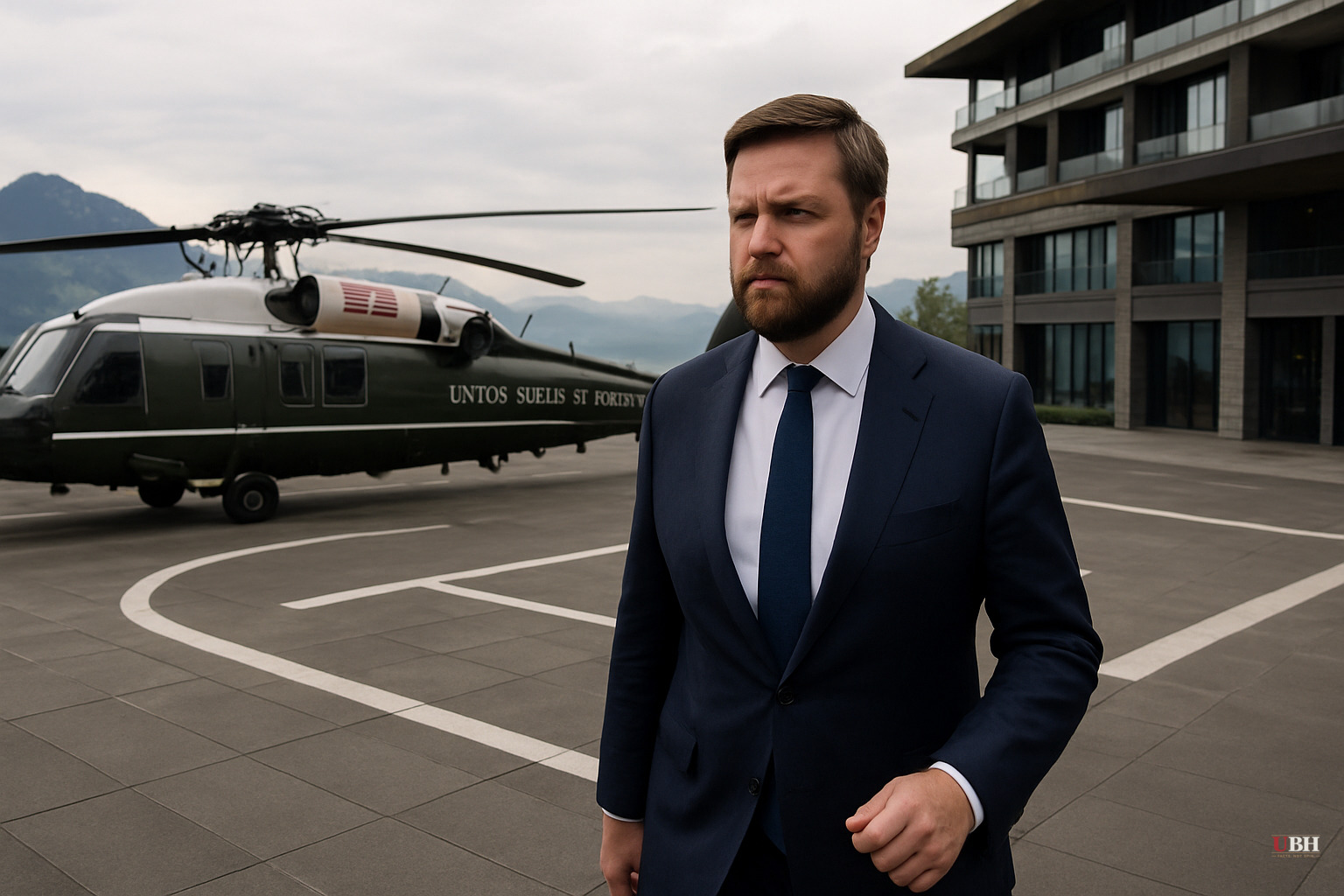
Since Iran's Strait of Hormuz closure announcement on Saturday and the subsequent collapse-and-restart drama covered in prior reporting, the situation on the ground as of Sunday, June 21 has shifted. Both the U.S. and Iranian delegations have arrived at the Bürgenstock Resort near Lake Lucerne, and talks are underway.
Who Is in the Room
Switzerland's Federal Department of Foreign Affairs confirmed in a statement that the U.S. delegation, led by Vice President JD Vance, and the Iranian delegation, led by Parliamentary Speaker Mohammad Bagher Ghalibaf, have both arrived at Bürgenstock. Iranian Foreign Minister Abbas Araghchi and central bank and oil ministry officials are also in the Iranian delegation, according to The Independent. Pakistani Prime Minister Shehbaz Sharif is also present, and Qatar is represented alongside Pakistan in the mediator role.
Vance told reporters at Joint Base Andrews before departing Saturday that he expected to be in Switzerland for "a day or two," with technical teams remaining after that. He identified two priorities: progress on the nuclear issue and progress on the Lebanon ceasefire.
The Hormuz Dispute Is Real, but the Strait Is Moving Traffic
The most immediate flashpoint is the Hormuz standoff. Iran's Islamic Revolutionary Guard Corps warned ships not to approach the waterway on Saturday. On Sunday, Iran's Fars news agency cited a military source saying the strait "remains closed" and the IRGC Navy has "not issued permission for any vessels to transit until further notice," according to The Guardian.
The U.S. military's account is flatly different. Navy Captain Tim Hawkins of U.S. Central Command told Reuters: "Iran does not control the Strait of Hormuz. Traffic continues to flow, and U.S. forces are monitoring the situation to ensure this remains the case." CENTCOM separately reported that 55 merchant ships transited the strait on Saturday, according to The Guardian.
Iran can issue a closure order that the U.S. does not recognize and does not enforce, while traffic continues because neither tanker operators nor the U.S. Navy are honoring it. What is NOT established is whether Tehran has the capability or the intention to physically enforce the closure by force. That question is unresolved in all four sources.
Iran's Stated Justification
Iran's joint military command said the closure was a direct response to continued Israeli military strikes in Lebanon and what it characterized as U.S. "bad faith" in upholding commitments under the truce framework, according to CNBC citing AP. Israeli strikes in southern Lebanon on Saturday killed at least 16 people, including two children, per Lebanese authorities cited by AP. Seven people remained trapped under rubble in Nabatiyeh and nearby villages following those strikes.
Iran has a stated, on-record grievance: Israel keeps hitting Lebanon, and Iran says the U.S. agreed to stop that as part of the interim deal. The U.S. position that the strait is open and Iran doesn't control it does not address whether the strikes in Lebanon constitute a violation of the memorandum of understanding signed earlier in June.
The Emergency Lebanon Session
That gap is why the first day of talks has been restructured. A diplomat attending the talks told CBS News that an emergency session on the Israel-Hezbollah conflict has been added to the schedule and will be the first item when negotiations begin, not a side conversation.
CBS News also flagged the strategic significance: neither Israel, Hezbollah, nor the Lebanese government are party to the Switzerland talks. Allowing Iran to formally introduce the Israel-Hezbollah file into these negotiations represents a shift in U.S. strategy. Whether that shift is a concession to Iranian pressure or a pragmatic acknowledgment that Lebanon can't be walled off from a broader deal is a genuine open question.
Trump's Toll Threat
President Trump entered the dispute Saturday via Truth Social, posting: "There will be NO TOLLS in the Hormuz Strait for 60 days during the Cease Fire Period, and there will be NO TOLLS after the 60 day period has expired, unless they are imposed by and for the United States of America, should the deal not be completed."
He described any future U.S. toll as payment for "services rendered as the Guardian Angel to the countries of the Middle East." The post simultaneously reassured markets that the strait stays open during the ceasefire window and warned Tehran that a failed final deal would cost them and everyone else money. Whether the U.S. has any legal or logistical mechanism to collect tolls in an international strait is a question none of the four sources address.
The Strongest Counterargument
Tehran signed a memorandum of understanding under the assumption that U.S. influence over Israel would translate into a halt to Israeli operations in Lebanon. When Israeli strikes continued and killed 16 people within days of that signing, Iran had a reasonable basis to argue the other side wasn't delivering. The Hormuz closure declaration, in that framing, is a pressure tactic designed to force the U.S. to actually constrain Israel, not a sign Iran is walking away from talks entirely. Iran's delegation still flew to Switzerland while the closure declaration was in effect, which supports that reading.
Issuing a closure order on a waterway that carries roughly a fifth of global oil and liquid gas supplies while simultaneously sending negotiators to a luxury Swiss resort is a coercive tactic with real economic consequences regardless of whether it is physically enforced.
What Comes Next
The core unresolved question as of Sunday, June 21: whether the U.S. will formally address Iranian complaints about Israeli strikes in Lebanon as part of these talks, or whether Washington will insist the Lebanon file stays separate from the nuclear negotiation. Vance's own pre-departure comments listed both as priorities, but the Swiss talks were originally framed around converting the memorandum of understanding into a detailed nuclear agreement. If Lebanon consumes the agenda, the nuclear timeline slips and Trump's 60-day window to avoid Hormuz tolls starts ticking.
Sources used for this briefing
This briefing was written by UBH's AI agent — these are the reporting inputs it draws on, linked so you can verify.


