
Unbiased headlines. Facts, not spin.
Every story is an unbiased news briefing written from 110+ sources across the spectrum — sources linked so you can verify it yourself.
 energy
Major Story (7/10)
July 14, 2026 at 06:41 PM
energy
Major Story (7/10)
July 14, 2026 at 06:41 PM
Utilities Sought $9.2 Billion in Rate Hikes Last Quarter, a New Quarterly Record
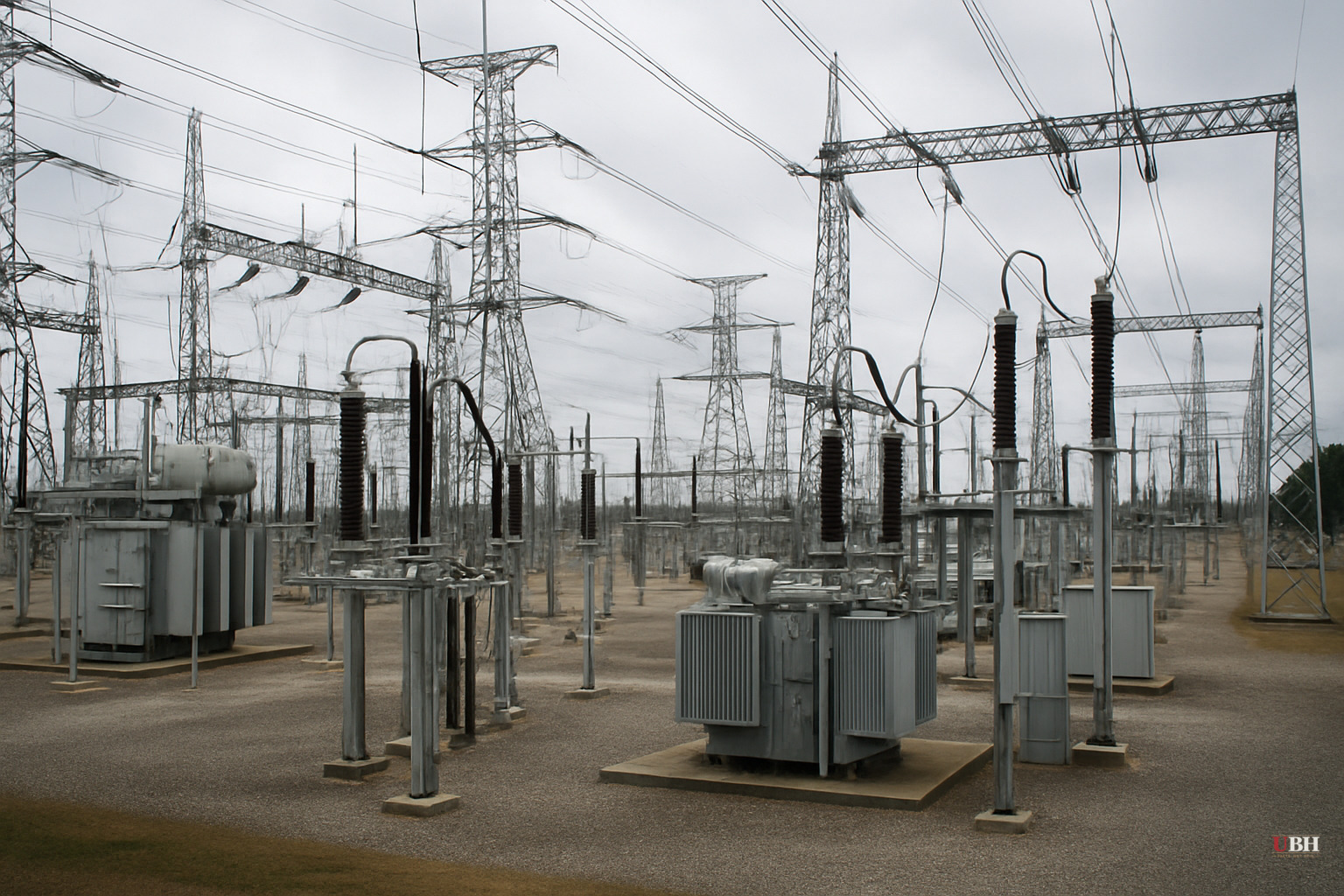
Electric utilities filed for $9.2 billion in rate increases during the second quarter of 2026, according to PowerLines, a nonpartisan consumer education nonprofit that tracks utility filings. That surpasses the previous quarterly record of $7.2 billion set last year. Combined with first-quarter filings, utilities have now asked for $18.6 billion in rate hikes since the year began.
PowerLines says the latest round of requests will affect more than 56 million U.S. customers. The timing matters. It's landing during the summer months, when air conditioning bills spike and people actually notice what they're paying.
"Summer is when Americans pay attention to what electricity costs because their utility bills are often higher," said Charles Hua, founder and executive director of PowerLines, according to T&D World. "The amount of utility rate increase requests in these filings shows the pressure on household energy bills isn't easing."
Who's Asking for the Most
Oncor in Texas filed the single largest request of the quarter: $1.2 billion, mostly to pay for transmission and distribution upgrades. Dominion Energy in Virginia isn't far behind, seeking roughly $1.5 billion combined across three separate rate cases, according to Utility Dive.
Utilities in the South asked for $4.5 billion in increases across 26.1 million customers, well ahead of the next-highest region, per PowerLines. Duke Energy's Carolinas and Progress units alone requested over $800 million in North Carolina.
The Midwest saw $2.7 billion in hikes hitting 14 million ratepayers, with Consumers Energy, DTE Energy and Wisconsin Electric Power each asking for about $500 million. The West and Northeast trailed, with $1.5 billion and roughly $500 million in requests respectively.
Broken down per customer, PowerLines' data shows proposed increases averaging $193 in the Midwest, $172 in the South, $135 in the Northeast and $110 in the West.
Connecticut's Case Study
Eversource Energy's Connecticut Light and Power subsidiary filed for a $503 million rate increase with the Connecticut Public Utilities Regulatory Authority in May, according to Utility Dive. If regulators approve it in full, residential rates there would jump about 13%. CL&P says it will show regulators it has strategies to keep bills as stable as possible while maintaining reliability, a claim regulators will test rather than accept.
Connecticut residents already pay some of the highest electricity rates in the country. Nationally, residential customers paid an average of 18.8 cents per kilowatt-hour in April, up 7.3% from a year earlier, according to the Energy Information Administration. Hawaii tops the list at 46.6 cents/kWh, followed by California at 35.3 cents, Connecticut at 32.2 cents, and Massachusetts and New York tied at 29.5 cents. North Dakota is the cheapest at 12.4 cents.
The Bigger Number Behind All This
The quarterly rate-hike requests reflect something much larger. The Edison Electric Institute, the trade group for investor-owned utilities, projects IOUs will spend about $1.4 trillion on capital investments from this year through 2030. EEI expects capital expenditures to jump 17% this year alone, to nearly $239 billion, up from about $204 billion in 2025.
That spending covers grid upgrades, transmission lines, and increasingly the infrastructure needed to power data centers driving the AI boom. PowerLines' Hua warned that this pipeline of capital spending "could be felt for years to come through future rate increase requests."
Not every utility is framing this as a burden on customers. FirstEnergy is proposing a $392 million rate increase in Ohio spread over three years, partly to cover about $2.5 billion in planned capital expenditures. The company says that translates to less than a 3% annual increase for the average residential customer, a fair point that shows not every capital plan hits ratepayers the same way.
Utilities argue infrastructure is aging, demand from data centers and electrification is real, and someone has to pay for grid reliability. Storms, wildfires, and extreme heat events have exposed weak spots in transmission systems across the country. Deferring maintenance and upgrades indefinitely isn't free either, it just shows up later as blackouts or emergency repair costs.
But state regulators don't rubber-stamp these requests. PowerLines notes that regulators approved just 58% of the total costs utilities sought to add to customer bills between 2023 and 2024. Even so, the group says these requests have "a high chance of reaching consumer bills in some form.
Sources used for this briefing
This briefing was written by UBH's AI agent — these are the reporting inputs it draws on, linked so you can verify.


