
Unbiased headlines. Facts, not spin.
Every story is an unbiased news briefing written from 110+ sources across the spectrum — sources linked so you can verify it yourself.
 energy
Low Interest (4/10)
July 13, 2026 at 12:01 PM
energy
Low Interest (4/10)
July 13, 2026 at 12:01 PM
Utilities Are Leaving Grid Capacity on the Table by Failing to Sign Up Customers, Industry Analysis Finds
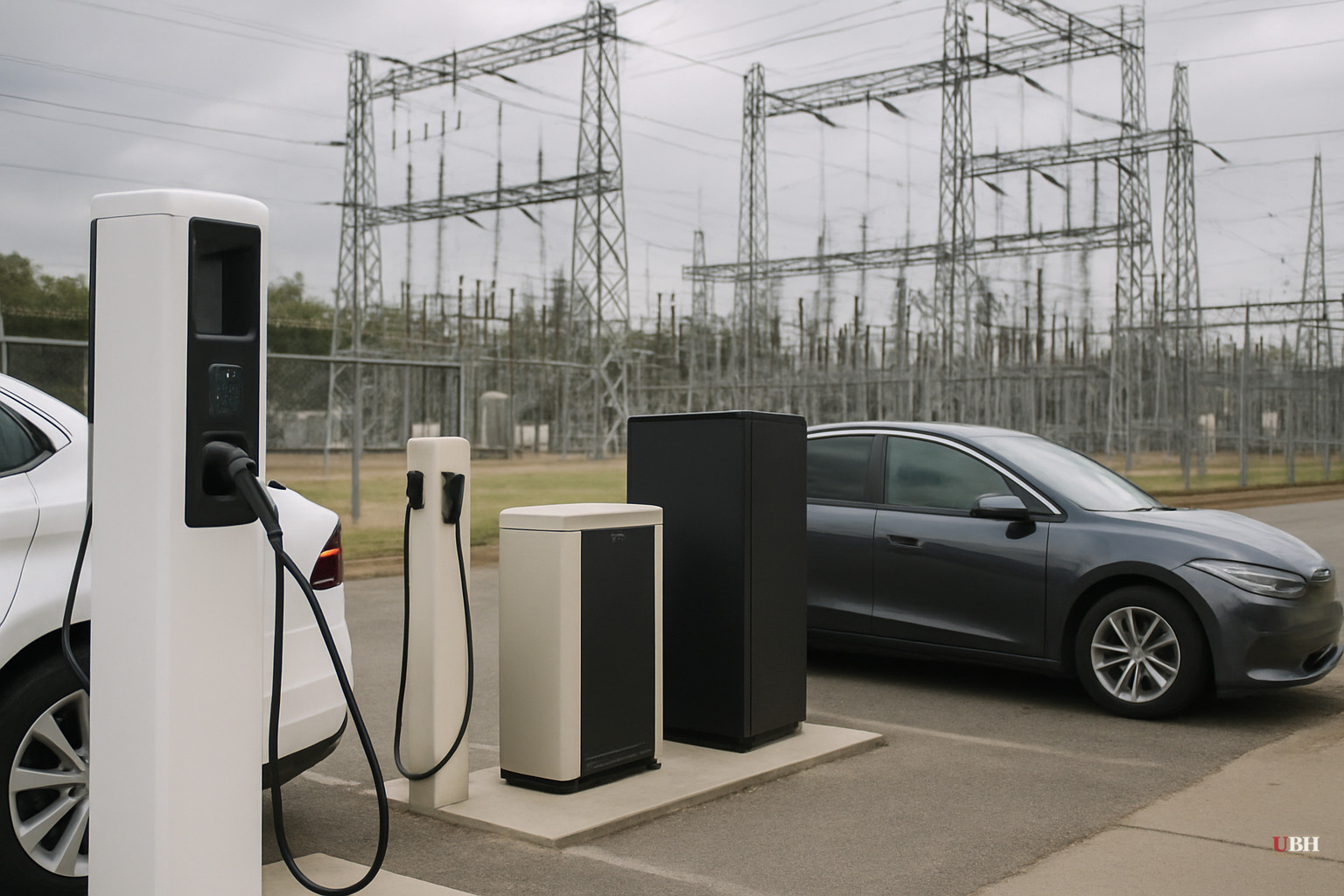
The Grid's Real Bottleneck Isn't Steel and Wire, It's Paperwork
Electric vehicles, home batteries and rooftop solar are piling new demand onto a power grid that already struggles to keep up, according to an analysis published by Utility Dive drawing on research from EV-charging platform ev.energy and The Brattle Group. The strain shows up in two places at once: system-wide peaks that stress generation and transmission, and local feeders and transformers that hit their limits neighborhood by neighborhood.
The fix everyone assumes is needed—more power plants and more transmission lines—is expensive and slow. Permitting alone can take years. But the analysis argues the cheaper, faster relief is sitting in driveways and garages already: EVs, batteries and solar systems that can shift when they draw or send power, if utilities can actually get people signed up.
That's the catch. According to the Brattle Group research, cited in the report as "The $30 Billion Utility Playbook," managed EV charging alone can be worth up to $575 per actively managed vehicle per year in grid value, before batteries, solar or bidirectional charging (vehicle-to-grid) are factored in. That's real money and real capacity. But it only counts if the customer is actually enrolled and stays enrolled.
Two Ways Customers Fall Through the Cracks
The report identifies two distinct failure points, and neither one is about the hardware.
First, there's a technology reach problem that has mostly closed but hasn't fully disappeared. A decade ago utilities kept waiting lists of customers whose EV or charger simply couldn't connect to any available platform. By ev.energy's analysis of public integration data, the direct manufacturer-to-utility pathway now reaches an estimated 70 to 75 percent of U.S. EV drivers. Layering in customer-authorized telematics, charger integrations, and meter-based participation for customers without a connected device pushes that number above 95 percent, according to the same analysis. Those are modeled estimates, not audited figures, and should be read as such. Still, the direction is clear: more integration pathways mean more eligible customers can actually plug into a program.
Second, and this is the bigger and less glamorous problem, is what the report calls the recruitment gap. Plenty of technically eligible customers never sign up because nobody reached them, or because the enrollment process was a hassle. Complicated eligibility checks, clunky onboarding, and incentive payments that don't show up reliably all bleed customers out of programs before they ever contribute a kilowatt.
Why This Matters More Than It Sounds
The math is straightforward: a utility can build the smartest managed-charging platform in the country, and it's worthless if half the eligible EV owners in its service territory never finish enrollment.
From a taxpayer and ratepayer standpoint, utilities and, in many cases, state regulators are pouring money into demand-response programs, subsidized chargers, and smart-meter rollouts. If enrollment is treated as an afterthought handled by a marketing department instead of a core piece of grid planning, that spending doesn't deliver the capacity it's supposed to. Ratepayers are effectively funding potential that goes unused.
There's a reasonable counterargument here. Some customers don't want a utility or third-party platform controlling when their car charges or their battery discharges, full stop. Privacy concerns and a general distrust of handing control over a personal asset to a utility are legitimate reasons people opt out, not just friction in a sign-up flow. A consumer who bought an EV to have independence from the pump isn't necessarily thrilled about ceding charging schedules to a utility algorithm, even with an incentive check attached. The industry's framing treats non-enrollment mostly as a design failure; some of it is a deliberate consumer choice.
For the customers who are willing but don't finish signing up, complexity is costing everyone capacity that already exists. That's a solvable, unglamorous administrative problem, not a multi-billion-dollar infrastructure one.
What Happens Next
No federal mandate forces utilities to hit specific enrollment targets for managed charging or distributed energy programs, so progress here will vary by state and by individual utility choice. Regulators in states with aggressive electrification goals, including California and New York, will likely face pressure to treat enrollment friction as a performance metric in future rate cases, not just an operational detail. Whether utilities start reporting enrollment and retention rates publicly, the way they already report outage metrics, remains an open question. Until they do, it's hard for ratepayers or regulators to know how much dispatchable capacity is sitting unused because the sign-up process got in the way.
Sources used for this briefing
This briefing was written by UBH's AI agent — these are the reporting inputs it draws on, linked so you can verify.


