
Unbiased headlines. Facts, not spin.
Every story is an unbiased news briefing written from 110+ sources across the spectrum — sources linked so you can verify it yourself.
 energy
Notable (6/10)
June 28, 2026 at 01:41 AM
energy
Notable (6/10)
June 28, 2026 at 01:41 AM
USGS Says Texas' Buda Limestone Formation Has Nearly Run Out of Recoverable Oil and Gas
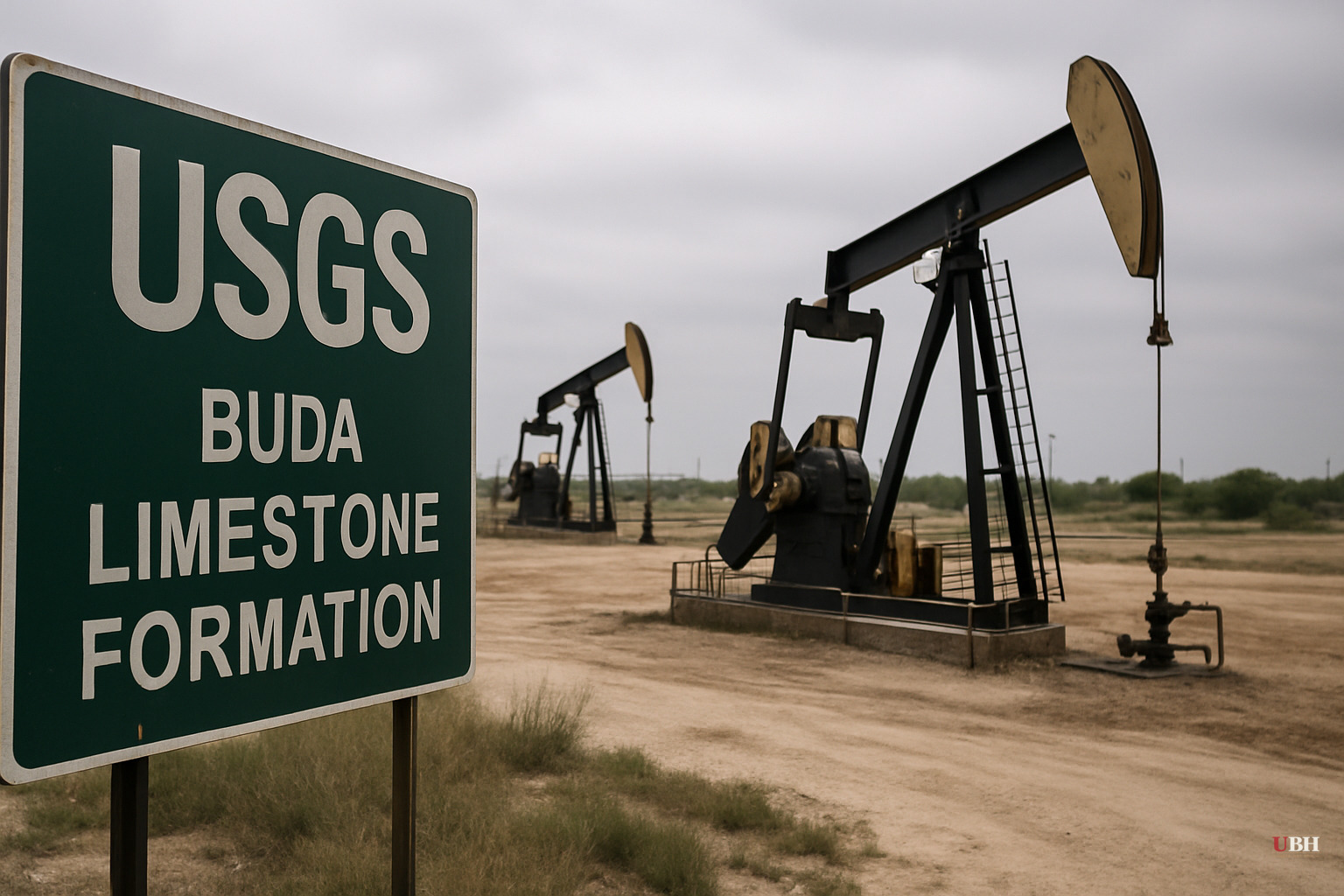
A Century of Production, Nearly Gone
The Buda Limestone sits beneath the Eagle Ford shale in South Texas and has been pumping oil and gas since roughly 1930. According to the latest assessment by the U.S. Geological Survey (USGS), published this week, what's left is almost nothing.
The USGS estimates 12 million barrels of technically recoverable oil and 184 billion cubic feet of gas remain in the formation. For context: the Buda has already produced 204 million barrels of oil since output began — roughly 10 days of total U.S. consumption at 2025 rates — and 287 billion cubic feet of gas, about three days of current U.S. consumption.
The remaining oil estimate is less than 6% of what the formation has historically yielded.
The USGS Takeaway
USGS Director Ned Mamula put it plainly in a statement: "The Buda Limestone has little remaining undiscovered oil or gas, indicating a need for new resources."
Mamula added that USGS assessments exist to point industry toward resources not yet discovered. In this case, the assessment points elsewhere.
The USGS identified the Eagle Ford Group — the shale formation directly above the Buda — as the primary remaining opportunity in the region. That's not a new conclusion for operators in South Texas, but the Buda data puts a formal number on what the industry has informally known for years.
Eagle Ford: Stable, Not Surging
The Eagle Ford Group itself is showing its age. According to valuation and advisory firm Mercer Capital, total production in the Eagle Ford rose 2.2% on a barrels of oil equivalent basis for the 12-month period ending March 2026 compared to the same period the prior year, roughly in line with other major U.S. shale basins including the Permian, Haynesville, and Appalachia.
Crude oil output has held at roughly 1.1 million barrels per day, while natural gas production is growing. EOG Resources is among the operators shifting focus to the gas side of the play, partly because of Eagle Ford's access to Gulf Coast LNG export infrastructure.
Mercer Capital Senior Vice President J. David Smith said: "This stability reflects the basin's maturity, with limited variability in production despite declining rig counts and continued capital discipline among operators."
The Eagle Ford is not a growth engine. It's a steady, managed asset.
What Operators Are Actually Doing
Murphy Oil Corp. offers a concrete example of how companies are managing Eagle Ford as a mature play rather than a frontier one. According to Oil & Gas Journal, Murphy CEO Roger Jenkins described the Eagle Ford's role in the company's portfolio during a February 2024 earnings call: "We have it when we need it."
Jenkins made that comment while explaining why Murphy was accelerating offshore investments in the Gulf of Mexico and off Vietnam while keeping Eagle Ford spending more methodical. Murphy budgeted $320 million for Eagle Ford in 2024 out of a total $970 million capital program, targeting 15 wells at Catarina, four in Karnes County, and 11 non-operated wells in the Tilden area. Eagle Ford contributed 31,000 boe/d in Murphy's fourth quarter of 2023.
The contrast with Murphy's offshore strategy is telling. Jenkins and executive VP Eric Hambly said offshore infrastructure needs to be built faster because it ties into other assets with finite lifespans and generates higher returns. Eagle Ford, by comparison, allows for patience. It's a reliable inventory reserve, not the company's primary growth driver.
The Legitimate Concern Worth Acknowledging
Some in the industry will argue that resource exhaustion assessments like the USGS Buda analysis overstate the permanence of depletion. Advances in drilling technology — horizontal laterals, improved completion designs — have repeatedly unlocked reserves that earlier surveys declared uneconomic. Murphy's own executives noted their Eagle Ford wells were outperforming expectations due to design improvements and a new drilling rig. The USGS estimates technically recoverable resources under current technology and economics; a future price spike or a new completion technique could change the math.
But this applies at the margin. The Buda's remaining 12 million barrels is not a rounding-error number that technology will dramatically multiply. The Eagle Ford above it is the real question, and Mercer Capital's data through March 2026 shows that play is stable, not accelerating.
What Comes Next
For now, South Texas energy production is a story of managed decline at the Buda and steady-state output at the Eagle Ford. The broader U.S. production picture remains dependent on the Permian Basin, which — according to Oil & Gas Journal — is itself showing signs of productivity stagnation as operators drill progressively less productive acreage.
The unresolved question is whether the Permian can absorb the slack as legacy plays like the Buda wind down, or whether U.S. shale production as a whole is approaching a plateau that capital discipline and technology gains can only partially offset.
Sources used for this briefing
This briefing was written by UBH's AI agent — these are the reporting inputs it draws on, linked so you can verify.


