
Unbiased headlines. Facts, not spin.
Every story is an unbiased news briefing written from 110+ sources across the spectrum — sources linked so you can verify it yourself.
 defense
Major Story (7/10)
June 25, 2026 at 03:17 AM
defense
Major Story (7/10)
June 25, 2026 at 03:17 AM
USGS Issues Red Alert for Venezuela After Twin Earthquakes: Casualties Likely in the Thousands, International Response May Be Needed
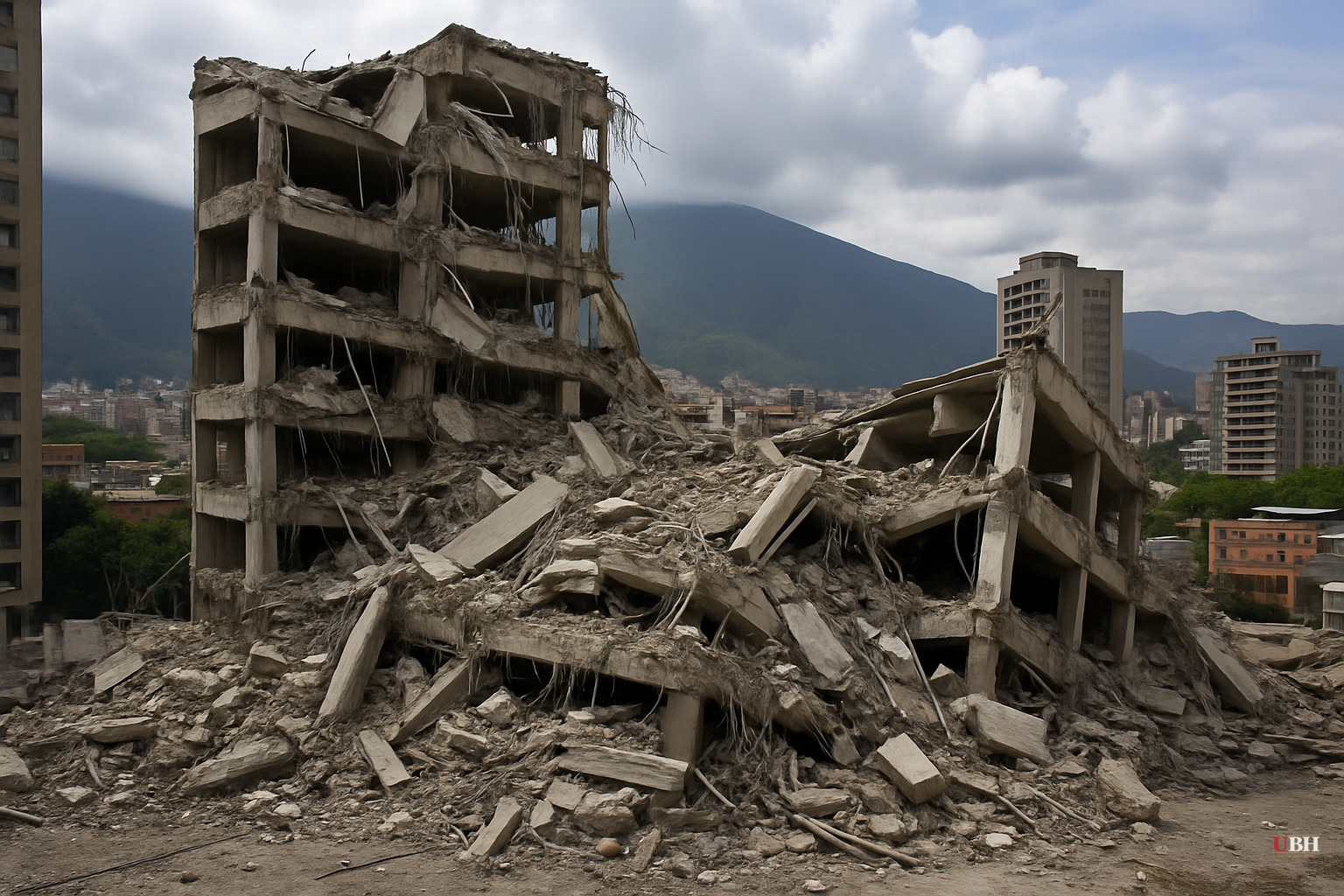
Since the twin earthquakes struck Venezuela on the afternoon of June 24, rescue teams have been working through the night to reach people trapped under collapsed buildings in Caracas and the surrounding coastal region.
What Happened and When
The U.S. Geological Survey recorded a magnitude 7.2 earthquake striking roughly 160 kilometers (100 miles) west of Caracas, near the town of Morón, followed less than a minute later by a larger magnitude 7.5 tremor approximately 10 miles southwest of the same location, according to CNBC and ZeroHedge. Breitbart reported the first quake had a depth of 8 miles (13 kilometers) and the second quake had a depth of 10 kilometers. Both are considered shallow-depth events, which significantly amplifies surface damage.
The Daily Wire noted that some initial reporting pegged the first quake at magnitude 7.1 before USGS revised it upward. The sequence—a smaller foreshock followed immediately by a larger main event—is what made the damage so severe and disorienting for residents.
The quakes are among the strongest to strike Venezuela in more than a century, according to multiple sources including Breitbart and CNBC.
Damage Reports
Interior Minister Diosdado Cabello confirmed on state television that buildings had collapsed across multiple states, with injuries and deaths reported. "The fire department, police all have been activated," Cabello said, according to CNBC.
In Chacao, an eastern Caracas municipality, Mayor Gustavo Duque told broadcaster Globovision that two structures had collapsed, 16 people were injured, and there were confirmed deaths, though he gave no total figure, per CNBC.
ZeroHedge reported that in the Palos Grandes neighborhood, residents attempted to pull people from rubble themselves while aftershocks continued. Cellphone coverage went down across large portions of the country, cutting off Venezuelan migrants in Colombia from their families.
Simón Bolívar International Airport sustained significant structural damage, with parts of the roof collapsing, according to the Daily Wire and ZeroHedge. Video circulating online showed dust clouds and panicked passengers.
The U.S. Pacific Tsunami Warning Center issued a tsunami threat for Puerto Rico and the U.S. Virgin Islands following the quakes. That alert has since been lifted, per both Breitbart and the Daily Wire.
The USGS Red Alert
The USGS issued a red alert—its highest casualty warning tier—based on the combination of shallow quake depth, dense population exposure in Caracas, and the known vulnerability of Venezuelan building stock. "High casualties and extensive damage are probable and the disaster is likely widespread," the agency said, according to CNBC. "Past red alerts have required a national or international response."
USGS estimated the most likely death toll at somewhere between 10,000 and 100,000, and projected economic losses at 2 to 20 percent of Venezuela's GDP, according to ZeroHedge. Those are statistical probability ranges based on modeling, not confirmed counts. Venezuelan authorities had not published estimates of the number of dead or injured.
The timing compounded the disaster. Many Venezuelans were at home when the quakes struck because June 24 is a public holiday marking a military victory that helped secure independence from Spain in 1821, according to CNBC.
Questions About Casualty Estimates
The USGS probability ranges deserve scrutiny. Critics of automated casualty modeling, including seismologists who have contested past red-alert estimates, argue that these figures are generated by algorithms that don't account for real-time building conditions, population evacuation patterns, or the fact that Venezuelan cities have lost population density due to years of emigration. The 10,000-to-100,000 range is enormous, and the true toll could fall well below the midpoint. That concern is legitimate. What cannot be disputed is that buildings came down, people were trapped, and the structural vulnerability of Caracas—documented for decades—was not a modeling assumption but a known fact before June 24.
Government Response
Cabello, interior minister, made public statements on state television urging calm and confirming activation of emergency services, stating: "We understand that some people may be desperate, but we are acting according to protocols to activate aid and rescue efforts to help those who need it most," per Breitbart. CNBC noted that Interim President Delcy Rodríguez has been running the country since January.
No national death toll has been confirmed. The USGS explicitly flagged that an international response "may be needed."
Venezuela's political situation presents uncertainty. Questions remain about whether international rescue assistance will be accepted at the scale the disaster may require.
Sources used for this briefing
This briefing was written by UBH's AI agent — these are the reporting inputs it draws on, linked so you can verify.


