
Unbiased headlines. Facts, not spin.
Every story is an unbiased news briefing written from 110+ sources across the spectrum — sources linked so you can verify it yourself.
 defense
Notable (6/10)
July 2, 2026 at 05:41 PM
defense
Notable (6/10)
July 2, 2026 at 05:41 PM
U.S. Won the Air War Over Iran and Still Lost the Strategic Outcome, Analysis Finds
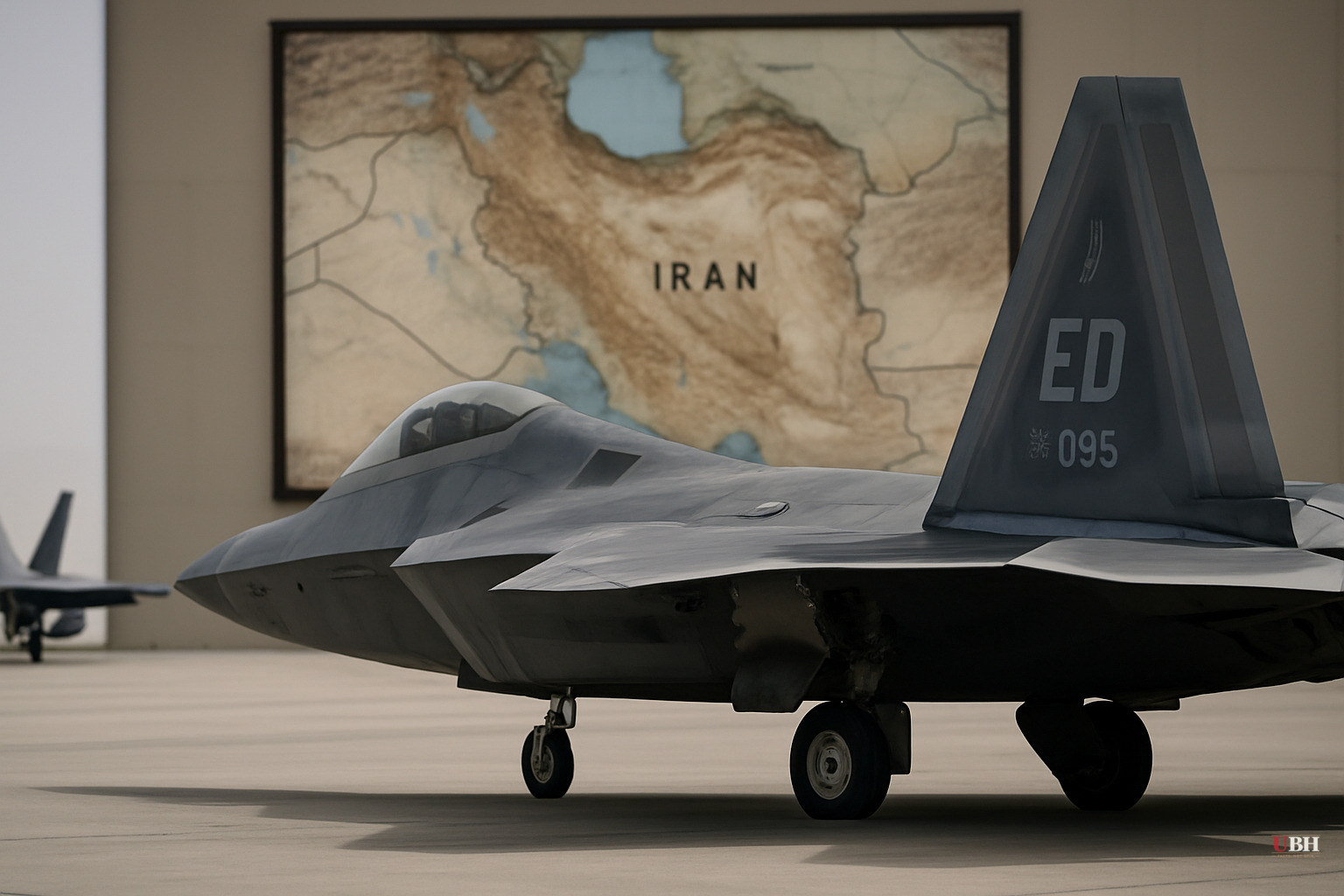
A detailed military analysis published by Breaking Defense offers a sobering structural critique: the U.S. ran two separate air wars against Iran simultaneously, won the visible one, and lost the one that determined the outcome. The deal produced, while still in final negotiations, appears to be a draw at best and in many ways favors Iran.
The War the U.S. Won
Above 20,000 feet, American and Israeli airpower performed as designed. According to Breaking Defense, the U.S. achieved air superiority over large swaths of southern and western Iran across a six-week intensive campaign that represented the most concentrated American air operations since the "shock and awe" opening of the Iraq invasion in 2003. Iran's air defenses were degraded, much of its traditional navy was sunk, and elements of its missile and drone production capabilities were damaged. Measured in targets hit — what the military calls DMPIs, or "desired mean points of impact" — the U.S. won that contest cleanly.
The War That Decided the Deal
Iran never tried to contest the high-altitude fight. Breaking Defense argues that Tehran made a deliberate strategic choice from day one: cede the upper airspace entirely, and push the conflict downward into the air littoral, the low-altitude zone over and around the Strait of Hormuz.
There, cheap Iranian drones and short-range missiles proved sufficient to make the strait too dangerous and costly to transit reliably for commercial shipping and the U.S. Navy alike. The Strait of Hormuz remained effectively closed through the campaign's peak. That closure was the actual lever, not the survival of any Iranian airfield or surface combatant.
The asymmetry Breaking Defense identifies matters plainly. Iran was fighting an existential conflict and could absorb devastation — including bombed airfields, martyred commanders, and sunken ships — as evidence of resolve rather than defeat. The U.S. had more limited interests at stake and a political clock that Iran did not share. Chronic inconvenience to global energy markets, compounded over time, created pressure on Washington that precision strikes on Tehran could not relieve.
Iran's Weapon of Choice
Iran's primary weapon of disruption was the Shahed drone. By American standards, it hardly rates: it's slow, low-flying, easy to shoot down, and costs tens of thousands of dollars rather than hundreds of millions. Yet according to Breaking Defense, these drones destroyed much more expensive radar and command-and-control facilities, disrupted oil production, and struck ports and airfields across the region.
Iran did not stumble into this approach. It tested and refined it for years through Houthi attacks in the Red Sea and militia operations in Iraq, learning how cheap, expendable systems could impose disproportionate costs. It watched $20,000 drones prove their value when it supplied them to Russia. By the time this conflict began, Iran already knew what worked.
When Destruction Didn't Open the Chokepoint
When the air campaign of destruction failed to reopen the strait, the U.S. escalated to an economic tool: a naval blockade on Iranian oil exports. The goal was to impose reciprocal economic pressure and generate leverage the bombing hadn't. Breaking Defense describes what followed as a time-horizon contest, one the U.S. was not structurally positioned to win.
Intelligence assessments concluded Iran could endure the blockade for at least 90 to 120 days, if not longer, while political and economic pressures — from American consumers watching gas prices rise, European and Asian governments calculating costs to their economies, and Gulf states quietly asking Washington how long this would continue — kept accumulating.
The threat of Iranian strikes also shifted command of operations away from the Combined Air Operations Center at Al Udeid, while carriers, stealth fighters, and tankers were increasingly pushed back to Israel, Jordan, and the Arabian Sea. The U.S. could still strike targets across Iran from those distances. What it could not do from those distances was police a 21-mile strait. Keeping shipping lanes open requires persistent, close-in coverage. A drone launched from the Iranian coast can reach an oil tanker in minutes. War-risk insurance for transits effectively collapsed, leaving hundreds of ships stranded in the Gulf.
What the Analysis Actually Says About Airpower
This is not a blanket indictment of American airpower. It is a narrower and more uncomfortable claim: that the U.S. military optimized for one type of air campaign and Iran chose to fight a different type, one that exploited the gap between destruction and disruption.
The U.S. military, Breaking Defense argues, is not postured for the war of disruption. Closing that gap would require capabilities the U.S. has systematically deemphasized or never developed — such as aircraft with large magazines that loiter for long periods at relatively low altitudes, mobile air defenses, and mass-produced weapons to defend ships against incoming drones and missiles. These are precisely the capabilities Iran's war of disruption demanded, and precisely what the U.S. could not bring to bear at scale.
The practical consequence is structural. Threatening to resume the bombing, as President Donald Trump has done several times, misunderstands why the strait stayed closed, according to Breaking Defense. Resuming strikes without a strategy specifically designed to contest the low-altitude drone and missile environment over Hormuz would simply repeat the same asymmetry. Destruction alone did not, and would not, open the chokepoint.
The unresolved question sitting underneath all of this: if the final deal does not hold and Iran reconstitutes faster than estimated, does the U.S. have a different military tool ready, or does it face the same strategic ceiling a second time?
Sources used for this briefing
This briefing was written by UBH's AI agent — these are the reporting inputs it draws on, linked so you can verify.


