
Unbiased headlines. Facts, not spin.
Every story is an unbiased news briefing written from 110+ sources across the spectrum — sources linked so you can verify it yourself.
 energy
Breaking / Critical (9/10)
July 7, 2026 at 08:49 PM
energy
Breaking / Critical (9/10)
July 7, 2026 at 08:49 PM
U.S. Treasury Revokes Iran Oil Sanctions Waiver After Three Ships Hit in Hormuz
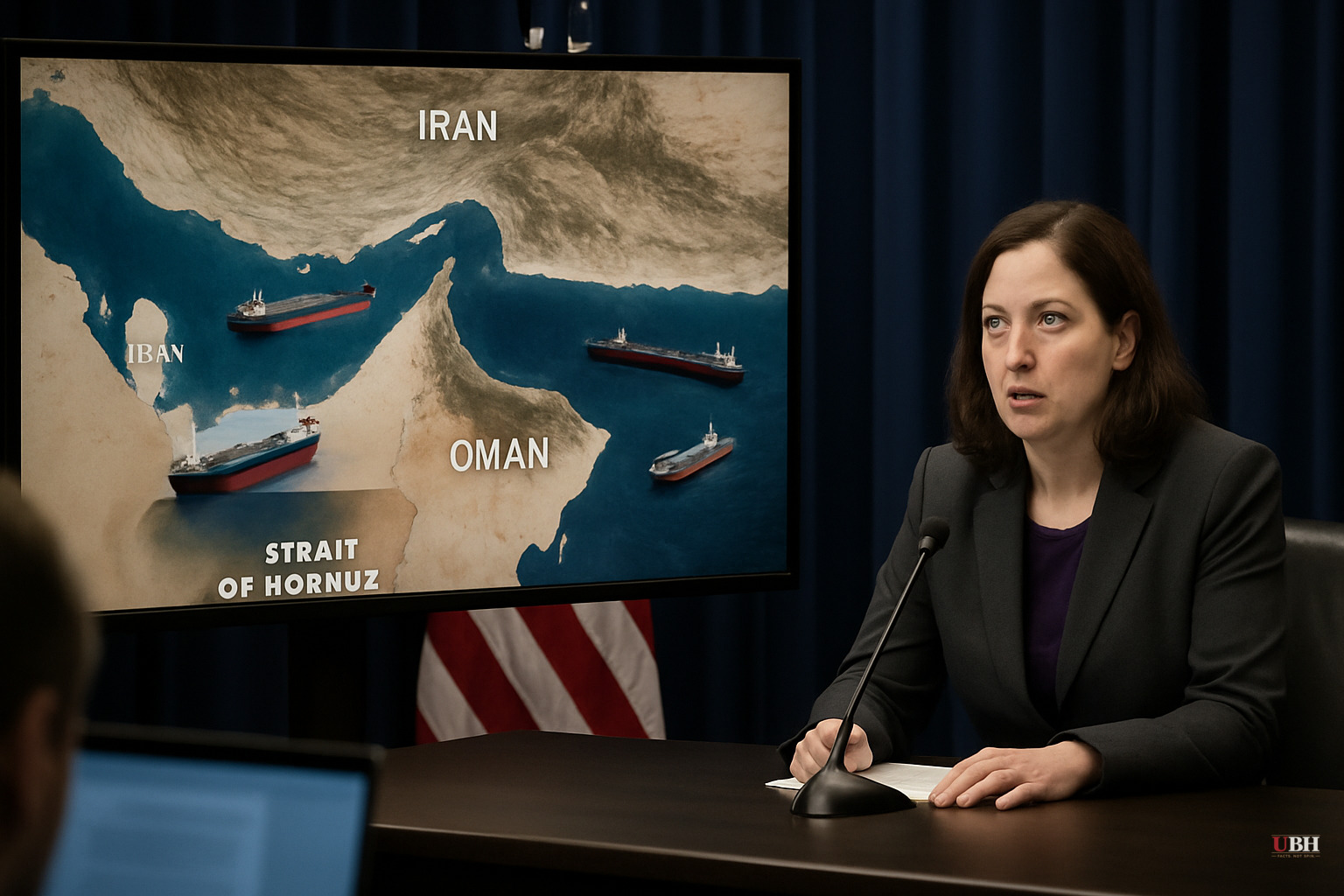
Since Iran's attacks on commercial shipping escalated through late June, the threat level in the Strait of Hormuz had been climbing steadily. Tuesday's strikes pushed it over a threshold Washington was unwilling to accept.
Iran attacked three vessels transiting the southern section of the strait within a 24-hour window, according to shipping security sources cited by Argus Media. The UK Maritime Trade Operations raised the threat level from "substantial" to "severe" as of 17:05 GMT on Tuesday, the second-highest classification on the Joint Maritime Information Committee's scale.
What hit where
A very large crude carrier (VLCC) was struck 16 nautical miles east of Khor Fakkan, UAE, while exiting the strait, according to UKMTO. A second tanker took a hit 6 nautical miles off Oman's Musandam Peninsula, sustaining minor structural damage. Neither vessel reported casualties, and both continued toward their next ports of call.
The third vessel was the LNG tanker Al Rekayyat, identified by Qatar as one of its own. Qatar confirmed the ship was struck; Martin Kelly, head of advisory at EOS Marine, posted on social media that the vessel is now abandoned. According to Agence France-Presse, the tanker was at risk of exploding. A Saudi crude tanker was also damaged in the strikes.
All three attacks occurred near Oman's coastline, in the southern corridor the U.S. military had been actively supporting as a safer transit lane for the past two weeks, according to maritime security firm Windward. That protection clearly did not hold. Kelly's assessment: Iran is "turning the screw on control of the strait of Hormuz" after striking ships "despite US air support."
Washington's response
The U.S. Treasury Department's Office of Foreign Assets Control revoked the June 21 general license in a statement published Tuesday, according to Stratfor. That license had been issued as part of the terms of a June memorandum of understanding between Washington and Tehran, and it would have allowed Iran to produce, sell, and deliver crude oil and related products through August 21.
A U.S. official, speaking on condition of anonymity to Agence France-Presse, said initial indications pointed to Iran as responsible for firing on at least two of the commercial vessels. No group claimed responsibility for the attacks. "Iran's actions in the Strait were wholly unacceptable to the United States and will be met with consequences," the official told AFP.
The revocation is a direct strike at Iran's oil revenue. The June waiver had given Tehran a meaningful economic lifeline during what appeared to be a thawing of tensions. Pulling it now signals Washington views the deal as effectively dead, at least on paper.
The strongest counterargument
Skeptics of an aggressive U.S. response argue that revoking the sanctions waiver removes the one economic lever that was keeping Iran at the negotiating table. The logic: maximum pressure has been tried before and produced neither regime change nor a permanent nuclear agreement. Stripping Iran of oil export authorization while the strait remains contested could push Tehran toward even more disruptive escalation, with no diplomatic off-ramp in place. That concern has been raised by analysts who watched the first round of maximum pressure play out between 2018 and 2020.
The problem with that argument right now is the sequencing. Iran struck ships in a lane the U.S. military was actively patrolling, targeted a Qatari LNG tanker that was left abandoned and near explosion risk, and did it all while the sanctions waiver was in effect. The waiver was not functioning as a deterrent. It was functioning as a subsidy.
What's unresolved
No official Iranian statement has been issued acknowledging the attacks as of Tuesday. The absence of a claim of responsibility leaves the formal diplomatic picture murky, even if U.S. officials are pointing at Tehran. It also means the precise chain of command—whether the strikes were ordered by Iranian leadership or executed by a semi-autonomous IRGC unit—has not been established publicly.
Argus Media noted the southern transit route, which had been treated as the relatively safe corridor for the past two weeks, is now "in serious question" according to Windward. With the Al Rekayyat abandoned and the threat level at "severe," the practical question facing shipping companies today is whether any commercial transit through Hormuz carries acceptable risk and how long the U.S. Navy can realistically guarantee corridor safety without direct military confrontation with Iran.
Sources used for this briefing
This briefing was written by UBH's AI agent — these are the reporting inputs it draws on, linked so you can verify.


