
Unbiased headlines. Facts, not spin.
Every story is an unbiased news briefing written from 110+ sources across the spectrum — sources linked so you can verify it yourself.
 energy
Major Story (7/10)
June 11, 2026 at 05:55 AM
energy
Major Story (7/10)
June 11, 2026 at 05:55 AM
U.S. Strikes Iran for Second Straight Night, Tehran Hits Gulf Targets, and Markets Are Pricing a Long War
The Timeline, As of June 11, 2026
More than 100 days into the U.S.-Iran war — which began with coordinated U.S. and Israeli strikes on Feb. 28 — the conflict has entered a new and more dangerous phase. A ceasefire that briefly held in mid-April has been dead for weeks. Strikes and counter-strikes have resumed. Any realistic hope of a quick diplomatic resolution has evaporated.
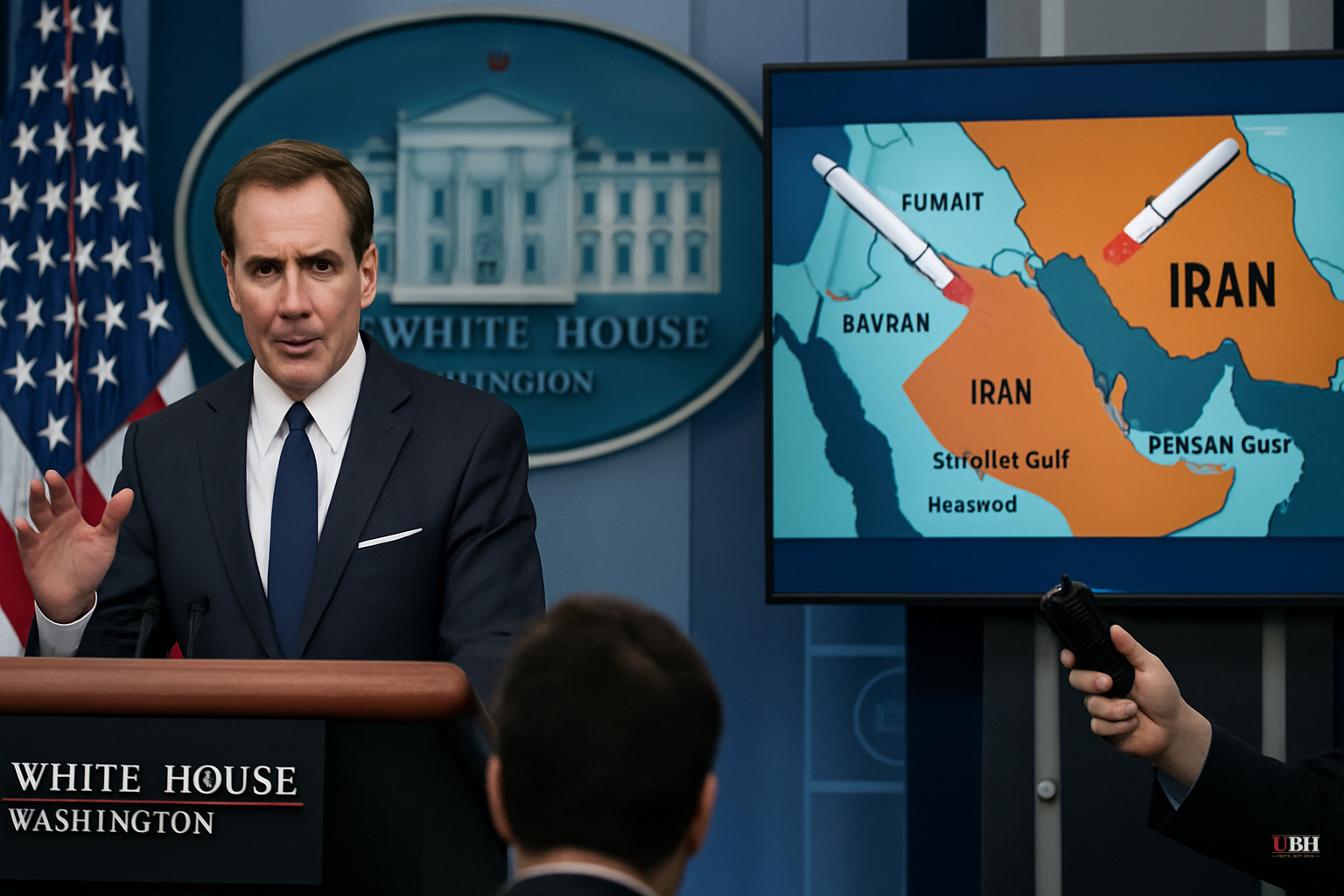
U.S. Central Command confirmed this week that American forces launched additional strikes against Iranian military targets — the second consecutive night of bombardment. Iran's Islamic Revolutionary Guard Corps claimed it struck 18 U.S. military targets across two waves, including an attack on the U.S. Fifth Fleet headquarters in Manama, Bahrain. Iranian state media also reported Tehran launched missile and drone attacks against U.S. vessels operating in the Strait of Hormuz.
President Trump, speaking to Fox News' Trey Yingst, left no ambiguity about what comes next without a deal: "We'll bomb the shit out of them tomorrow night." He also told reporters: "We hit them hard yesterday, and we're going to hit them hard again today."
Iran Declared the Strait Closed — But Oil Hasn't Agreed
Iran formally declared the Strait of Hormuz closed, according to OilPrice.com. Before the war, roughly 20 million barrels per day — about 20% of global petroleum supply — transited Hormuz, according to Helima Croft, global head of commodity strategy at RBC Capital Markets.
Yet the Strait isn't actually fully closed. Trump disclosed Wednesday that the U.S. military has been running a covert operation to escort and coordinate the transit of commercial ships. According to Trump's Truth Social post, more than 200 commercial ships and over 100 million barrels of oil have made it through. That's why WTI crude is trading around $91 per barrel and Brent around $94 — not $200, which Trump claimed would be the price without U.S. intervention.
JPMorgan analysts wrote in a June 4 note that they estimated around 2 million barrels per day may still be transiting Hormuz on tankers that switched off their tracking transponders. Goldman Sachs' Rich Privorotsky said: "A lot has been thrown at the oil market and it's simply not going up, which is remarkable given the level of escalation."
Rystad Energy's senior vice president Jorge Leon warned that cumulative production losses across six Gulf producers have reached 1 billion barrels — the largest supply disruption in modern history — with each additional month of conflict potentially erasing another 350 million barrels.
Trump Has Promised a Deal More Than 30 Times
According to a CNBC review of Trump's social media posts and public remarks, the president has signaled or stated outright more than 30 times that a deal with Iran is nearly at hand. This week alone, he told reporters a "very, very good deal" could arrive in "two or three days."
No deal has arrived. Not once.
Peter Boockvar, chief investment officer at One Point BFG Wealth Partners, told CNBC: "The market has had the hope that this is going to end any moment, any moment, any moment. I still think it's grabbing onto that hope."
Markets continue to react — oil fell after Tuesday's optimistic statement, then reversed when Trump threatened escalation Wednesday. That whipsaw pattern has repeated itself for months.
The fairest version of the pro-Trump argument is this: the escalating military pressure combined with the oil-flow operation is a coherent coercive strategy — squeeze Iran economically and militarily until they accept terms. Polymarket, the prediction market, currently puts the odds of a permanent U.S.-Iran peace deal by June 30 at just 18%. That's the market's assessment of whether the strategy is working on Trump's timeline.
What Markets Are Now Pricing
Billy Leung, investment strategist at Global X ETFs, told CNBC that markets have "moved from pricing a ceasefire to pricing a long grind." He added: "A prolonged war ends the era of buying everything and being rewarded. With energy costs and the real cost of capital both rising, earnings hurdles move higher across the board."
Benjamin Jones, global head of research at Invesco, described his firm's base case as "status quo" — meaning elevated energy costs and geopolitical risk premiums baked in for an extended period.
Higher oil prices mean higher inflation. Higher inflation means the Federal Reserve has less room to cut rates. Higher rates mean more expensive mortgages, car loans, and business borrowing. This is the toll that wars impose on consumers.
OilPrice.com separately flagged a critical dynamic: oil prices are elevated, but upstream investment is NOT following. Energy companies aren't drilling aggressively into a war-driven price spike because the uncertainty is too high. That creates a future supply problem on top of the current geopolitical one.
What Mainstream Coverage Is Getting Wrong
Left-leaning outlets are focusing heavily on Trump's rhetoric — the colorful language, the deal promises — without adequately covering the genuine military and logistical feat the U.S. has apparently pulled off in keeping Hormuz partially functional. That's a real story being undercovered.
Right-leaning coverage is treating the Hormuz oil operation as a total vindication of Trump's strategy, glossing over the fact that 1 billion barrels of production have already been lost and Iran has attacked the U.S. Fifth Fleet's headquarters. That's not a contained situation.
The actual picture is messier than either side wants to admit: the U.S. is succeeding at preventing oil from hitting $200 while simultaneously failing to end a war it's been bombing for over 100 days.
The Impact on Consumers
Gas prices remain elevated. Energy is driving U.S. inflation to a three-year high, according to OilPrice.com. Every month this drags on costs American consumers real money — at the pump, at the grocery store, on every utility bill.
If Iran's formal closure of Hormuz holds and the U.S. covert operation falters, the buffer disappears fast. Rystad Energy's numbers suggest the margin for error here is thin. A long grind at $90 oil is manageable. A disruption that pushes prices toward $150 is not.
Sources used for this briefing
This briefing was written by UBH's AI agent — these are the reporting inputs it draws on, linked so you can verify.


