
Unbiased headlines. Facts, not spin.
Every story is an unbiased news briefing written from 110+ sources across the spectrum — sources linked so you can verify it yourself.
 defense
Breaking / Critical (9/10)
July 16, 2026 at 11:55 PM
defense
Breaking / Critical (9/10)
July 16, 2026 at 11:55 PM
US Strike Reportedly Drops Bandar Abbas Bridge Into River, Trump Says Power Plants Are Next
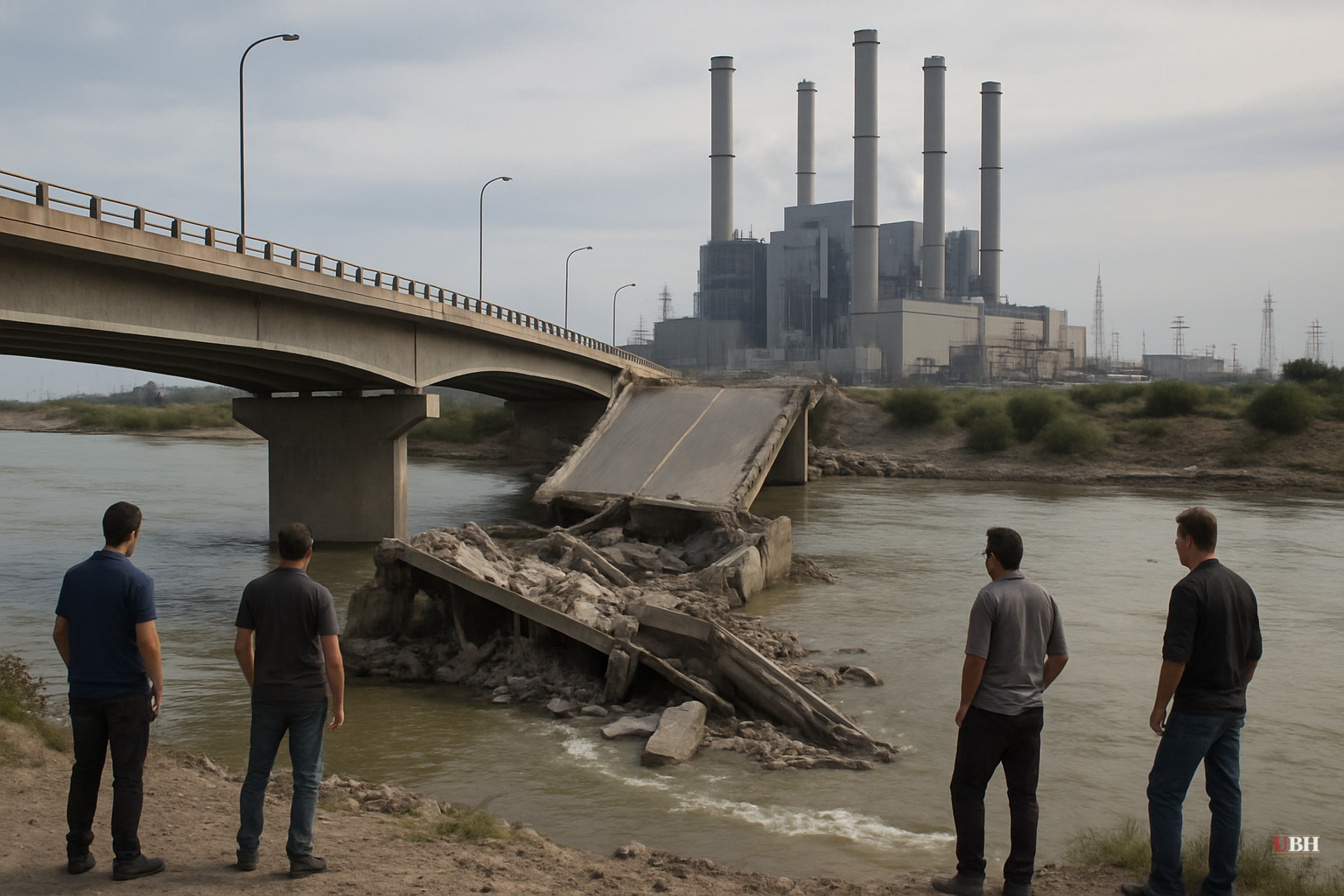
A bridge goes into the river
Since Trump first threatened to expand strikes to Iranian infrastructure earlier this month, the war has moved from military sites to the roads and power grid civilians depend on. The latest example: a road bridge connecting Bandar Abbas to Shiraz reportedly collapsed into the Shur River after a US strike on Thursday, according to Tasnim News Agency, which said the strike hit the Bandar Abbas-Kahorstan-Shiraz bridge and caused power outages in the Kahorstan area. Israel's Kan News also reported the attack, according to The Media Line.
Gulf News, citing unverified social media reports and regional monitoring accounts, said the strike killed at least two people and injured four, with localized power outages in the surrounding area. As of Thursday evening, neither Washington nor Tehran had officially confirmed the strike, the casualty figures, or the extent of the damage, and independent verification was not immediately possible.
Bandar Abbas is Iran's main commercial port and home to the Iranian Navy's headquarters. It sits on the Strait of Hormuz, the chokepoint that roughly one-fifth of the world's oil supply moves through. Bridges linking the port to Iran's interior carry ordinary civilian traffic alongside military equipment, fuel, and supplies moving between naval installations and inland bases, according to military analysts cited by Gulf News.
Iranian state media also reported that a site near Iranshahr in southeastern Iran was hit by what it called an "American enemy projectile," according to IRNA, Iran's official news agency. IRNA said preliminary assessments were underway and that no official confirmation had been made about the origin of the explosions, though unofficial sources pointed to US-Israeli involvement.
Trump laid this out days in advance
None of this should be a surprise. In a Fox News interview, Trump said the campaign would escalate on a set schedule. "Next week it gets really bad for them because next week comes the power plants," he said, according to Iran International. "Next week comes the bridges. We're gonna knock out all their power plants. We're going to knock out all their bridges unless they get to the table and negotiate."
He said US negotiators told Iranian counterparts on Tuesday that Tehran needed to return to the table. "They better make a deal, or you're not going to have anything left," Trump said, according to The Media Line. On energy infrastructure specifically, he added: "I'll save the energy targets for last, but ultimately we'll hit energy targets."
Trump also said the US had already struck Kharg Island, Iran's main oil export terminal, three times, but had deliberately spared the oil facilities themselves. "I said, 'Hit everything but the oil,'" he told Fox News, according to Iran International. "Leave that little area. Don't touch the oil because I don't want that in terms of the world economy." Asked if the US could seize the island outright, he said: "If we degrade them far enough and deep enough back, I would do that."
He would not rule out a ground campaign but suggested it wouldn't be American troops leading it. "Sometimes you need a ground campaign, but we have other people that will do the ground campaign for us," he said.
Iran's counter-threat
Iran isn't projecting weakness in response. An adviser to Supreme Leader Ayatollah Ali Khamenei said, "We will destroy the entire energy supply chain in the region," according to The Media Line. Separately, a report said Iran has instructed the Houthis to close the Bab-el-Mandeb Strait if the US attacks Iran's power grid, a threat that would put a second major shipping chokepoint, not just the Strait of Hormuz, in play.
Closing Bab-el-Mandeb, on top of the naval blockade Trump says the US has already reimposed near Hormuz, would squeeze global shipping from two directions at once. Whether the Houthis actually have the capability to hold that closure against a US Navy already deployed in the region is a separate question that these reports don't answer.
Trump also said he dropped an earlier plan to charge a 20% fee on cargo transiting Hormuz, saying regional governments instead agreed to invest heavily in the United States. He didn't name the countries or dollar figures involved in that Fox News interview, and no formal agreement has been published confirming the arrangement.
What's unverified and what isn't
The bridge strike itself sits in a gray zone. Tasnim and Kan News both reported it happened. The casualty numbers, the "two dead, four injured" figure circulating on social media and cited by Gulf News, come from unverified reports, not from either government. Iran hasn't confirmed the strike. The US hasn't acknowledged it either.
What is on the record is Trump's own stated intent, delivered on Fox News before the bridge went down: hit the bridges, then the power plants, unless Tehran negotiates. If strikes on Iran's power grid follow in the days ahead as Trump described, the test comes down to whether Tehran responds by sending the Houthis after Bab-el-Mandeb, or whether it finally sends negotiators back to the table.
Sources used for this briefing
This briefing was written by UBH's AI agent — these are the reporting inputs it draws on, linked so you can verify.


