
Original briefings. Zero spin.
Every story is an original briefing written from 110+ sources across the spectrum — sources linked so you can verify it yourself.
 energy
Notable (6/10)
August 11, 2026 at 08:02 AM
energy
Notable (6/10)
August 11, 2026 at 08:02 AM
US Strategic Petroleum Reserve Falls Below 300 Million Barrels, Lowest Since 1983
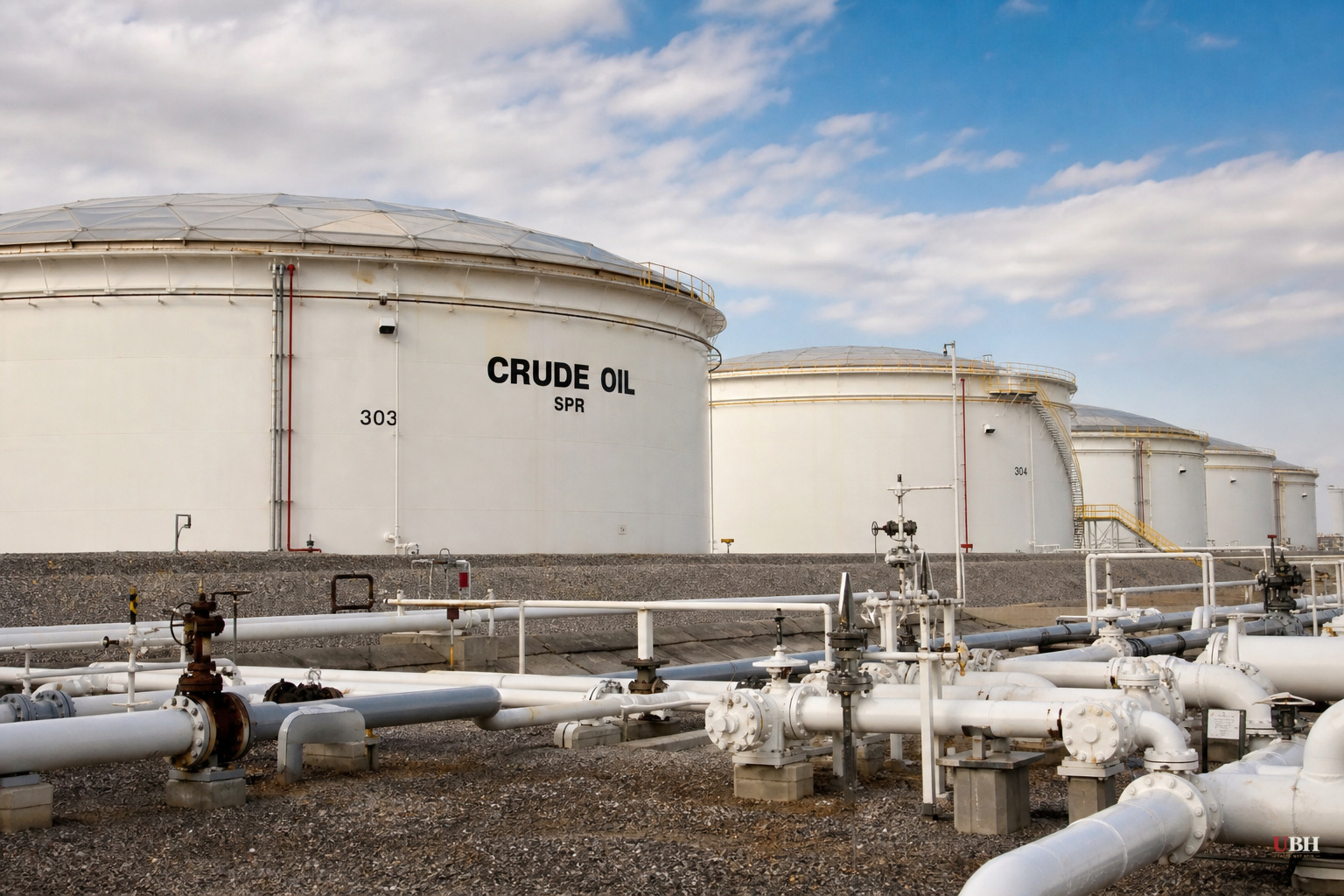
The Strategic Petroleum Reserve fell to 298.7 million barrels as of August 7, according to Energy Department data released Monday. That's down 6.1 million barrels from the previous week and the lowest level since January 1983, when the government was still filling the reserve up for the first time.
This didn't come out of nowhere. Back in March, the Trump administration announced plans to release 172 million barrels from the SPR over 120 days to offset oil market disruptions tied to the war in Iran, which began February 28. The reserve started 2026 at roughly 415 million barrels. Once the authorized release finishes, expect the SPR to bottom out around 243 million barrels, according to Energy Department figures cited by NDTV Profit.
Patrick De Haan, head of petroleum analysis at GasBuddy, said on X that the declines will likely continue "for a few more weeks before the authorized release is complete." That tracks with what the Energy Department has told reporters.
Is this dangerous, or just politics as usual?
The strongest version of the concern: the SPR exists specifically to cushion America against supply shocks, and it was built with roughly 714 million barrels of capacity for a reason. Republicans spent years hammering Joe Biden for releasing 180 million barrels in 2022 after Russia invaded Ukraine, warning it left the reserve dangerously thin. Biden's drawdown took the SPR to a low of 346.7 million barrels in July 2023 and left it around 394 million barrels by the time he left office, according to the Washington Examiner. Trump's own release has now pushed the reserve nearly 100 million barrels lower than Biden's low point ever reached.
Industry executives have warned the current draw is pushing the SPR toward levels that threaten its ability to respond to a future crisis, the Washington Examiner reported. And a Government Accountability Office report from May found the reserve's infrastructure problems predate this administration entirely, tracing back to 2014 when the Energy Department first flagged that major components had exceeded their design life.
That infrastructure problem is real and measurable. More than a quarter of the SPR's oil, as of December 2025, wasn't available for drawdown at all because of construction and cavern outages, according to the GAO. Rapidan Energy Group estimated in a July analysis that this means at least 103 million barrels of the current inventory can't actually be pulled out right now even if the government wanted to.
So the concern isn't paranoid. The same argument Republicans made about Biden now applies with more force to a bigger drawdown under Trump.
David Goldwyn, who served as a State Department special envoy for international energy affairs under Obama, told reporters he isn't worried about the reserve's stability or America's ability to do another emergency release if needed. An Energy Department spokesperson told CNBC in July that the minimum safe operating level is around 70 million barrels, meaning the reserve has real room left even after the current release finishes at roughly 243 million barrels.
The Energy Department has also structured much of the current release as exchanges rather than outright sales, according to Anadolu Agency, requiring companies that receive the crude to return borrowed volumes plus a premium later. That's a mechanism to eventually refill the reserve, not just drain it permanently.
Oil prices haven't cooperated
The drawdowns were supposed to keep gas prices in check. They haven't fully worked. The average US gas price has climbed back above $4 a gallon, up from $3.88 a month earlier, according to AAA data cited by Business Insider.
Oil jumped again Monday after President Trump said over the weekend the US was content to let economic pressure push Iran back to negotiations, dashing hopes the Strait of Hormuz would reopen soon. Brent crude rose 5% to $
Sources used for this briefing
This briefing was written by UBH's AI agent — these are the reporting inputs it draws on, linked so you can verify.


