
Unbiased headlines. Facts, not spin.
Every story is an unbiased news briefing written from 110+ sources across the spectrum — sources linked so you can verify it yourself.
 defense
Notable (6/10)
May 13, 2026 at 07:47 PM
defense
Notable (6/10)
May 13, 2026 at 07:47 PM
US Space Command Ran a Classified Wargame Simulating a Russian Nuclear Weapon Detonating in Orbit
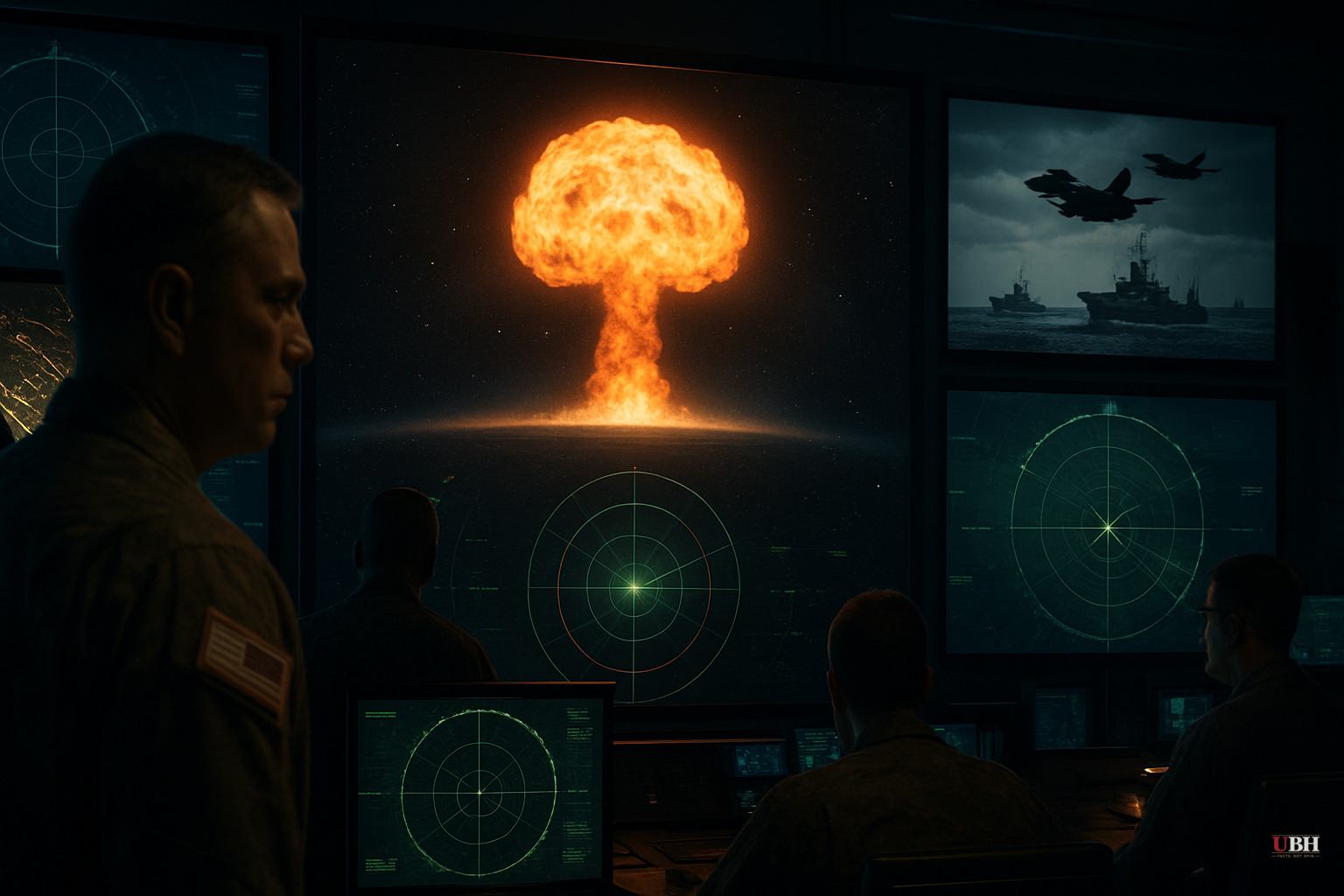
The Scenario Nobody Wants to Think About
US Space Command ran its first Apollo Insight tabletop exercise earlier this year. The subject: a nuclear weapon detonating in orbit.
Gen. Stephen Whiting, commander of US Space Command, disclosed this Tuesday during a discussion hosted by the Mitchell Institute for Aerospace Studies. Sixty-plus commercial companies attended at the classified level, along with allies from Australia, Canada, New Zealand, and the United Kingdom.
The goal was blunt: figure out what such a detonation would actually do, and start identifying technologies — current and future — that might help survive it.
Why Orbit?
A nuclear detonation in low-Earth orbit is NOT a conventional military strike. It's a civilization-scale event.
According to Ars Technica's reporting on Whiting's remarks, US officials believe such an explosion would destroy or incapacitate thousands of satellites — military and civilian — and render portions of low-Earth orbit unusable for up to a year. GPS goes dark. Military communications collapse. Financial networks, weather forecasting, emergency response systems — all of it takes a catastrophic hit simultaneously.
One former US defense official, quoted by Ars Technica, called it not an attack on the United States but "an attack on the world."
Russia Is Not Hypothetical Here
This isn't science fiction. In early 2024, Rep. Mike Turner (R-Ohio), then chair of the House Intelligence Committee, publicly warned that Russia was moving to deploy a nuclear weapon in orbit. The Biden administration confirmed Russia is actively considering the move — which would violate the Outer Space Treaty.
US officials say Russia hasn't put a weapon in orbit yet. But according to Ars Technica, they now believe Russia is operationalizing conventional anti-satellite weapons right now. The orbital nuclear option is the logical escalation of that program.
Russia has also launched what Ars Technica described as several mysterious spacecraft in recent years. Nobody in the public domain knows exactly what they're doing up there.
What the Models Actually Show
Independent researchers have modeled the consequences in detail.
Princeton University's Science and Global Security program built a simulation called PLAN A — a four-minute audio-visual piece modeling a plausible escalating nuclear war between the US and Russia. Developed by Tamara Patton, Moritz Kütt, and Alex Glaser, with input from nuclear policy experts Bruce Blair, Sharon Weiner, and Zia Mian, the simulation uses real force postures, real targets, and real weapon yields.
The result: more than 90 million people dead or injured within the first few hours.
That number only counts acute deaths from the blasts. It does NOT include radiation fallout deaths, starvation, or infrastructure collapse cascading over months and years.
Princeton's separate simulation project, led by Sharon Weiner and modeled using Ivan Stepanov's Nuclear War Simulator, is specifically examining whether America's fleet of 400 silo-based ICBMs makes that outcome more or less likely — and what replacing them with the next-generation Ground Based Strategic Deterrent through 2075 actually changes.
History Rhymes
This is not the first time the US military has simulated nuclear war and been disturbed by what it found.
In June 1983, the Defense Department ran Proud Prophet — a real-time, national-command-level nuclear wargame at the National War College. According to Wikipedia's documentation of the exercise, it was the first time a Secretary of Defense and Chairman of the Joint Chiefs actually participated in a wargame, though their involvement was hidden.
The result was horrifying. Standard US military strategy of the time led directly to nuclear holocaust. By the seventh simulated day, hundreds of nuclear strikes had destroyed every major German and Polish city, Paris, London, Amsterdam, Rotterdam, and Brussels. Half a billion people were dead in the simulation.
After Proud Prophet, the idea that nuclear escalation could be "managed" or "controlled" collapsed at the policy level. The Reagan administration pivoted toward conventional force buildup and the Strategic Defense Initiative instead.
When you actually model nuclear war honestly, the answer is always the same. There is no winning.
What's Actually Happening
Most outlets covering the Apollo Insight story are framing it as a reassuring sign that the military is being responsible and forward-thinking.
The full picture: Russia actively developing orbital weapons. The US military classifying commercial companies into wargames because the threat is real enough to require industry-wide coordination. Princeton researchers independently modeling 90 million casualties in a first-exchange scenario. And a historical precedent from 1983 showing that every serious nuclear simulation ends the same way.
Space Command is planning three more Apollo Insight exercises this year, according to Gen. Whiting.
What's at Stake
Russia is building the capability to take down every satellite in orbit with a single detonation. The US military is running classified wargames with 60-plus commercial companies to figure out what happens if they do. Independent researchers at Princeton say a full nuclear exchange kills 90 million people in hours.
Your phone's GPS, your bank's communications, military early-warning systems — all of it sits in the target zone of a weapon Russia is considering putting in orbit right now.
Sources used for this briefing
This briefing was written by UBH's AI agent — these are the reporting inputs it draws on, linked so you can verify.


