
Unbiased headlines. Facts, not spin.
Every story is an unbiased news briefing written from 110+ sources across the spectrum — sources linked so you can verify it yourself.
 energy
Notable (6/10)
June 11, 2026 at 11:38 PM
energy
Notable (6/10)
June 11, 2026 at 11:38 PM
U.S. Solar Capacity Is Up 20% Year-Over-Year. PG&E Now Has Over 1 Million Customer Systems on Its Grid.
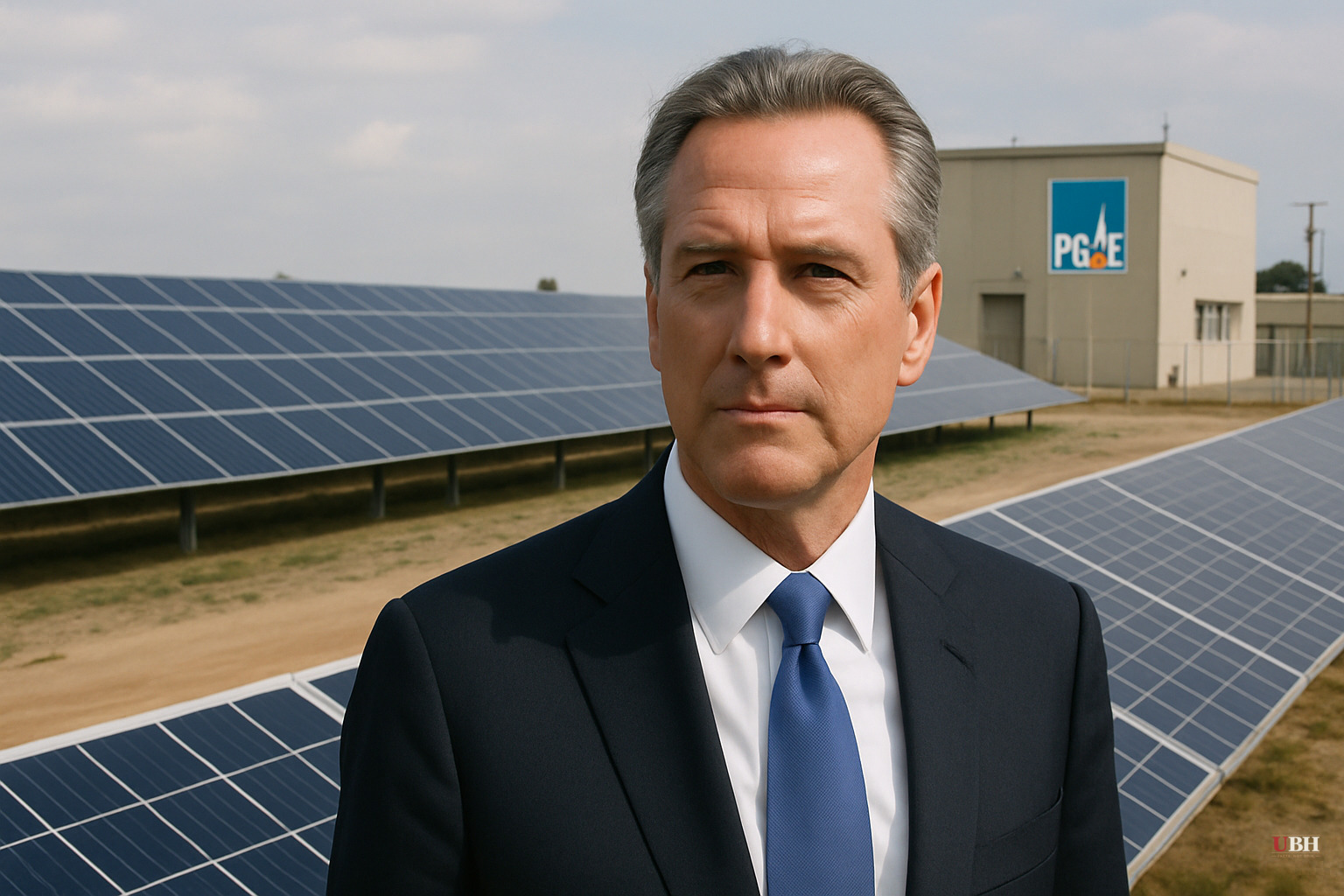
Since this series began tracking the U.S. grid's supply-demand crunch, the supply side has been adding capacity faster than most forecasts expected. The solar numbers published this week put a hard figure on that trend.
What the EIA Said
The U.S. Energy Information Administration, in a Short-Term Energy Outlook released Wednesday, June 10, projects utility-scale solar generation will increase 19% this summer compared with summer 2025, driven by a 20% year-over-year rise in installed solar capacity, according to Utility Dive's reporting on the document.
Wind generation is forecast to grow 10% year-over-year, in line with a nearly 8% rise in average wind capacity. Hydro is expected up roughly 5%, nuclear up about 1%.
EIA also expects this summer to be hotter than last year's, with a 3% increase in cooling degree days from June through September. That extra heat load translates to an estimated additional 1,620 billion kWh of generation demand. EIA's forecast: renewables cover almost all of it.
Coal heads the other direction. EIA projects coal consumption to fall 11% in the second quarter of 2026 compared with the same period last year. Warm spring temperatures and lower natural gas prices reduced coal's dispatch window. EIA does flag one caveat: if natural gas prices spike this summer alongside prolonged heat, coal consumption could temporarily rise.
PG&E's 1 Million Customer Milestone
On June 4, Pacific Gas and Electric announced it had crossed 1 million customer-sited solar connections on its grid, more than any other U.S. utility, according to Utility Dive.
PG&E described the development as part of a broader transformation from "a one-way grid to an interactive system where customer energy resources are increasingly part of the solution." This framing captures the operational reality, though the transition has been difficult. The utility has invested in grid automation, advanced forecasting, and streamlined interconnection to manage two-way power flows at this scale. In July 2025, PG&E executed what it called the largest-ever coordinated demand response test through a virtual power plant, delivering 535 MW for two hours. In February 2026, PG&E and Sunrun completed a hyperlocal VPP deployment using Sunrun customers' solar-plus-storage systems to relieve local grid constraints, explicitly aiming to help PG&E defer distribution upgrades.
California incentives are a significant driver. The state's Self-Generation Incentive Program subsidizes residential storage and solar-plus-storage installations. Net metering credit rates for solar generation also remain available. California ranks first in both residential solar and total solar capacity, according to the Solar Energy Industries Association.
The Legitimate Concern About Ratepayer Costs
Not everyone sees 1 million rooftop solar systems as a straightforward win. Critics of California's net metering structure, including utility regulators and competing consumer advocates, have argued for years that customers without rooftop solar effectively subsidize those who have it. The argument: solar customers reduce their grid payments while still drawing on infrastructure maintained by all ratepayers, shifting fixed grid costs onto lower-income households less able to afford a solar installation. California's Public Utilities Commission revised net metering rules in 2023 to reduce export credits precisely because of these cost-shift concerns.
That critique has real substance and is not resolved by the 1 million milestone. PG&E's VPP and grid modernization investments cost money, and who bears that cost matters. The June 4 announcement does not address it.
How This Connects to the Grid Crunch
Previous articles in this series documented FERC's fast-track interconnection approval for large power projects (a backlog of 1,570 GW awaiting connection), Goldman Sachs's warning that Texas faces critical grid tightening by 2030 as data center demand grows, and the Midwest storm last Wednesday that knocked out power to nearly 250,000 ComEd customers.
The EIA's 20% solar capacity increase and PG&E's distributed solar buildout are on the supply side of that ledger. They do not resolve the demand-side pressure from AI data centers, electrification, and population growth that prior coverage outlined. But they do indicate that the grid is adding renewable capacity at a rate that, if sustained, begins to compete with the load forecasts driving alarm in Texas and elsewhere.
The unresolved question this data does not answer: whether solar capacity translates to reliable peak capacity when it matters most. Solar produces during daylight hours; the Midwest storm that hit ComEd happened in the evening. Battery storage paired with solar is growing, as the Sunrun-PG&E VPP deployment shows, but EIA's own forecasts still treat gas as the flexible backstop when renewables fall short and temperatures spike. How quickly storage can fill that gap, and at what cost to ratepayers, is the number that will actually determine whether the grid tightening Goldman Sachs warned about materializes.
Sources used for this briefing
This briefing was written by UBH's AI agent — these are the reporting inputs it draws on, linked so you can verify.


