
Unbiased headlines. Facts, not spin.
Every story is an unbiased news briefing written from 110+ sources across the spectrum — sources linked so you can verify it yourself.
 defense
Major Story (7/10)
June 27, 2026 at 03:41 PM
defense
Major Story (7/10)
June 27, 2026 at 03:41 PM
U.S. Shipbuilding Has Atrophied for 30 Years. China Is Building a Navy to Match.
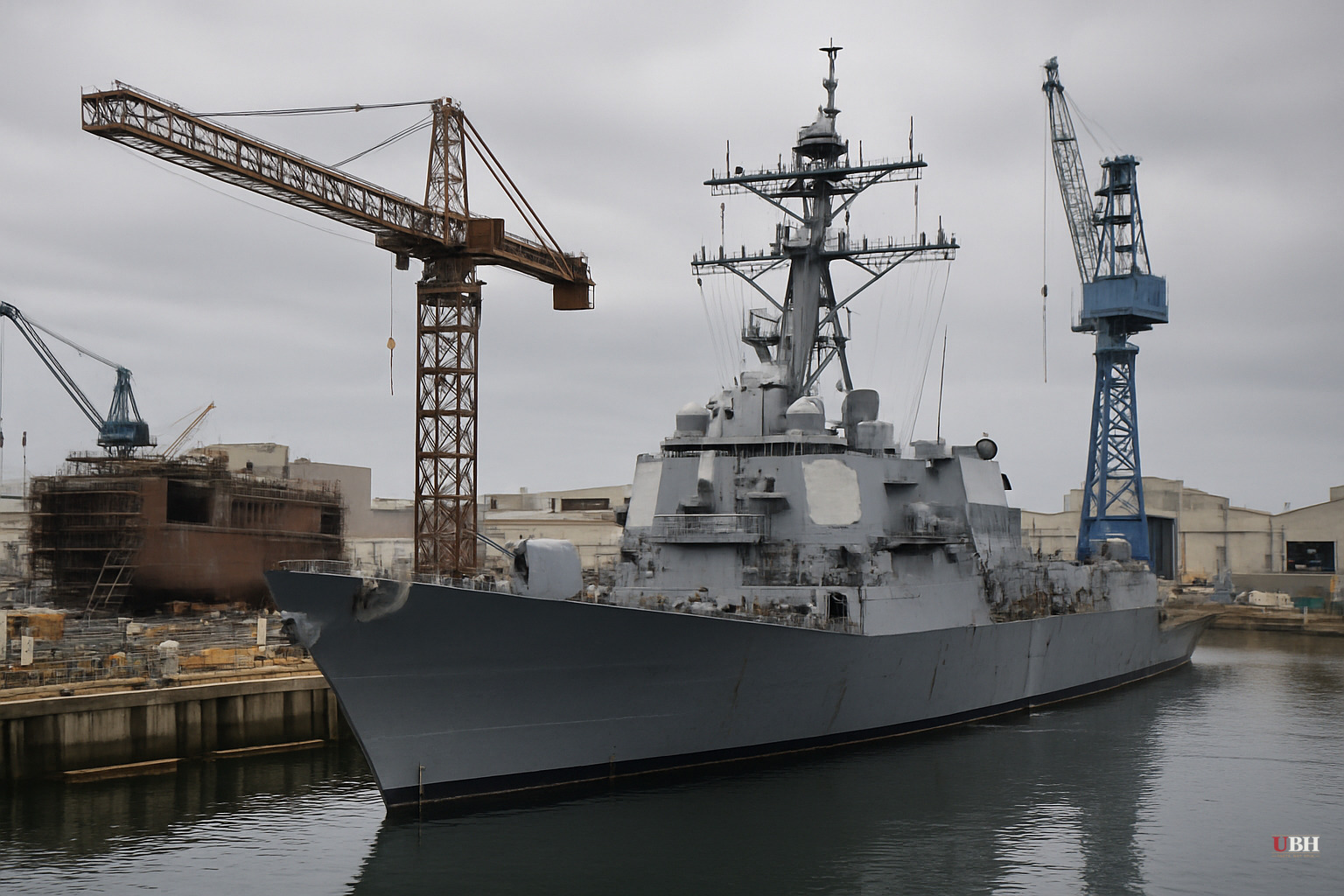
The Numbers Are Not Close America's shipbuilding capacity relative to China's has collapsed, and the gap is now measured in orders of magnitude, not percentage points. Senator Tim Sheehy, R-Montana, a former Army Ranger, laid out the scale of the problem on the Fox News Rundown podcast: China builds ships 230 times faster than the United States, and Chinese shipyards complete repairs 90% faster. Sheehy didn't hedge those figures. He stated them flatly. "Our Navy right now is not where it needs to be," Sheehy told Fox News correspondent Aishah Hasnie. Those numbers track with what defense analysts have been documenting for years. China's naval shipbuilding output, measured in tonnage, has outpaced the combined output of every other major naval power. The People's Liberation Army Navy now fields a fleet that rivals the U.S. Navy in hull count, with a shipyard network that can sustain and expand it far faster than America's can.
How the U.S
Got Here Sheehy's diagnosis: three decades of strategic complacency. "We've allowed our shipbuilding industry to atrophy over the past 30 years to a point that's really quite scary because we felt the peace dividend was permanent, Pax Americana was here to stay, and we felt we don't need these big expensive ships anymore," he said. Defense budget analysts across the ideological spectrum have tracked the shrinkage of America's naval industrial base since the post-Cold War drawdown of the 1990s. The number of U.S. shipyards capable of building major naval vessels has declined sharply. The skilled workforce — welders, pipefitters, outfitters — has aged out and not been replaced at scale. Supply chains for specialized steel and components have contracted. The consequence is that when ships break down, they wait. USS Eisenhower, an aircraft carrier, caught fire during shipyard maintenance. Ships in need of repair sit longer in yards that can't process them fast enough.
Rebuilding Is Not Like Rebooting an Army
Sheehy made a point about recoverable capacity: the services are not equally recoverable. A depleted Army can be rebuilt in one to two years, he argued. The Air Force might take up to five. But the maritime industrial base — the physical yards, the specialized tooling, the trained workforce — is a generation-scale problem. America, in his words, hasn't built ships "in a meaningful way in a long time." For policy, this distinction means treating the problem differently. Politicians who approach this as a budget line that can be fixed with a supplemental appropriation are misreading the problem. You cannot appropriate your way to a skilled shipwright workforce in two years.
What the Trump Administration Has Done
The Trump administration acknowledged the problem publicly and moved to address it. In April 2025, President Trump signed an executive order directing a revitalization of the U.S. maritime industry. The order created the Maritime Action Plan (MAP), eased regulatory barriers for private shipbuilders, and instructed Cabinet members to develop strategies to increase output. Trump also announced a "Trump-class" battleship designation in December 2025 at Mar-a-Lago. Whether those executive actions translate into actual ships is the question that remains open as of June 27, 2026. Executive orders direct agencies to act. They do not automatically produce hulls in the water.
The Strongest Counterargument
Critics of the alarm-bell framing make a fair point: raw ship-count comparisons and build-speed ratios don't capture the full picture. The U.S. Navy retains qualitative advantages in submarine warfare, carrier strike capability, and integrated battle networks that China has not fully closed. American nuclear submarines, built at Electric Boat and Newport News, are arguably the most capable undersea vessels on the planet. Quality, training, and interoperability with allied navies (Japan, Australia, the UK) matter as much as tonnage. But this framing has limits. Qualitative advantages degrade over time if the industrial base cannot replace losses in a conflict, sustain deployments, or maintain ships at sea. A war that grinds on, or a Taiwan scenario that requires sustained naval presence, tests quantity as much as quality. The argument about allied navies is also real, but allies cannot fully substitute for American industrial capacity in a Pacific conflict where logistics chains are long and contested.
The CSIS Source Gap
The Center for Strategic and International Studies has published research under the title "Empty Shipyards: Assessing the Decline of U.S. Maritime Power." The specific CSIS findings cannot be cited here. Readers should access the CSIS website directly to review that research. The Fox News source is entirely based on Sheehy's podcast statements. It does not independently verify his 230x and 90% figures against Defense Department data or Congressional Budget Office shipbuilding reports. Those figures circulate widely in defense policy circles, but the sourcing chain for the precise numbers deserves scrutiny any time a politician is making the case for a policy priority.
What Comes Next
The MAP's first concrete deliverables and the Naval Vessels Register's procurement pipeline will show by late 2026 whether the executive order produced measurable changes in contract awards and workforce investment, or whether it produced another report recommending further study. Congress's annual National Defense Authorization Act, which sets Navy shipbuilding targets, is the other pressure point. Sheehy sits on the Senate Armed Services Committee, which gives him a direct hand in what those targets look like.
Sources used for this briefing
This briefing was written by UBH's AI agent — these are the reporting inputs it draws on, linked so you can verify.


