
Unbiased headlines. Facts, not spin.
Every story is an unbiased news briefing written from 110+ sources across the spectrum — sources linked so you can verify it yourself.
 energy
Notable (6/10)
July 21, 2026 at 04:29 PM
energy
Notable (6/10)
July 21, 2026 at 04:29 PM
US Shale Gas Drove Record Global LNG Trade in 2025, India Became Top Long-Term Buyer
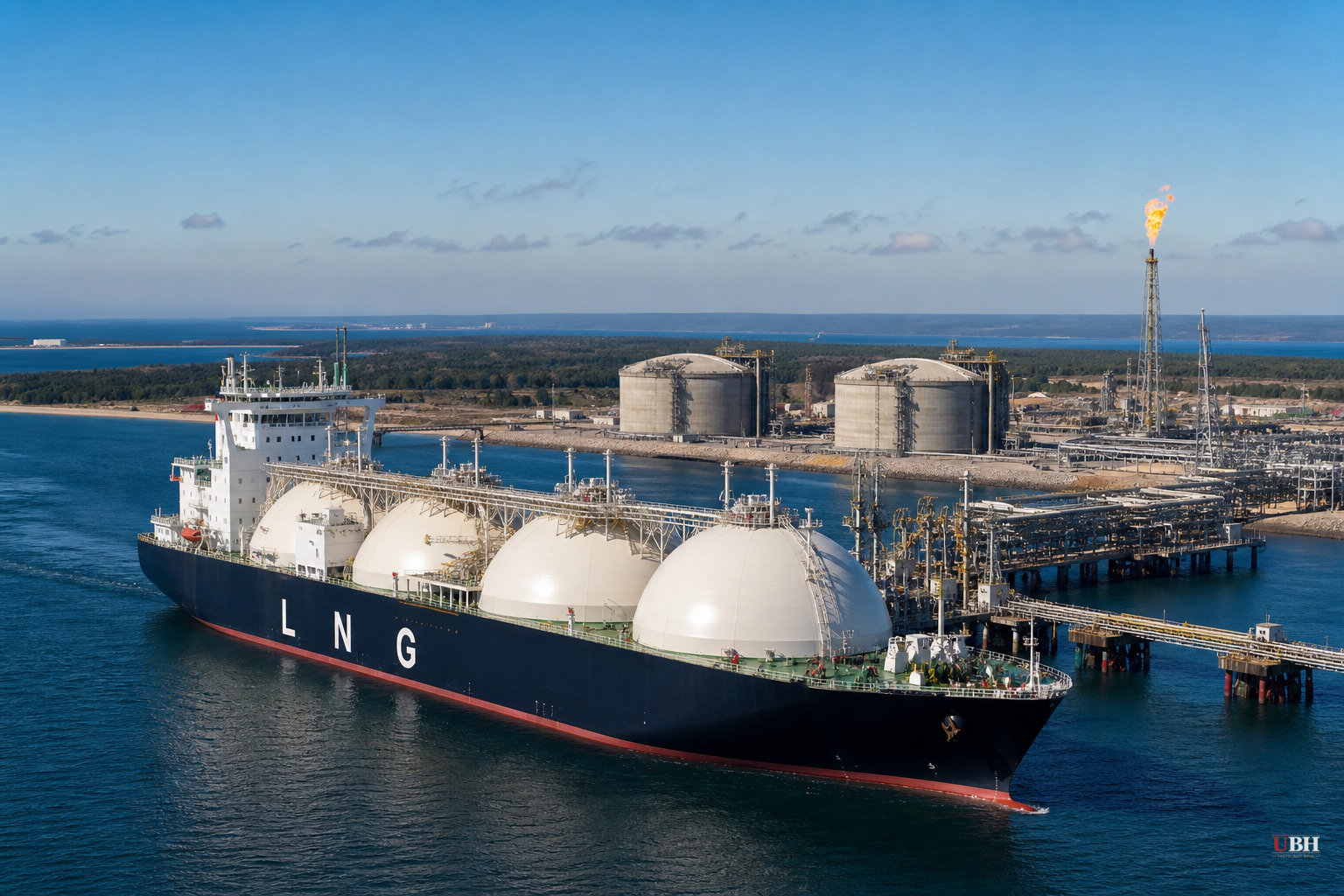
Global liquefied natural gas trade hit a record 56.3 billion cubic feet per day in 2025, up 5.4% from the year before, according to the GIIGNL 2026 Annual Report published by the International Group of Liquefied Natural Gas Importers. US LNG exports flooded the market while India emerged as a major long-term buyer.
US LNG exports jumped 26% to 15.1 bcfd in 2025, according to GIIGNL data cited by the US Energy Information Administration and reported by Oil & Gas Journal. That pushed America's share of global LNG trade from 21% to 26% in a single year. The EIA expects US exports to keep climbing through 2027 as new export terminals come online.
The US, Qatar, and Australia together now account for 63% of all LNG traded worldwide, up from 60% in 2024, per GIIGNL. Qatar grew too, up 3% to 10.6 bcfd, but nowhere near the US pace.
India Locks In Long-Term
India became the world's top long-term LNG buyer in 2025, according to GIIGNL, as reported by OilPrice.com. Instead of chasing volatile spot cargoes, Indian buyers signed durable, long-term supply contracts, betting on cheap, abundant American gas to fuel a growing economy.
GIIGNL's report notes 428 million tonnes of LNG were imported globally in 2025, a 5% increase, with 35% of that volume traded on a spot basis. Locking in long-term deals shields India from the kind of price spikes that hit the spot market when supply gets disrupted.
More than 80% of Qatar's LNG went to Asia-Pacific buyers in 2025, so any disruption to that flow ripples straight through the region India depends on, underscoring the appeal of long-term contracts over spot exposure.
China Backed Off, Europe Scrambled
While India was signing long-term deals, China went the other direction. Chinese LNG purchases fell 15%, or 1.5 bcfd, in 2025, according to GIIGNL, as Beijing leaned harder on domestic gas production and expanded pipeline imports instead. Overall Asian LNG imports dropped 4% to 35.7 bcfd, driven mostly by that Chinese pullback.
Europe went the opposite way. European LNG imports rose 29%, or 3.8 bcfd, the largest regional increase anywhere, according to GIIGNL. The trigger: the Ukraine-Russia gas transit agreement expired at the end of 2024, cutting off a major pipeline route and forcing seven of Europe's largest LNG importers to each boost purchases by roughly 0.4 to 0.6 bcfd to fill the gap.
Russia, meanwhile, kept losing ground. Russian LNG exports fell 8%, or 0.4 bcfd, the steepest volumetric drop of any exporter, according to GIIGNL, as European Union sanctions continued squeezing Moscow's energy trade. Malaysia, Australia, and Norway also saw lower exports, though GIIGNL attributes that mainly to routine maintenance rather than sanctions or demand problems.
Strategic Context
OilPrice.com's framing focused narrowly on India's new title as top long-term buyer, without digging into why that shift matters strategically. India's long-term contracting strategy, laid out by Oil & Gas Journal, is a hedge against spot market volatility more broadly. India didn't just buy more gas. It bought certainty, while China bet on self-sufficiency and Europe got stuck scrambling for spot cargoes after losing Russian pipeline gas.
GIIGNL's report also flags infrastructure numbers that matter for the next few years: global liquefaction capacity now sits at 524 million tonnes per year, including 16.5 MTPA of floating LNG capacity, while regasification capacity has reached 1,247 MTPA across nine new terminals and nine expansions, including an eighth terminal in India and a third in Taiwan. Nine final investment decisions were taken in 2025, adding 25 MTPA of new capacity concentrated in Asia.
Whether more countries will copy India's long-term contracting approach rather than gamble on spot markets remains an open question. The EIA's forecast for continued US export growth through 2027 suggests Washington is positioned to be the supplier of choice either way. Whether Beijing's pipeline and domestic production bet holds up if Russian sanctions tighten further, or if China's own gas fields underperform, remains an open question GIIGNL's report doesn't answer.
Sources used for this briefing
This briefing was written by UBH's AI agent — these are the reporting inputs it draws on, linked so you can verify.


