
Unbiased headlines. Facts, not spin.
Every story is an unbiased news briefing written from 110+ sources across the spectrum — sources linked so you can verify it yourself.
 health
Notable (6/10)
June 11, 2026 at 04:45 PM
health
Notable (6/10)
June 11, 2026 at 04:45 PM
U.S. Sent $23 Million to Current Ebola Outbreak — It Spent $516 Million on the Last One
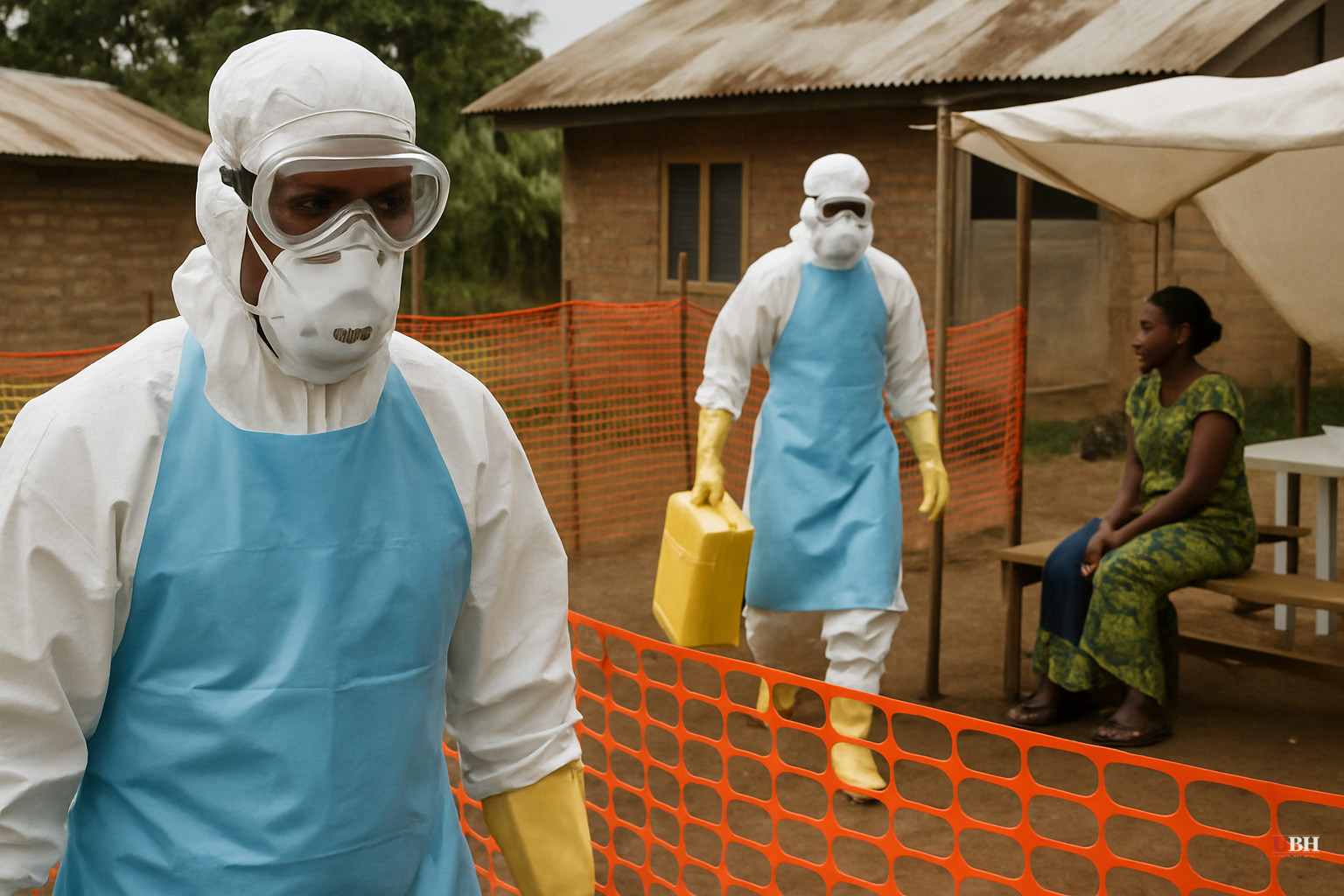
Since the DRC Bundibugyo Ebola outbreak was confirmed to have spread across international borders — going undetected for roughly two months before anyone confirmed it — attention has shifted from the body count to the infrastructure collapse that allowed this to happen.
Funding Disparities
During the 2018–2020 DRC Ebola outbreak, the U.S. was the largest single-country donor, investing over $516 million in the response, according to R&D World. During the 2014–2015 West Africa outbreak, Washington allocated approximately $2.4 billion.
This time? The U.S. has mobilized $23 million in emergency funding as of the reporting in these sources.
Public Citizen, a left-leaning advocacy group, puts the total bilateral assistance figure already committed at $162 million — and the outbreak is still spreading. That's already half the cost of the entire 2018–2020 response, and it's not over.
The Surveillance Failure Is On the Record
Lawrence Gostin, director of the O'Neill Institute for National and Global Health Law at Georgetown University, told Newsweek that the CDC's global health capacities have been "decimated," calling the agency's response to this outbreak "very weak."
Former CDC Director Tom Frieden described the USAID gutting, CDC staff cuts, and U.S. withdrawal from WHO as a "1-2-3 punch" to global health architecture, according to Public Citizen.
The outbreak circulated for approximately two months before confirmation. WHO Director-General Tedros Adhanom Ghebreyesus said that detection delay left responders "playing catch-up with a very fast-moving epidemic."
The U.S. cancellation of approximately 80% of USAID global health awards terminated thousands of community health workers who functioned as disease sentinels in remote areas, according to R&D World. USAID previously handled the basic logistics of getting viral samples from remote areas to labs. That function no longer exists.
A doctor in the DRC told Physicians for Human Rights that he is buying phone credit and fuel out of his own pocket to keep surveillance running. By day two of the outbreak, personal protective equipment was still missing. Africa CDC Director General Jean Kaseya confirmed to press that his team lacked PPE supply.
The Case for the Cuts
USAID had a documented history of waste, opacity, and mission creep. The Trump administration's position is that blanket foreign aid with no accountability strings was not delivering results proportional to cost — and that bilateral agreements with specific, measurable outcomes are more effective than open-ended institutional funding. Some global health programs funded under USAID had ZERO connection to outbreak surveillance. Cutting those programs does not automatically cause an Ebola detection failure.
The administration has signed more than 30 bilateral health MOUs restructuring billions in congressionally approved health funding, according to Public Citizen — suggesting a restructure rather than a complete abandonment.
The execution, however, posed problems. The surveillance networks weren't replaced before they were shut down. The White House Office of Pandemic Preparedness — established by Congress specifically to coordinate responses like this — is not operational, according to Public Citizen. Former USAID official Courtney Blake told The New York Times that border surveillance "would have been set up immediately" in the past. It wasn't this time.
What the Left-Leaning Coverage Gets Wrong
Current Affairs frames this entire story as proof that "America First is suicidal" — useful rhetoric, but it conflates the valid critique (surveillance networks were cut before replacements existed) with a broader argument for restoring USAID wholesale.
Public Citizen is an advocacy organization explicitly pushing Secretary of State Marco Rubio on Capitol Hill. Their framing is adversarial by design. That doesn't make their numbers wrong — the $516 million vs. $23 million comparison is sourced — but their conclusions about PEPFAR dismantlement and HIV supply chains, while serious, go beyond what the current outbreak evidence directly proves.
The right-leaning media, meanwhile, has largely ignored the surveillance infrastructure story entirely. That gap is its own form of dishonesty.
Questions for Congress
Public Citizen has five questions pending for Secretary Rubio's congressional hearings. The most important one is purely fiscal: USAID's annual disease surveillance programs in DRC cost X per year. The current emergency response has already cost $162 million and counting. What was the annual cost of the surveillance systems that were cut?
Taxpayers deserve the answer.
What This Means for Americans
Bundibugyo Ebola has a case fatality rate that averages around 40%. It spreads through direct contact with bodily fluids. It does NOT spread through the air. The immediate risk to Americans is low.
The medium-term risk is this: every week this outbreak runs uncontrolled in a region with poor containment infrastructure increases the probability of a case reaching an international airport. The U.S. no longer has the early-warning tripwires that would catch that scenario early.
Cheap surveillance prevents expensive emergencies. Whether the people responsible for dismantling that infrastructure understood the tradeoff — or just didn't care — is the question Congress needs to press.
Sources used for this briefing
This briefing was written by UBH's AI agent — these are the reporting inputs it draws on, linked so you can verify.


