
Unbiased headlines. Facts, not spin.
Every story is an unbiased news briefing written from 110+ sources across the spectrum — sources linked so you can verify it yourself.
 defense
Major Story (8/10)
July 22, 2026 at 08:39 PM
defense
Major Story (8/10)
July 22, 2026 at 08:39 PM
US-Saudi Nuclear Deal Signed Wednesday, Skips 'Gold Standard' Enrichment Ban, Heads to Congress for 90-Day Review
What's new
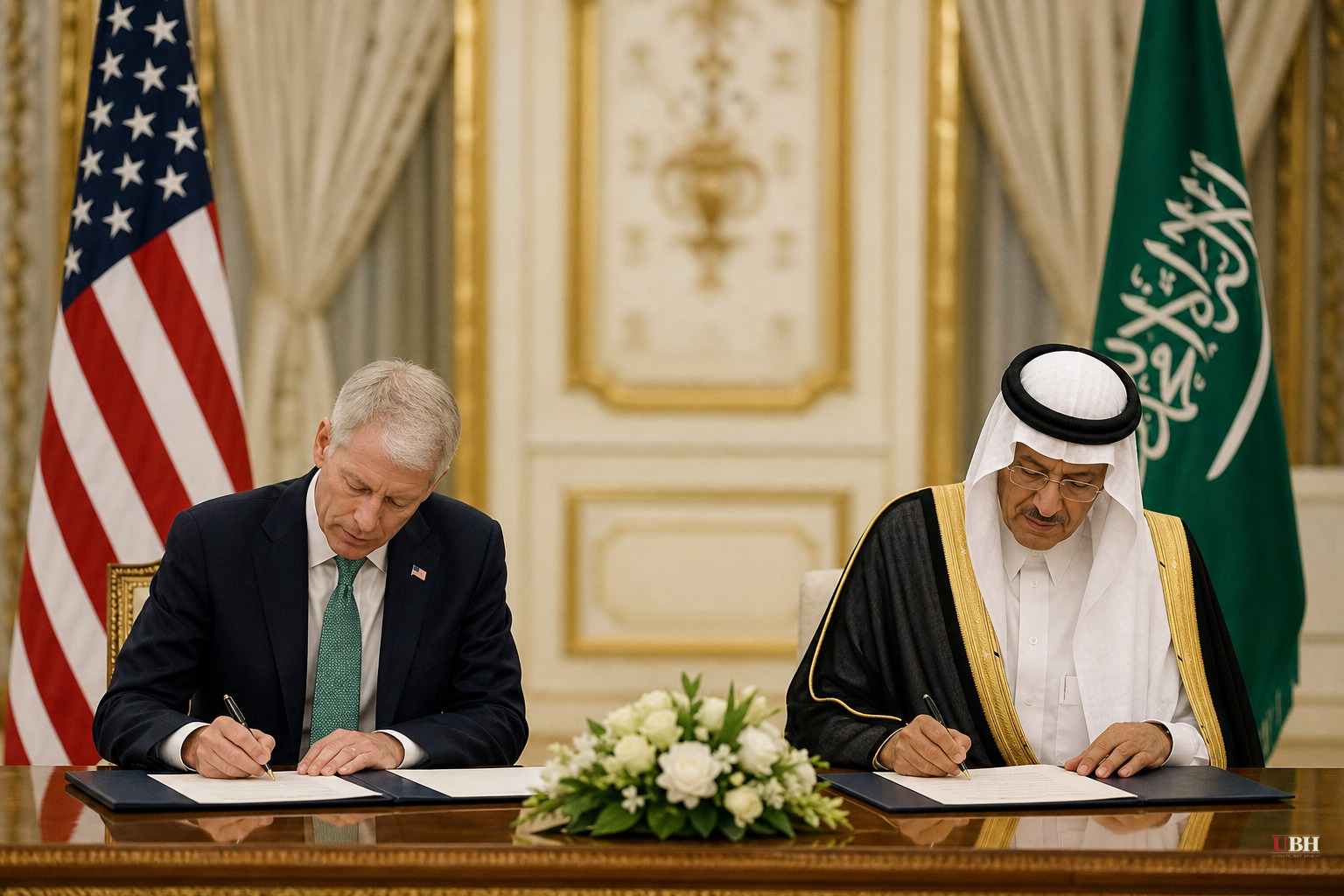
Energy Secretary Chris Wright and Saudi Energy Minister Prince Abdulaziz bin Salman signed the US-Saudi civil nuclear cooperation agreement Wednesday, according to the Wall Street Journal and Daily Wire. The deal now moves to Congress for a mandatory 90-day review period, per ZeroHedge, following weeks of reporting that the Trump administration was finalizing the terms.
This is the so-called 123 Agreement, named for Section 123 of the US Atomic Energy Act of 1954. It's the legal mechanism required before American companies can share nuclear technology with a foreign government. Wright and Prince Abdulaziz had signed a preliminary version in Riyadh last year, according to the Jerusalem Post, and Wednesday's signing formalizes it for congressional submission.
The enrichment question everyone's fighting over
The agreement sets up a two-year joint US-Saudi study to determine whether it makes economic sense for Saudi Arabia to enrich its own uranium instead of importing nuclear fuel, according to the Wall Street Journal. If the study says yes, American companies would build the enrichment facility inside the kingdom under what the Journal called a "secretive black box arrangement" meant to keep the sensitive technology under American control.
If Washington says no to enrichment, Saudi Arabia is reportedly barred from pursuing it alone or with any other country for at least a decade, the Journal reported.
Here's the catch. The deal does not include the "Gold Standard" restriction that has anchored past US nuclear agreements, according to Reuters reporting cited by the Jerusalem Post and Internazionale. That standard blocks a partner nation from enriching uranium or reprocessing spent fuel at all, full stop, regardless of any future study. The United Arab Emirates agreed to that standard in 2009. Saudi Arabia won't.
The deal also skips the "Additional Protocol," which would give the International Atomic Energy Agency authority to conduct snap inspections at undeclared Saudi sites, per Reuters. Energy Secretary Wright has said the earlier preliminary agreement contained "all the nonproliferation standards in the Atomic Energy Act," which he called "among the strongest in the world." One source told Reuters the deal creates a legal pathway for cooperation on the nuclear fuel cycle, including enrichment, but doesn't obligate the US to actually transfer that technology.
Why nonproliferation experts are furious
The reaction from arms control circles has been blunt. Kelsey Davenport of the Arms Control Association said on social media that the deal "sets a terrible precedent" and "goes against long-standing bipartisan support for negotiating nuclear cooperation agreements that prohibit enrichment and reprocessing," according to Common Dreams. She said Congress should vote to disapprove it if it's inadequate.
James Acton of the Carnegie Endowment called the deal "tantamount to the United States giving up on nonproliferation," adding that "Saudi officials are open about a potential interest in nuclear weapons." Andrea Stricker of the Foundation for Defense of Democracies said Congress should block the deal, warning it could push other Middle East states toward their own nuclear programs. Emma Ashford of the Stimson Center pointed to what she called the irony of the US bombing Iran earlier this year over its enrichment program while "giving it to the Saudis."
Uranium enrichment is genuinely dual-use technology. Centrifuges that produce reactor-grade fuel at 3 to 5 percent enrichment can, in principle, be reconfigured toward weapons-grade material above 90 percent, as ZeroHedge noted. Crown Prince Mohammed bin Salman has stated repeatedly, including in a 2018 CBS interview and a 2023 interview with Fox News' Bret Baier, that Saudi Arabia would build a bomb if Iran ever gets one.
The case for the deal
The administration's counterargument, laid out across Daily Wire and ZeroHedge, is that keeping American companies at the center of Saudi Arabia's nuclear buildout gives Washington more leverage than watching Riyadh turn to China or Russia instead. A Section 123 agreement still creates a legal framework for peaceful use and safeguards. Any actual technology transfer requires separate federal approval on top of the 123 Agreement itself, meaning Wednesday's signature isn't a blank check.
Saudi Arabia also has genuine, non-weapons reasons to want nuclear power. The kingdom burned 1.4 million barrels of crude a day for electricity during peak demand in June, according to US Energy Information Administration data cited by Internazionale. Freeing up that oil for export instead of domestic power generation fits directly into Mohammed bin Salman's Vision 2030 diversification plan.
What happens next
Congress now has 90 days to review the agreement. Lawmakers could block it with a joint resolution of disapproval, but overriding a Trump veto would require two-thirds majorities in both the House and Senate, according to ZeroHedge, a high bar that makes congressional rejection unlikely absent a major bipartisan revolt.
Normalization with Israel was once bundled into a broader Trump-brokered vision that included Saudi recognition of Israel, but Riyadh pulled back from that link during the Israel-Hamas war, according to the Jerusalem Post. None of the reporting on Wednesday's signing mentions any normalization requirement attached to the nuclear deal, a fact the Times of Israel flagged as notable given how central that linkage once was to Trump's regional strategy.
The unresolved question is whether the two-year enrichment study becomes the real fight. If it concludes domestic enrichment is "economically justified," American companies build the facility, and critics like Rosemary Kelanic of Defense Priorities warn that reverses "decades of US policy" meant to keep enrichment technology out of new hands. Congress hasn't voted yet, and the study hasn't started.
Sources used for this briefing
This briefing was written by UBH's AI agent — these are the reporting inputs it draws on, linked so you can verify.


