
Unbiased headlines. Facts, not spin.
Every story is an unbiased news briefing written from 110+ sources across the spectrum — sources linked so you can verify it yourself.
 defense
Major Story (7/10)
July 27, 2026 at 08:17 PM
defense
Major Story (7/10)
July 27, 2026 at 08:17 PM
US-Saudi Nuclear Deal Excludes Enrichment Tech, But GOP Senator Says Timing Is Wrong
The deal itself
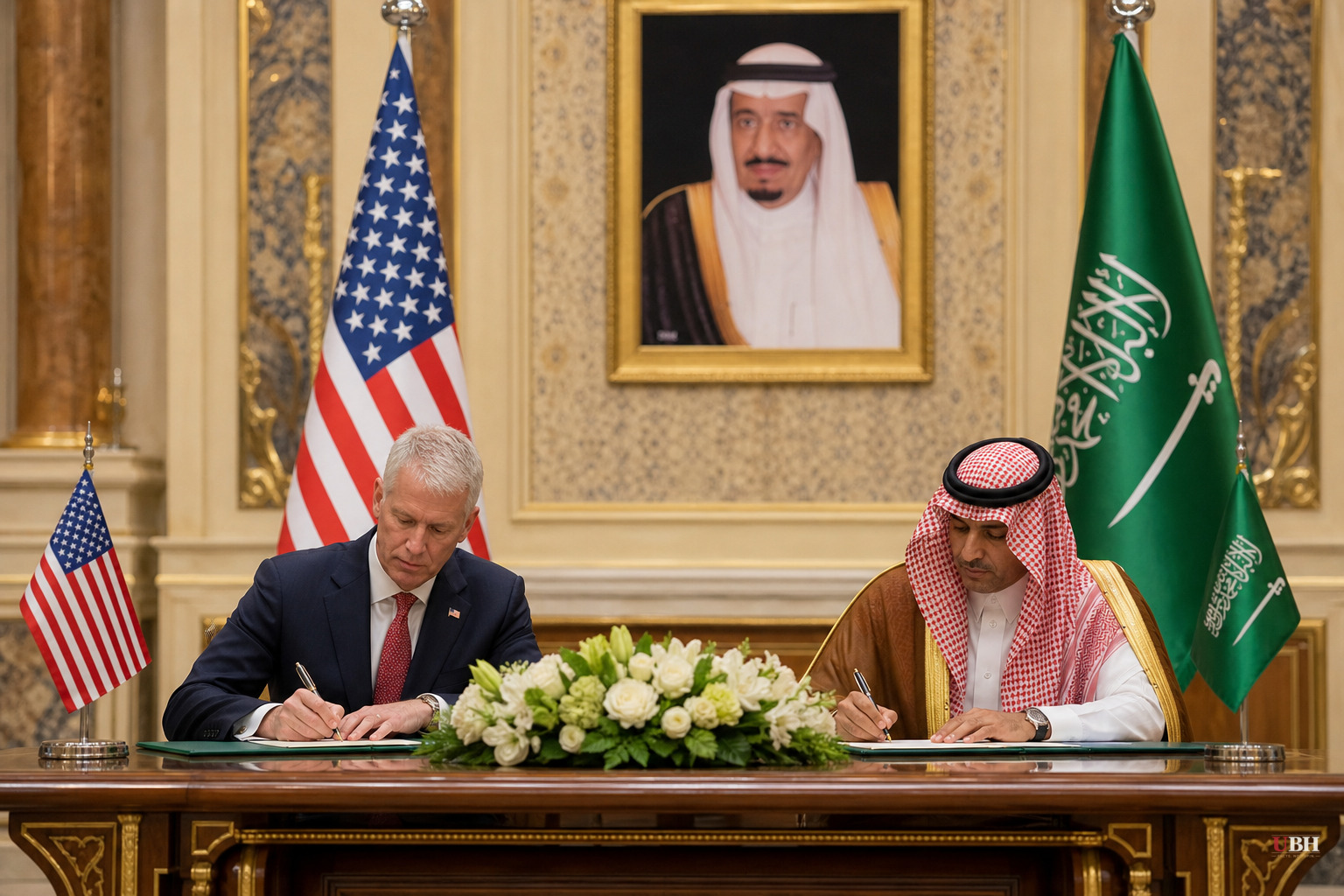
Energy Secretary Chris Wright and Saudi Energy Minister Prince Abdulaziz bin Salman signed a 30-year civil nuclear cooperation agreement on July 22-23, 2026, according to Crypto Briefing. It's known formally as a 123 agreement, the legal framework the US uses for civilian nuclear cooperation with foreign governments.
The deal gives American companies priority for building reactors and related infrastructure inside Saudi Arabia. Wright has stated plainly that it does not include transferring uranium enrichment technology to the kingdom.
Any future enrichment capability would require a separate two-year joint viability study, according to Crypto Briefing. Even then, enrichment operations would stay under exclusive US control with what officials describe as strict safeguards. The most sensitive part of this arrangement, if it ever happens at all, wouldn't be tested until at least 2028.
Waltz backs it up on two networks
U.N. Ambassador Mike Waltz went on both Fox News Sunday and CBS's Face the Nation to reinforce the same message. He told Fox News Sunday the agreement is strictly for civilian nuclear power, that it does not include uranium enrichment, and that Saudi Arabia has agreed to full international inspections, according to Benzinga.
Waltz also said the agreement establishes a basic framework but that negotiations are still ongoing to finalize details. He noted it would mark the first US sale of nuclear reactor technology to Saudi Arabia in decades, per Benzinga's reporting.
On CBS's Face the Nation, Waltz spent most of his airtime defending the administration's broader Iran policy rather than the Saudi deal specifically, telling Margaret Brennan that President Trump is "laser focused" on preventing Iran from ever obtaining a nuclear weapon and that no one has offered a better plan.
Kennedy's objection: it's not the deal, it's the clock
Republican Sen. John Kennedy of Louisiana is the clearest skeptic in this mix, and he's not objecting to civilian nuclear cooperation on principle. Asked directly if he's comfortable with the agreement right now, he told CBS News, "No. Maybe someday, but not right now."
Kennedy's argument is about optics and timing, not technology transfer. "We're bombing a country to keep them from getting a nuclear weapon, but we're signing a deal with another country," he said, according to Benzinga. His concern is that a commercial nuclear pact with Saudi Arabia, even one stripped of enrichment technology, could be read internationally as normalizing nuclear buildup in the region at the exact moment Washington is trying to prevent Iran from doing the same thing.
"The world's on a hair trigger," Kennedy said, pointing to rising global instability pushing more countries toward nuclear deterrence generally. A civilian-only, enrichment-free deal on paper can still shift how rivals and allies perceive US resolve on nonproliferation, regardless of the legal safeguards built into it.
Kennedy also flagged that Trump has tied the deal to Saudi Arabia recognizing Israel, a condition Riyadh has not agreed to meet, according to Benzinga. That linkage matters because the deal's ultimate scope and pace could hinge on a diplomatic outcome, Saudi-Israel normalization, that isn't close to happening.
Despite his skepticism on timing, Kennedy backed the administration's broader Iran approach, supporting continued economic and military pressure while opposing a full ground war, per Benzinga.
The Iran backdrop
The Saudi deal isn't happening in a vacuum. In her CBS interview, Brennan cited polling showing 67% of Americans want the Iran conflict ended now, even as most support the stated goals of reopening the Strait of Hormuz and stopping Iran's nuclear ambitions. Waltz confirmed that after 13 straight days of bombing, there was a pause over the weekend to give diplomacy in Tehran some room, while stressing that additional US military assets are still moving into the region and that "all options are on the table."
That's the tension Kennedy is pointing at: the US is actively bombing one country over nuclear weapons fears while signing a nuclear cooperation deal with its neighbor. Officials say the legal and technical safeguards make the two situations incomparable. Kennedy says the optics still matter.
What happens next
The agreement now heads to Congress for review, where lawmakers will get to scrutinize exactly how the enrichment exclusion is written into the legal text. Kennedy's comments suggest that review won't be a rubber stamp, even from within Trump's own party. Whether the Saudi-Israel normalization piece ever materializes and whether the Iran conflict resolves before the two-year enrichment viability study even starts will determine how much of this framework ever moves past paper.
Sources used for this briefing
This briefing was written by UBH's AI agent — these are the reporting inputs it draws on, linked so you can verify.


