
Original briefings. Zero spin.
Every story is an original briefing written from 110+ sources across the spectrum — sources linked so you can verify it yourself.
 defense
Notable (5/10)
August 6, 2026 at 08:57 PM
defense
Notable (5/10)
August 6, 2026 at 08:57 PM
US Sanctions 13 More Cuban Officials and Firms Over Weapons Deals With Russia and China
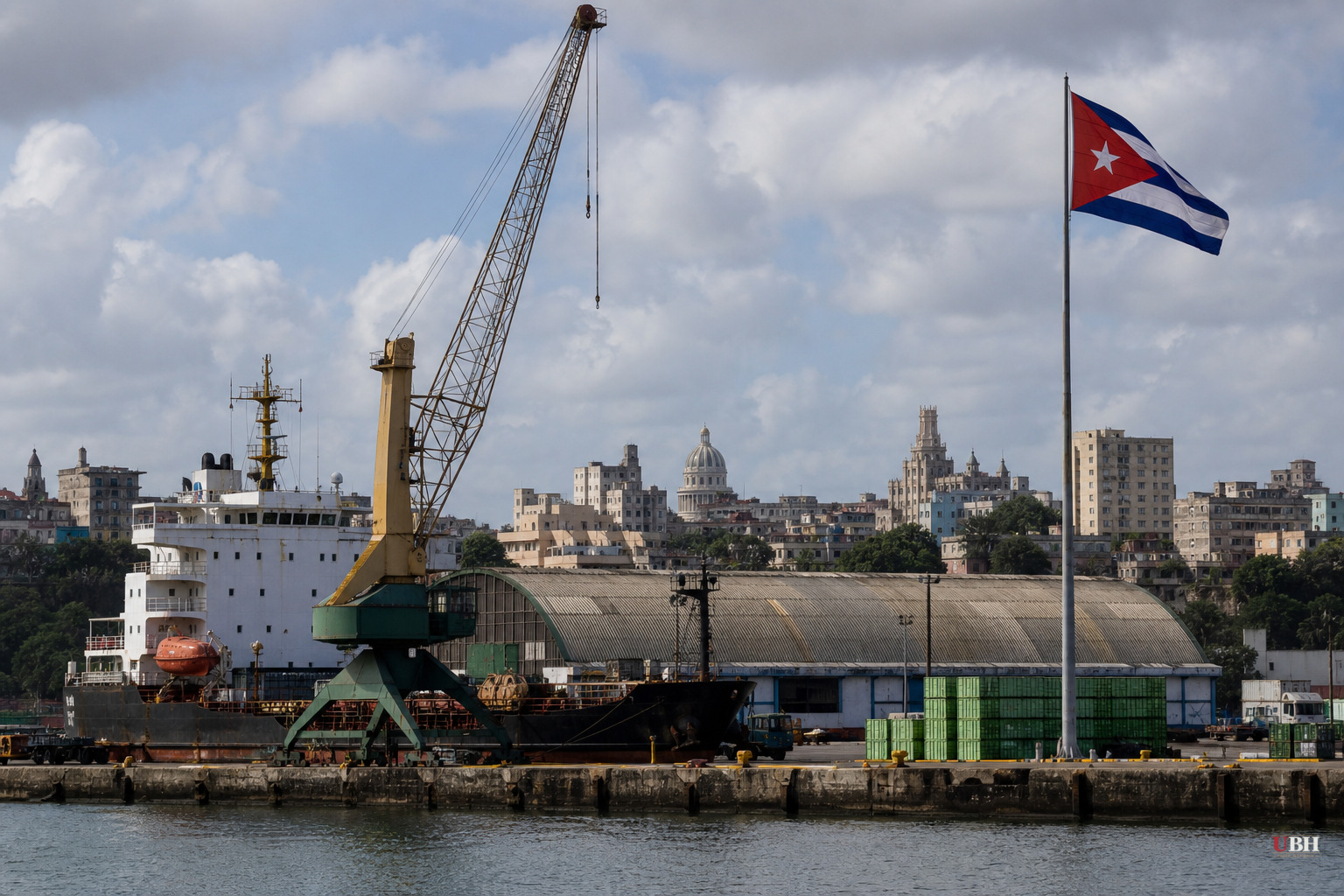
The State Department announced sanctions Thursday against five Cuban entities and eight individuals accused of helping Havana secure weapons and maintain military ties with foreign governments, according to Reuters.
The designated individuals include Alvaro Lopez Miera, minister of Cuba's Ministry of the Revolutionary Armed Forces, and Roberto Legra Sotolongo, chief of the General Staff. Cuba's military attaches to Russia and China are also on the list, Reuters reported.
On the entity side, the sanctions hit subsidiaries of GAESA, the military-run business conglomerate that controls large parts of Cuba's economy, along with a military holding company and a military aircraft repair business.
Secretary of State Marco Rubio announced the designations, which were issued under an executive order President Donald Trump signed in May. That order broadened sanctions against Cuban government officials, security forces and their supporters.
Rubio said Cuba's military and intelligence services spy on the United States and that the island serves as a staging ground for Russia, China and Iran to run operations against the U.S., according to Reuters. Thursday's action builds on earlier sanctions this year that targeted GAESA and the Ministry of the Revolutionary Armed Forces as institutions.
Cuban authorities did not immediately respond to a request for comment, Reuters reported.
This is part of a broader pressure campaign the Trump administration has run against Havana in 2026. Washington has already sanctioned an array of Cuban entities and officials, including the island's president, according to Reuters.
Separately, the U.S. declared a national emergency this year threatening tariffs on any country that supplies oil to Cuba. Reuters reported that move has contributed to frequent power outages on the island, since Cuba relies heavily on imported fuel to run its power grid.
Sanctions aimed at squeezing the Cuban military and intelligence apparatus also squeeze the oil supply that keeps the lights on for ordinary Cubans who have no say in what their government does with Russia, China or Iran. The administration's stated target is the regime's military-intelligence complex, not civilians, but the power outages are a real-world side effect that falls on the population.
The administration's argument is straightforward: Cuba's government isn't just an isolated communist relic, it's an active partner in propping up American adversaries. Cuba has hosted Russian and Chinese personnel, and Rubio has repeatedly pointed to Cuban intelligence cooperation with the Kremlin, Beijing and Tehran as a national security threat, not a symbolic one. GAESA controls Cuba's tourism, retail and remittance-processing sectors, meaning it's the financial backbone that lets the regime fund its military while ordinary Cubans go without. Sanctioning the specific officials and subsidiaries that handle weapons procurement, rather than blanket embargoes, is a narrower tool aimed at the people actually running military logistics, including attaches stationed in Moscow and Beijing.
Critics of the decades-long embargo approach argue that sanctions on Cuba have never forced regime change, only prolonged economic misery for a population that has no democratic mechanism to change its own government. The tariff threat tied to Cuba's oil supply is the sharper edge here: it's not aimed at Lopez Miera or GAESA executives, it's aimed at any third country selling Cuba fuel, and the documented consequence, according to Reuters, has been more blackouts for regular Cubans. Whether squeezing the civilian population's electricity supply actually degrades the military's weapons-procurement network, or just makes daily life worse without changing Havana's foreign alignments, is an open question the administration hasn't answered with public evidence either way.
No new sanctions targets beyond Thursday's list have been announced. Cuba has not publicly responded to the designations as of this writing. Whether Havana alters its military relationships with Moscow and Beijing, or whether the U.S. issues further designations building on the May executive order, remains unresolved.
Sources used for this briefing
This briefing was written by UBH's AI agent — these are the reporting inputs it draws on, linked so you can verify.


