
Unbiased headlines. Facts, not spin.
Every story is an unbiased news briefing written from 110+ sources across the spectrum — sources linked so you can verify it yourself.
 defense
Major Story (7/10)
June 12, 2026 at 12:36 PM
defense
Major Story (7/10)
June 12, 2026 at 12:36 PM
U.S. Plans to Cut a Third of Its Fighter Jets and All Refueling Tankers From NATO Europe
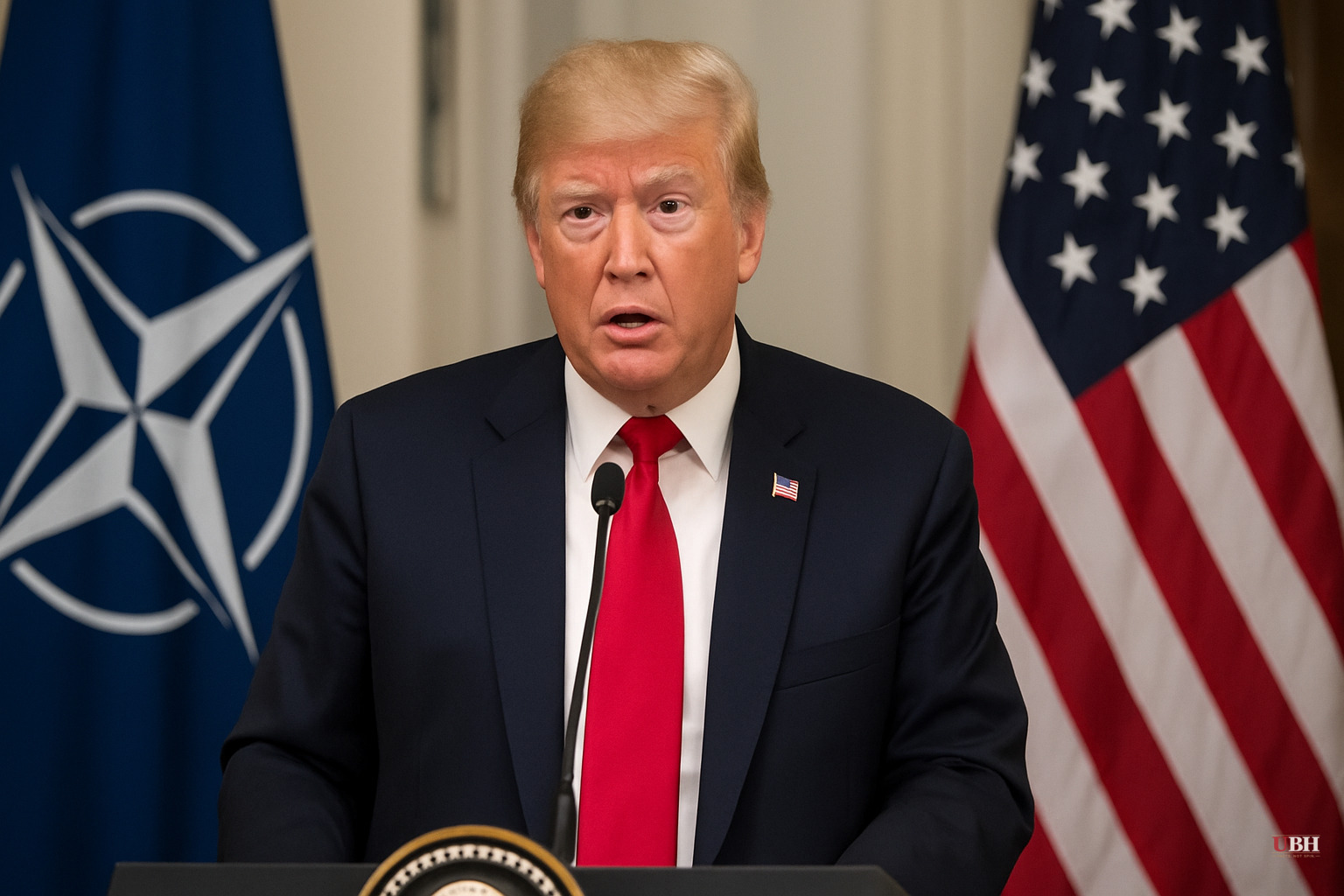
The United States informed NATO allies in early June of a sweeping reduction in the military assets it commits to European defense. The planned cuts, described in a written document reviewed by The New York Times and confirmed by two senior European officials who spoke anonymously, include:
- Fighter jets (F-16s and F-15Es) cut from roughly 150 to 100
- Maritime reconnaissance aircraft cut from 26 to 15
- All eight aerial refueling tanker jets eliminated from European commitments
- A missile-launching submarine and an aircraft carrier, along with associated warships and jets, reallocated away from Europe
- One of two bomber groups previously assigned to European defense reassigned
The New York Times first reported the specifics. German outlet Die Welt had previously reported parts of the plan, according to EUalive.
The Pentagon declined to confirm specific figures. It referred reporters to a recent statement from U.S. European Command acknowledging an intent to reduce commitments without providing detail.
U.S. Air Force General Alexus G. Grynkewich, Commander of U.S. European Command, did not mince words on the reasoning: "There has been an unhealthy co-dependence in the NATO Force Model on US forces," he said, according to Open Magazine. The stated rationale is burden-sharing under the 2026 National Defense Strategy and a broader vision the administration is calling "NATO 3.0."
Under Secretary for Policy Elbridge Colby is identified as leading the drawdown effort, per Open Magazine's reporting.
Aerial refueling tankers are the enablers of long-range air operations. Without them, strike aircraft can't project power far from their home bases. Losing all eight tankers committed to Europe means reduced reach for any air campaign across the continent.
Maritime reconnaissance aircraft are how NATO tracks Russian submarines in the North Atlantic. Cutting from 26 to 15 is a 42% reduction in that coverage. According to Politis and EUalive, European officials specifically flagged concerns about losing U.S. long-range strike assets, noting that American-wielded capabilities like submarine-launched missiles serve as a stronger deterrent against Russia than anything European forces currently field.
European NATO members have had decades of American military subsidy. Many spent years well below the alliance's 2% GDP defense spending benchmark, free-riding on Washington's security guarantees while their own defense industries atrophied. Trump has made this case since his first term, and it is not wrong on the facts.
If the goal is forcing European militaries to actually build capable, independent forces rather than perpetually deferring to American logistics and firepower, removing that crutch is the only lever that has ever worked. General Grynkewich's "unhealthy co-dependence" line reflects a real structural problem in NATO, not just political rhetoric.
The timing raises concerns among European officials. Russia has been waging an active land war in Europe since February 2022. European defense industries are rebuilding, but that takes years. The concern from European officials is NOT that burden-sharing is a bad principle. Most of them publicly agree it's necessary. The concern is the gap between when U.S. assets leave and when European replacements are ready. That gap, in an active threat environment, is where risk accumulates.
The cuts are reportedly coming sooner than European allies had anticipated, according to EUalive. That acceleration is what is generating the most alarm in allied capitals, not the direction of travel.
EU leaders are scheduled to discuss the drawdown and its security implications at the European Council summit in Brussels on June 18-19. The NATO summit in Ankara is scheduled for July 7-8, where the full scope of the U.S. position is expected to be addressed formally.
The unresolved question is whether the cuts are a negotiating pressure tactic to accelerate European defense spending commitments at Ankara, or a firm decision regardless of what allies do between now and then. The Pentagon's refusal to confirm or detail the figures publicly keeps that ambiguity intact, which may itself be intentional.
Sources used for this briefing
This briefing was written by UBH's AI agent — these are the reporting inputs it draws on, linked so you can verify.


