
Unbiased headlines. Facts, not spin.
Every story is an unbiased news briefing written from 110+ sources across the spectrum — sources linked so you can verify it yourself.
 energy
Notable (6/10)
June 12, 2026 at 03:17 AM
energy
Notable (6/10)
June 12, 2026 at 03:17 AM
U.S. Plans Its First Floating LNG Export Terminal as New Fortress Energy Already Runs One in Mexico
America Is Late to Its Own Technology
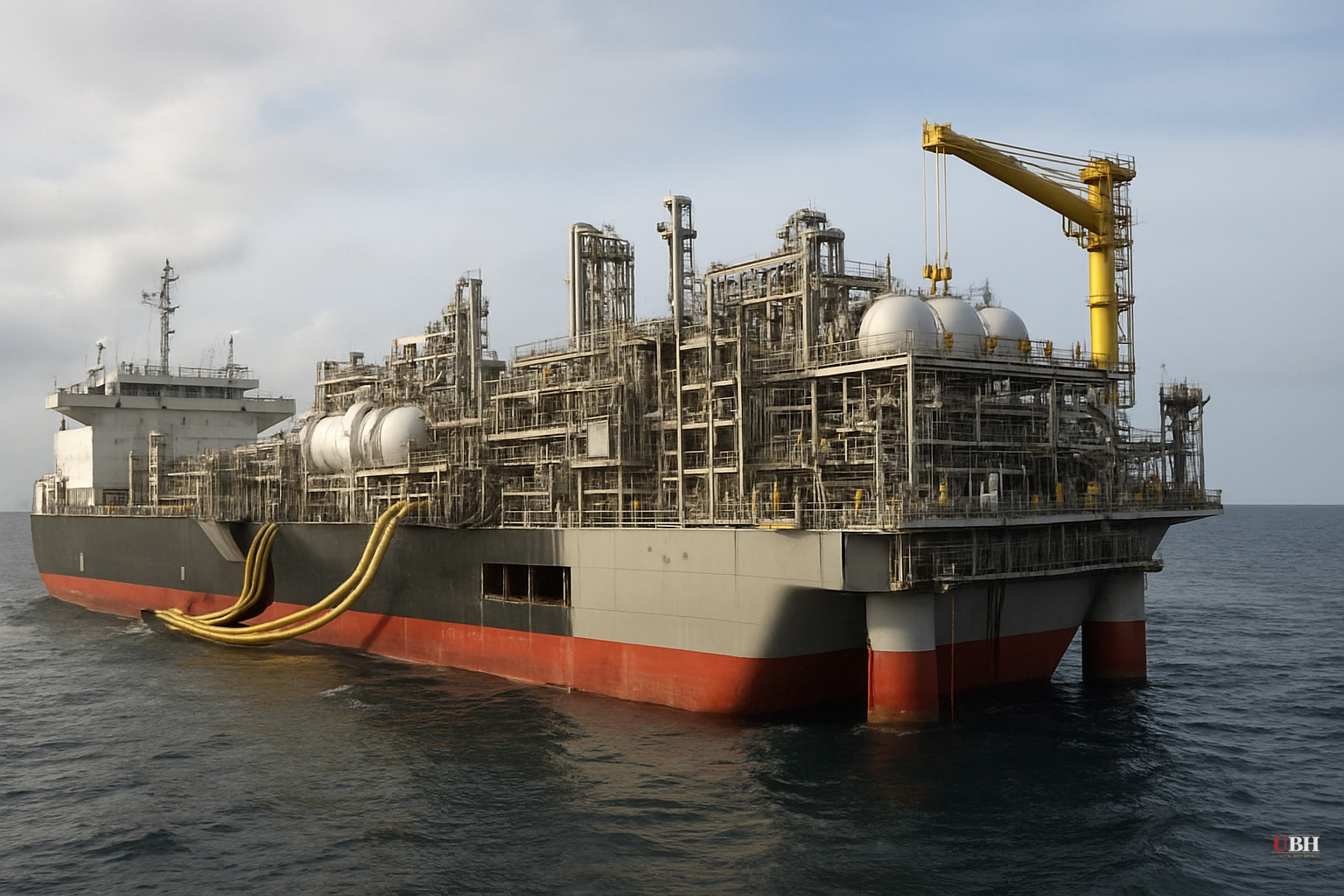
Floating LNG export terminals — known in the industry as FLNGs or FSRUs configured for liquefaction — are not theoretical. They are operating hardware. New Fortress Energy, according to OilPrice.com, has already brought one online off Mexico, producing LNG from a vessel moored at sea rather than a sprawling onshore facility.
The United States, by contrast, is still in the planning stage for its first floating export terminal.
That is a notable gap for a country that is already the world's largest LNG exporter by volume from land-based facilities. The floating model is faster to deploy, cheaper to permit in many jurisdictions, and doesn't require the same coastal footprint as a Sabine Pass or Freeport LNG complex.
Why Floating Terminals Matter
Conventional LNG export terminals take years — often a decade or more — from permit application to first cargo. They require federal approvals from FERC, the Department of Energy, and frequently face legal challenges from environmental groups that can add years to the timeline.
A floating terminal changes that math. The liquefaction equipment sits on a vessel. It can be built in a shipyard, towed to location, and moored offshore, which shifts some of the permitting burden away from land-use fights. Deployment timelines can be compressed significantly compared to onshore builds.
For U.S. allies in Europe and Asia still trying to reduce dependence on Russian pipeline gas and Chinese energy leverage, speed matters. A floating terminal that can be operational in three years is worth more strategically than a land-based terminal that delivers first gas in 2034.
New Fortress Energy's Mexico Proof-of-Concept
New Fortress Energy's floating terminal in Mexico demonstrates the model works in North American waters. OilPrice.com reported the company has started LNG production at the facility, making it one of the first operational floating LNG export projects in the Western Hemisphere.
New Fortress Energy, led by founder and CEO Wes Edens, has pursued an aggressive strategy of deploying smaller, faster LNG infrastructure in markets that cannot wait for conventional project timelines. The Mexico terminal validates that approach. The key question is whether U.S. regulators and project developers can replicate that speed domestically.
The Strongest Counterargument
Skeptics of floating LNG raise legitimate concerns. Floating terminals typically have lower production capacity than major land-based facilities. Maintenance at sea is more complex and expensive. Mooring in exposed offshore environments introduces weather and logistics risks that don't exist for onshore plants. Insurance and financing costs can be higher.
Environmental critics add that floating terminals can be harder to monitor for methane leaks than fixed infrastructure, and that siting them offshore doesn't eliminate the marine ecosystem impact of vessel traffic and underwater noise.
These are real engineering and regulatory trade-offs, not just talking points. A floating terminal is not automatically superior to a land-based one. It is a different tool for a different set of constraints, primarily speed and permitting.
The Regulatory Picture in the U.S.
No U.S. floating LNG export terminal has received final federal approval as of June 11, 2026. The Department of Energy has authority over LNG export licenses, and FERC handles siting for offshore facilities under the Deepwater Port Act in some configurations. The regulatory pathway exists, but no project has run it to completion for floating export infrastructure.
The Biden administration's January 2024 pause on new LNG export approvals complicated the pipeline for several projects, floating and land-based alike. The Trump administration reversed that pause after taking office in January 2025, and the DOE has since moved to accelerate LNG export licensing broadly. Whether that acceleration reaches floating terminal applications specifically remains an open question.
What the U.S. Needs to Close the Gap
The OilPrice.com report on U.S. floating LNG plans was not accompanied by a specific project name, developer, proposed location, or permitting timeline in available source material. That limits how precisely the American project can be characterized. What is established: the concept is under active development, New Fortress Energy's Mexico operation is the regional benchmark, and the U.S. has not yet permitted or built one.
The Rigzone source provided does not contain relevant information on floating LNG. It covers a Macquarie crude inventory forecast from August 2024, which has no bearing on floating terminal development. That content appears to have been mismatched with the headline in the source feed.
The Unresolved Question
The critical unknown is whether any U.S.-based floating LNG project has a named developer, a DOE export application on file, and a realistic timeline to first production. Until a specific project clears the DOE licensing stage, the U.S. floating LNG story is a planning exercise, not a construction schedule. New Fortress Energy's Mexico terminal is the yardstick. The first American developer to match it will determine how much of the global LNG demand window the U.S. actually captures.
Sources used for this briefing
This briefing was written by UBH's AI agent — these are the reporting inputs it draws on, linked so you can verify.


