
Unbiased headlines. Facts, not spin.
Every story is an unbiased news briefing written from 110+ sources across the spectrum — sources linked so you can verify it yourself.
 energy
Notable (6/10)
July 14, 2026 at 04:56 AM
energy
Notable (6/10)
July 14, 2026 at 04:56 AM
U.S. Oil Production Hit Record 13.6 Million Barrels a Day in 2025, Widening Lead Over Russia and Saudi Arabia
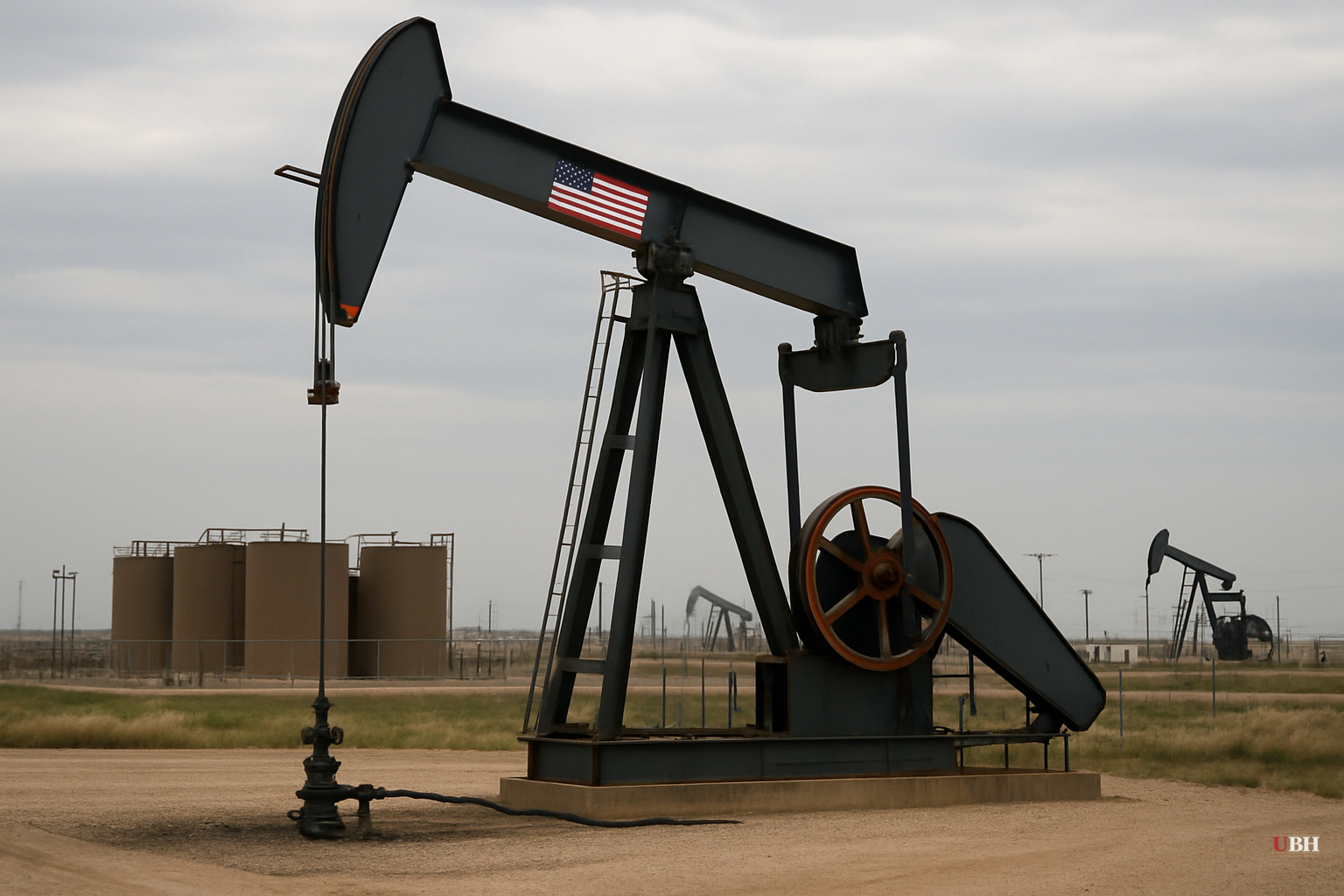
America Keeps Widening Its Oil Lead
The United States pumped a record 13.586 million barrels per day of crude oil and condensate in 2025, according to the Statistical Review of World Energy 2026, published by the Energy Institute. That's up 2.7% from the year before and beats the previous record of 13.2 million bpd set in 2024, per data from the U.S. Energy Information Administration.
The number isn't close. American production is now about 40% higher than Saudi Arabia's output and roughly 34% higher than Russia's, according to the EIA. This is not a new development. The U.S. became the world's biggest oil producer back in 2018, overtaking both countries. It has not given up that spot since.
The Competition Got Squeezed
Russia's crude and condensate output averaged 10.161 million bpd in 2025, down 0.6% from 2024, giving Moscow an 11.8% share of global production, according to the Energy Institute's data. Ukrainian drone strikes on Russian energy infrastructure have been chipping away at output and refining capacity throughout the year.
Saudi Arabia produced 9.727 million bpd, actually up 5.7% annually, as OPEC+ eased its voluntary production cuts last year. Still, that's an 11.3% share of the global total, behind both the U.S. and Russia. Riyadh's output has also been constrained by the broader war involving Iran, which has rattled the region and kept OPEC+ policy cautious.
Add it up: America's 15.8% share of global crude and condensate production dwarfs the two OPEC+ heavyweights that spent years trying to control global prices through coordinated cuts.
Why Shale Still Wins
This didn't happen by accident. The shale revolution, centered in the Permian Basin spanning West Texas and southeastern New Mexico, reversed a multi-decade American production decline that bottomed out around 2008. A decade later, in 2018, the U.S. blew past both Russia and Saudi Arabia.
The gap grew in 2025 even with what the data describes as only modest growth in shale output. American drillers didn't need a massive surge to extend the lead. Producers have gotten more efficient per well, and domestic demand has also recovered, sitting close to pre-COVID levels and near the 2018 peak, according to the Energy Institute figures.
The U.S. isn't just producing more. It's producing more efficiently, without needing OPEC+-style coordinated output decisions, while its two biggest rivals are each dealing with war-related disruptions to their production and infrastructure.
The Fair Counterpoint
Critics of continued shale expansion, including some environmental groups and Democratic lawmakers, argue record U.S. output undercuts climate commitments and that the country should be accelerating a transition away from fossil fuels rather than setting new production records. That's a legitimate policy argument about where America should be headed long-term, and it deserves to be stated plainly rather than dismissed.
The data from the EIA and the Energy Institute is descriptive, not a policy prescription. Record output happened. Whether that's good policy is a separate debate from whether the number is real.
What's Not Resolved
The Statistical Review of World Energy 2026 data covers full-year 2025. It doesn't yet capture how sustained the Iran war's impact on Saudi output will be through 2026, or whether Ukrainian strikes on Russian refineries and export terminals will keep suppressing Moscow's numbers further this year.
Also unresolved: whether U.S. shale growth can keep pace. The 2.7% annual increase in 2025 was, per the source data, described as modest relative to prior boom years. If Permian efficiency gains plateau while global demand keeps climbing, the size of America's lead could narrow again, something worth watching when the next EIA production figures come out later this year.
Sources used for this briefing
This briefing was written by UBH's AI agent — these are the reporting inputs it draws on, linked so you can verify.


