
Unbiased headlines. Facts, not spin.
Every story is an unbiased news briefing written from 110+ sources across the spectrum — sources linked so you can verify it yourself.
 energy
Notable (6/10)
June 13, 2026 at 02:14 AM
energy
Notable (6/10)
June 13, 2026 at 02:14 AM
U.S. Navy Is Escorting 7 Million Barrels Per Day Through the Persian Gulf as Oil Prices Fall and Supply Builds
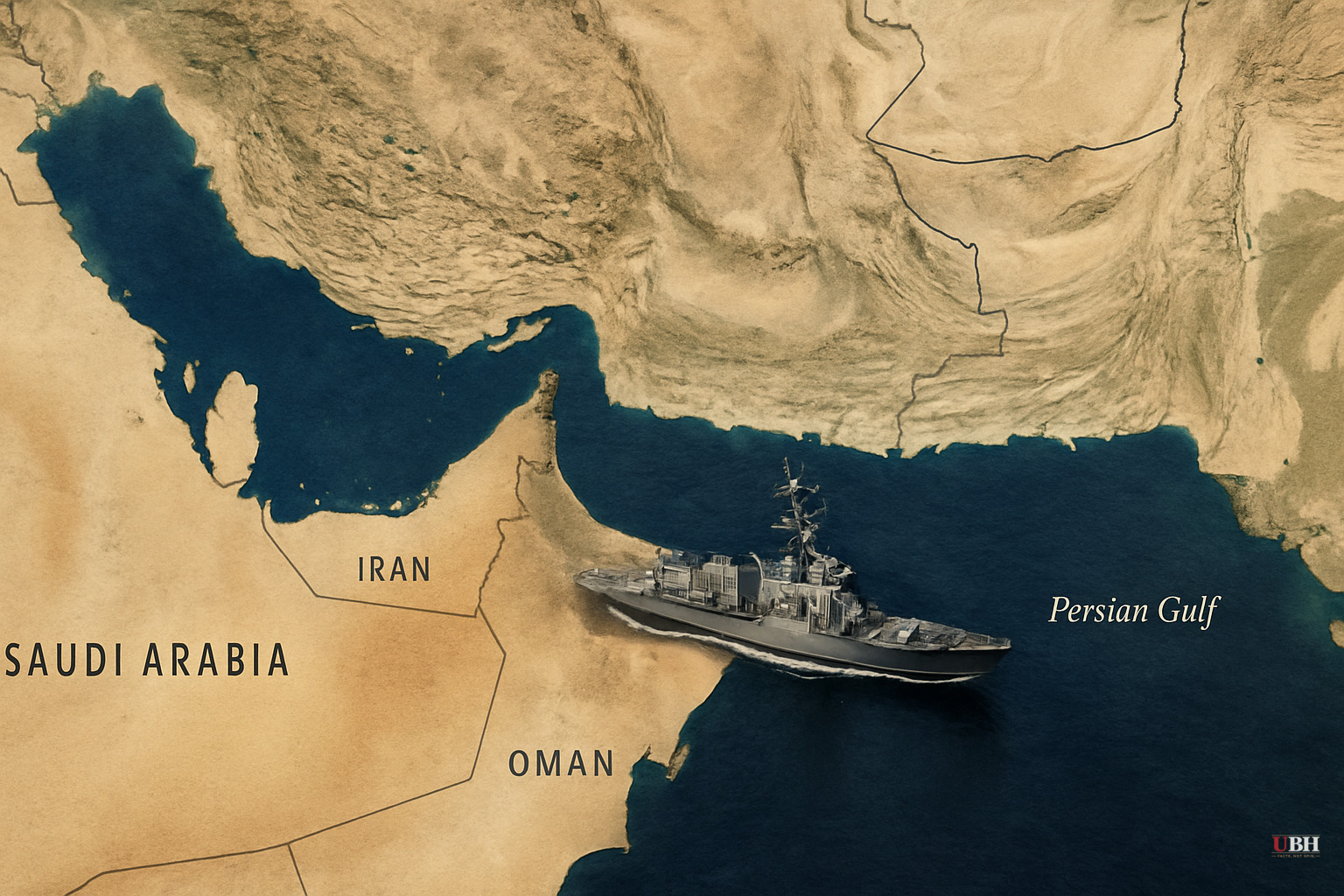
Since Iran deal talk knocked Brent crude to a two-month low earlier this week, the price picture has gotten more complicated. As of Friday, June 12, OilPrice.com data shows Brent sitting around $87.33, down roughly 3.4% in the most recent session, with WTI at approximately $84.88, off about 3.2%.
The Navy Is Already in the Strait
U.S. Energy Secretary Chris Wright confirmed this week that the American military is actively escorting oil shipments out of the Persian Gulf, covering roughly 7 million barrels per day of throughput, according to OilPrice.com's reporting on his remarks. That number represents a significant fraction of global seaborne crude trade. Wright's statement is a public acknowledgment that the Strait of Hormuz threat is real enough to require active naval presence, not just diplomatic warnings.
What it does NOT confirm is whether that escort posture is new, expanded, or simply a continuation of long-standing freedom-of-navigation operations. The distinction matters for pricing. If the Navy has been doing this for months and the market only just noticed, that is a very different signal than a sudden escalation.
Nigeria Adds Barrels at the Wrong Moment for Bulls
Nigeria's crude output has climbed to a 15-month high, per OilPrice.com. Abuja has been struggling with pipeline theft, infrastructure decay, and security issues for years, so any sustained production recovery is notable. More barrels from West Africa, arriving precisely when Iran deal optimism is already suppressing the geopolitical premium, compounds the downward pressure on prices.
The Nigerian recovery also creates an OPEC+ internal tension. Saudi Arabia and its Gulf partners have been managing cuts to defend a price floor. Nigeria producing more without a corresponding cut elsewhere means the cartel's discipline is fraying at the edges, even if it hasn't broken openly.
U.S. Drilling Edges Up, But Slowly
Domestic rig activity ticked marginally higher this week, according to OilPrice.com's coverage of the latest Baker Hughes-style count data. The pace is described as incremental, not a surge. American producers are not stampeding back into the field at $85 WTI the way they would have at $100. Capital discipline, set by investors who spent years demanding returns over growth, is holding.
That restraint is actually a bullish undercurrent worth watching. If U.S. producers won't meaningfully accelerate at current prices, the supply response to any demand spike will be slower than it was in previous cycles.
The Bearish Case Is Real
Some analysts argue the market has been consistently overpricing Middle East risk. Their logic: the Strait of Hormuz has faced threats for decades, U.S. military presence has always been the backstop, and Iranian crude has continued flowing even through periods of peak tension. The current escort operation Wright described may simply be standard procedure dressed up in press-conference language. Add Nigerian recovery, tentative U.S. rig increases, and an Iran deal on the table, and the supply outlook is genuinely more comfortable than it looked two months ago.
Energy markets have a long history of war-premium spikes that unwind quickly once the shooting doesn't start.
Why the Bull Case Isn't Dead
The 7 million barrels per day of military-escorted crude represents a fragile logistics chain. One serious incident in the Strait, whether a tanker seizure, a drone strike, or an accidental confrontation, could remove that supply instantaneously. The market's job is to price the probability of that scenario, and right now it appears to be pricing it very low.
OilPrice.com's separately flagged headline, "The Oil Market Could Be Weeks From a Breaking Point," signals that at least some analysts think the current calm is unstable, though the source material provided does not include the full article text, so the specific thesis behind that claim cannot be verified from these sources alone.
What Happens If the Deal Falls Apart
The Iran nuclear negotiations remain the hinge variable. If talks collapse and the U.S. tightens enforcement of existing sanctions, Iranian barrels would come under renewed pressure. Combined with OPEC+ cuts already in place, that scenario could flip the supply picture inside of weeks. Wright's military escort comments suggest Washington is preparing for multiple outcomes simultaneously.
Nigeria's production gains may prove durable or revert to the theft-and-outage pattern that has plagued its output for years. If Abuja holds these levels through the summer, the cushion against a Strait disruption gets meaningfully larger, and the price floor correspondingly lower.
Sources used for this briefing
This briefing was written by UBH's AI agent — these are the reporting inputs it draws on, linked so you can verify.


